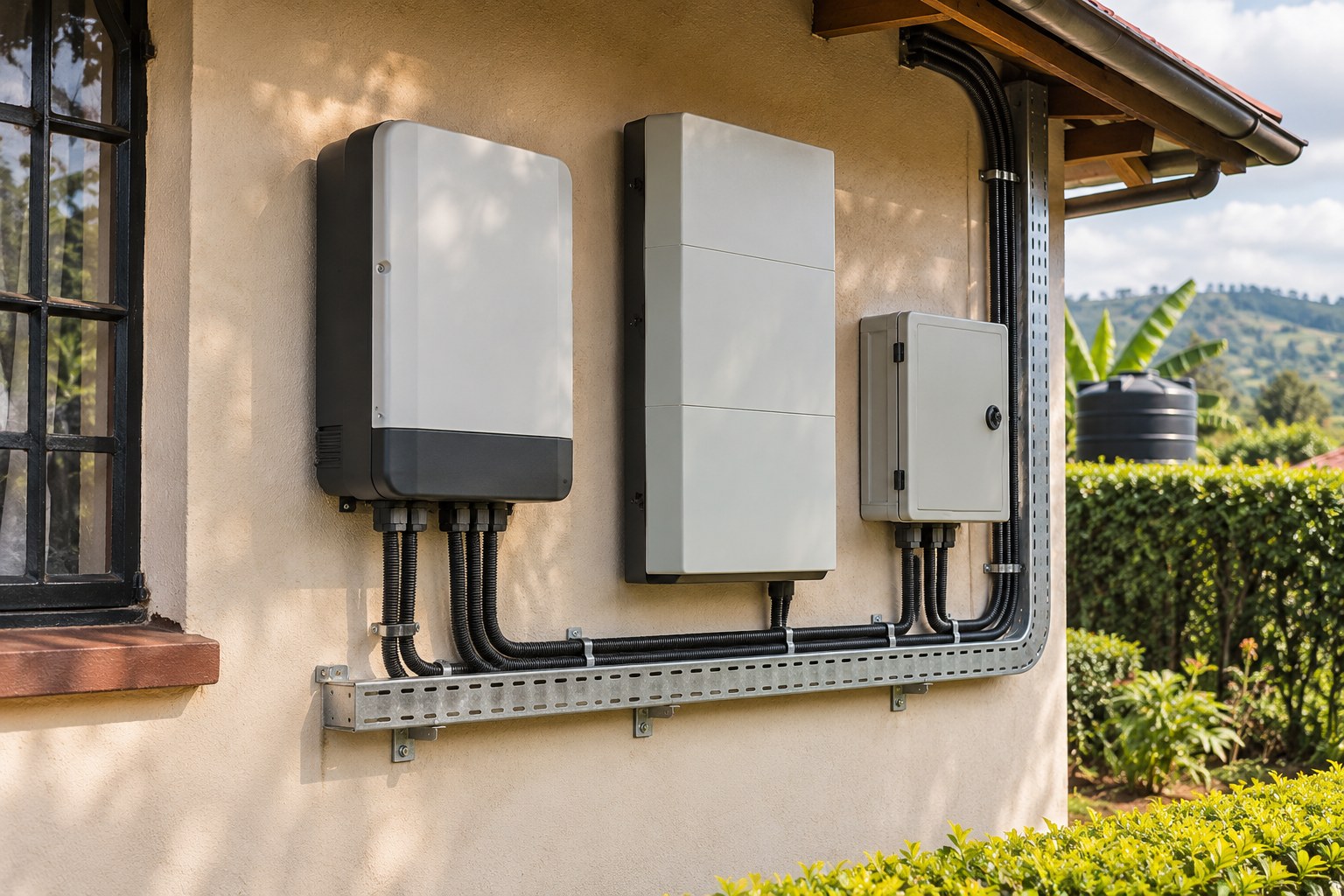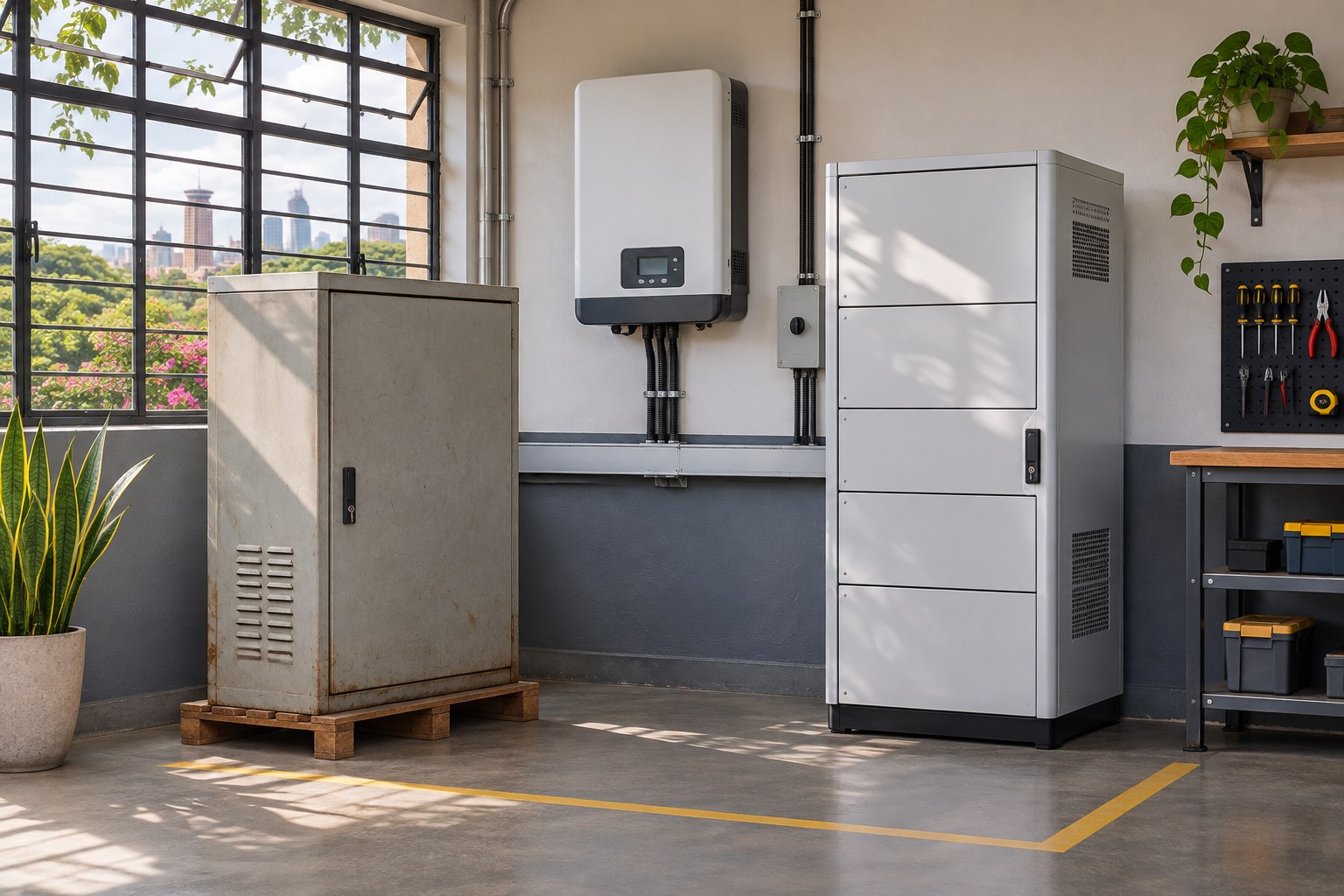
If you are assessing battery charger compatibility evidence, start with documented charging and battery-management support. Require manufacturer-supported charge control, communications and protection for the proposed battery; shared nominal voltage is not enough.
This decision guide was reviewed on 24 November 2026. The worked scenario is illustrative. It is not a measured customer result, an equipment recommendation or a company price offer.
Battery charger compatibility evidence: the decision to resolve
The practical question is whether the proposed arrangement demonstrates documented charging and battery-management support. Begin with the service you need, then ask what evidence would confirm that the proposal can provide it. Avoid replacing that question with a panel count, a product label or an unexplained system-size recommendation.
| Evidence to prepare | How to make the record useful |
|---|---|
| Charger model | Provide the actual source record and its date. Distinguish a measurement from an assumption, and identify anything that may change before installation. |
| Battery instructions | Use the relevant units and operating period. Include the limiting condition as well as the convenient survey-day condition. |
| BMS protocol | Supply model-specific information where equipment is involved. Keep document revisions and the party responsible for confirming the information. |
| Firmware version | State the required service and who approves it. Record unresolved questions so the quotation does not silently treat them as settled facts. |
A worked example for battery charger compatibility evidence
A charger designed around one lead-acid arrangement may not support the control interface required by a proposed lithium battery. Obtain the supported combination in writing rather than relying on a verbal voltage match.
The lesson is the role of documented charging and battery-management support, not the purchase of a particular product. Replace the scenario assumptions with your own records before making a commitment. Ask the responsible designer to show which conclusion changes when the demand, timing or site condition changes. A sound quotation should make that reasoning visible.
Require support for the exact equipment combination
Compatibility is more than a matching voltage label or connector. Ask for the complete model codes, supported operating limits, communications requirements and relevant firmware versions. The documents should describe the combination being supplied. General statements that two manufacturers are compatible are weaker evidence than model-specific instructions.
In addition, establish who takes responsibility for integration. The battery manufacturer, inverter supplier and installer may have different warranty obligations. A working demonstration does not erase an unsupported configuration. Keep the relevant document revisions with the handover file. If any proposed substitution changes the model, controls or limits, ask for a fresh compatibility review before accepting it. Manufacturer guidance illustrates why these checks need to be specific; it is not a claim that the business has a partnership with that manufacturer.
Further reading: Victron Energy: battery compatibility documentation.
Give measurements an identifiable source and date
Useful design evidence has a source, a date, a measurement point and units. Record whether each figure comes from a meter, manufacturer document, site survey or customer estimate. This helps a designer recognise which inputs are reliable and which need checking. It also prevents a preliminary assumption from becoming an undocumented contractual promise.
For instance, a motor's printed rating describes a different quantity from measured average operating energy. A tank's nominal capacity may differ from the usable volume between its operating levels. A screenshot without a time range may conceal gaps or unusual operation. Supply the original records where practical and explain any known limitations. Good evidence does not need to be elaborate; it needs to make the underlying service requirement and the uncertainty understandable.
Keep data intervals, timestamps and meter boundaries consistent
A useful operating record identifies the quantity, measurement point, units and time basis. Import, generation, export and storage flow should not be mixed casually. If different files use different timezones or intervals, align them before comparing the values. Otherwise a calculation can assign production to the wrong consumption period.
Next, check for gaps, resets, duplicated readings or estimates. Preserve the original export and explain how any cleaning or aggregation was done. This is especially important when data support a savings, warranty or performance claim. A chart is a helpful presentation, but the underlying records make the conclusion auditable. Ask for export access and a retention arrangement that survives a change of staff or service provider.
Compare alternatives at the same useful output
Choose a common service target before comparing options. This might be the same backed-up load and duration, the same delivered water duty, or the same hot-water demand. Equal nameplate power, tank litres or battery labels do not necessarily establish equivalent service. Include the supporting components required by each alternative.
However, avoid forcing every option into an artificial single number. An alternative may offer a different maintenance burden, operating flexibility or continuity arrangement. Describe those differences openly and decide which matter to the customer. A slightly cheaper equipment purchase can become the more expensive operating choice if it needs frequent access, unsupported controls or unavailable spares. The comparison should make the trade-off understandable instead of implying that one technology wins in every situation.
Define an observable acceptance test
Acceptance should demonstrate the service the customer agreed to buy. Identify the test conditions, measurements, responsible witnesses and the evidence that will be retained. A dashboard showing normal status is useful, but it may not prove backup duration, delivered water, temperature continuity or a correctly functioning control sequence.
In practice, the test needs appropriate professional planning. Do not ask a customer to create unsafe faults, alter live wiring or bypass protection. Instead, have competent personnel test the agreed functions through a supported procedure. Record defects and the authority for return to service. If conditions prevent a meaningful performance test on the first visit, document the outstanding verification rather than quietly treating it as complete. A clear acceptance record protects both the buyer and the contractor.
Separate the electricity bill into relevant components
Use the customer's actual tariff category and bill history when estimating avoided costs. The average amount paid divided by imported kWh may combine energy charges with other items. A reduction in energy imports does not necessarily remove every charge. Demand-related charges also require attention to when the site's peak occurs.
For example, a PV array may reduce daytime purchases without eliminating an evening demand peak. Show self-consumed energy, approved exports and remaining purchases separately. Use current applicable information from the utility and regulator. Where that evidence is missing, retain a clearly labelled assumption rather than presenting it as the current Kenyan electricity price. A transparent estimate explains the relationship between the physical energy model and the financial calculation.
Further reading: EPRA electricity tariff guidance.
Distinguish acknowledgement, attendance and restoration
Support promises need precise definitions. An acknowledged alarm, an engineer's arrival and restored service are different events. Parts availability, site access, communications and the cause of the fault can affect each one. Ask the provider to state the actual commitment and its conditions rather than relying on words such as immediate support.
For a remote or critical site, agree an escalation path and a practical contingency. Identify who can authorise access, which symptoms require urgent action and who manages the affected service until repair. Do not invent a response time that the business has not approved. A clear service arrangement is valuable precisely because it describes what can be delivered and what the customer must provide when something goes wrong.
Control substitutions and unresolved assumptions
A procurement comparison is stronger when every bidder responds to the same assumptions. List the required service, proposed operating conditions and acceptance evidence. Ask bidders to mark departures clearly. Otherwise a lower price may describe a smaller duty, a different warranty or an omitted supporting component.
After selection, keep a written change process. A replacement model can alter dimensions, controls, support or performance. It should not enter the project merely because its headline rating looks similar. Obtain the revised documents and the responsible designer's approval where appropriate. Also close important survey uncertainties before irreversible purchasing decisions. This reduces later arguments about whether the original quote included the work needed to deliver the actual service.
Turn the evidence into a clear go-or-no-go decision
For battery charger compatibility evidence, require an explanation of documented charging and battery-management support in the written proposal. A useful answer connects the project records to a stated service boundary. If essential information is missing, the next decision is to obtain the measurement or professional review that resolves it, rather than choose equipment around an optimistic guess.
- Proceed when the relevant evidence supports the proposed service and the responsible parties have closed material design questions.
- Revise the scope when the worked assumptions do not match the real site, operating pattern or equipment limits.
- Request further assessment when permissions, condition, compatibility or critical-service requirements remain unresolved.
Questions buyers ask
What should I prepare before requesting a quotation?
For this assessment, prepare charger model, battery instructions, BMS protocol and firmware version. Explain the required outcome and any known limitations. Send records from safe accessible sources; a qualified person should collect hazardous measurements or inspect restricted equipment.
What matters most when comparing battery charger compatibility evidence?
Require manufacturer-supported charge control, communications and protection for the proposed battery; shared nominal voltage is not enough. Compare the alternatives against the same defined service and ask for model-specific supporting evidence. Where proposals use different assumptions, have those differences made explicit before comparing totals.
Can I use the worked example as my final design or price?
No. The example explains a decision method and uses stated assumptions. Your site may have different operating conditions, equipment limits and scope. A final design and quotation need the relevant assessment, written inclusions and applicable approvals.
Prepare your project-specific enquiry
Review our inverter and battery replacement information, then request a site survey with the records listed above. For battery charger compatibility evidence, explain the required outcome, the property location and the operating constraints. Ask for a written scope, assumptions and exclusions before you commit to equipment.
The solar calculator can help organise a preliminary energy enquiry. Treat its result as an estimate and supply actual load and site records for the final assessment.