If you are assessing commercial rooftop solar Kenya, start with coincident generation and consumption. Design around electricity used while generation is available. A monthly bill cannot reveal the midday minimum or the simultaneous demand that sets inverter requirements.
This decision guide was reviewed on 24 November 2026. The worked scenario is illustrative. It is not a measured customer result, an equipment recommendation or a company price offer.
Commercial rooftop solar Kenya: the decision to resolve
The practical question is whether the proposed arrangement demonstrates coincident generation and consumption. Begin with the service you need, then ask what evidence would confirm that the proposal can provide it. Avoid replacing that question with a panel count, a product label or an unexplained system-size recommendation.
| Evidence to prepare | How to make the record useful |
|---|---|
| Interval imports | Provide the actual source record and its date. Distinguish a measurement from an assumption, and identify anything that may change before installation. |
| Operating hours | Use the relevant units and operating period. Include the limiting condition as well as the convenient survey-day condition. |
| Weekend demand | Supply model-specific information where equipment is involved. Keep document revisions and the party responsible for confirming the information. |
| Meter boundaries | State the required service and who approves it. Record unresolved questions so the quotation does not silently treat them as settled facts. |
A worked example for commercial rooftop solar Kenya
A business consuming 30,000 kWh monthly may still have a 20 kW Sunday midday load. A model based only on its weekday factory demand can substantially overstate self-consumption during closures.
The lesson is the role of coincident generation and consumption, not the purchase of a particular product. Replace the scenario assumptions with your own records before making a commitment. Ask the responsible designer to show which conclusion changes when the demand, timing or site condition changes. A sound quotation should make that reasoning visible.
Match generation to the load timetable
Solar generation changes through the day, while customers use energy on their own schedules. Compare the two profiles instead of subtracting an annual production estimate from annual consumption. The timing matters even when the totals look similar. A large midday surplus cannot automatically supply a load that operates much later.
For a grid-connected installation, unused production may need approved export, supported storage or curtailment. For an independent installation, the energy balance needs an alternative response when demand exceeds supply. Identify flexible loads that can move into daylight without disrupting the service they provide. Also keep genuinely time-sensitive loads separate. Scheduling can improve utilisation, but it should not compromise security, clinical care, product quality or an approved production process.
Further reading: National Laboratory of the Rockies: photovoltaic performance modelling.
Keep data intervals, timestamps and meter boundaries consistent
A useful operating record identifies the quantity, measurement point, units and time basis. Import, generation, export and storage flow should not be mixed casually. If different files use different timezones or intervals, align them before comparing the values. Otherwise a calculation can assign production to the wrong consumption period.
Next, check for gaps, resets, duplicated readings or estimates. Preserve the original export and explain how any cleaning or aggregation was done. This is especially important when data support a savings, warranty or performance claim. A chart is a helpful presentation, but the underlying records make the conclusion auditable. Ask for export access and a retention arrangement that survives a change of staff or service provider.
Use measured usable roof space
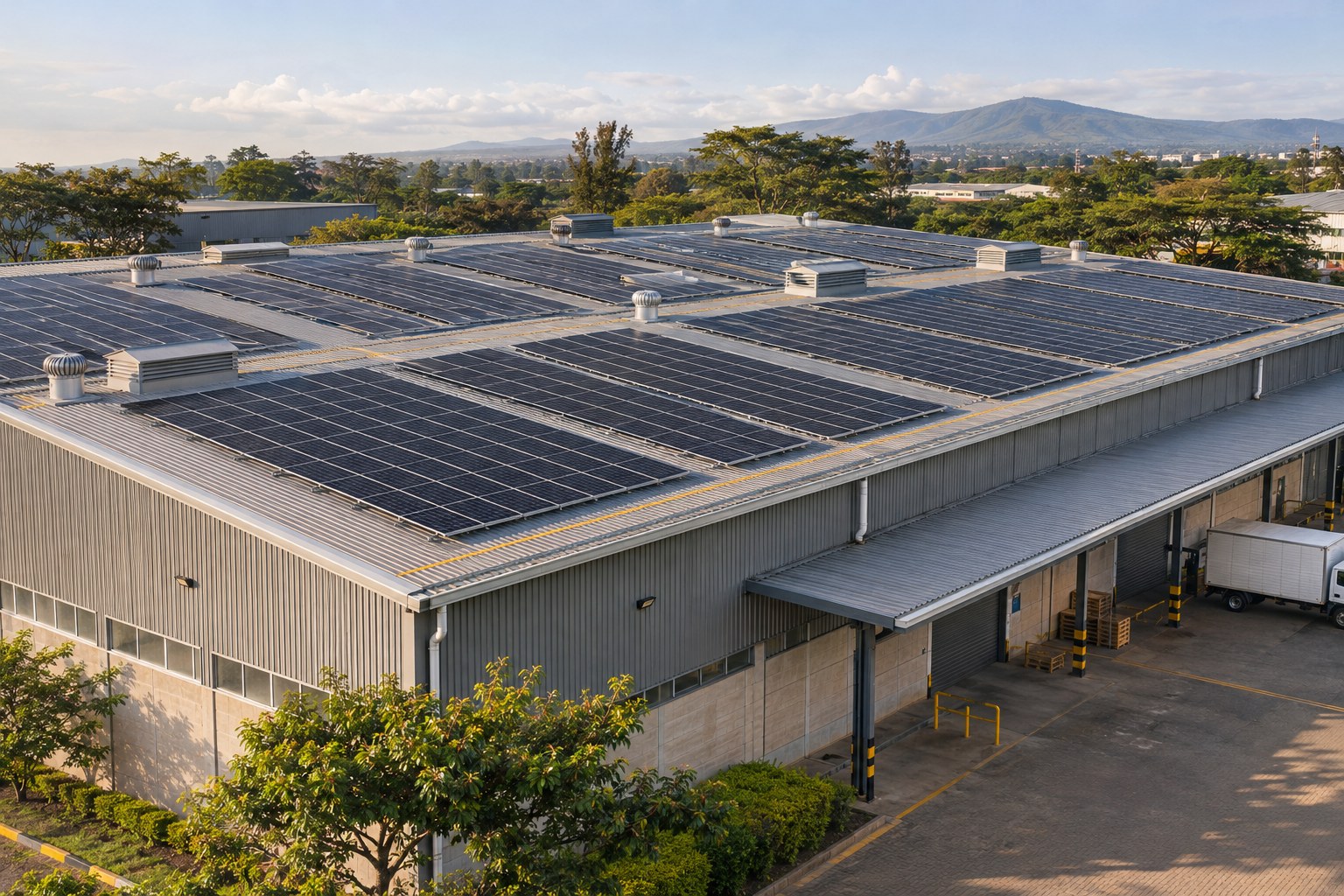
Gross roof area is not the same as available array area. Obstructions, shading, rooflights, access routes and the building's condition can reduce the space that is usable. The survey should record these constraints before a panel count is promised. Actual module dimensions then need to be fitted into an approved layout.
Furthermore, the roof covering does not describe the whole supporting structure. A competent assessment must consider the proposed load path and attachment arrangement. Ask how existing defects, waterproofing and any roof warranty will be handled. The resulting drawing should preserve safe access for future service work. This is a procurement and coordination question for the owner; it is not a reason for an unqualified person to climb onto the roof or inspect live installation equipment.
Use monitoring to answer a defined operating question
A monitoring system is most useful when the owner knows what each value means. Generation, consumption, import, export, battery flow and state of charge describe different things. The sensor location and the software's definitions matter. Ask the installer to demonstrate the measurements needed for the customer's actual decisions.
Also check what happens when communications fail. Local data storage, remote alerts and historical export can have different availability. Agree who owns the account and who is authorised to receive alerts. A graph can help detect an unusual trend, but it does not replace appropriate physical testing or establish the cause of every fault. Use the records to support a targeted professional assessment, with timestamps and relevant operating context.
Use more than one representative operating condition
Demand and available resources can change through the year. A school, farm, hotel and family home may each have busy and quiet periods. Identify the conditions that matter to the proposed service instead of extending a single favourable day across the whole annual forecast. The same principle applies to source water levels and access conditions.
Then distinguish a normal operating case from a limiting case and a contingency case. Explain which one determines equipment capacity and which one tests resilience. This makes the decision more transparent without pretending that a model predicts every future event. Where local evidence is unavailable, state the assumption and arrange the relevant survey or measurement rather than presenting a regional generalisation as a verified site fact.
Classify critical services with the responsible specialist
Critical-load classification belongs to the people accountable for the service, working with competent technical specialists. A hospital, laboratory, telecom site and domestic home can all need backup, but their permitted interruptions and recovery procedures differ. Do not translate a generic number of backup hours into a promise of uninterrupted operation at every outlet.
Map the whole service chain. Cooling, communications, control equipment and existing UPS interfaces may be essential to the main appliance. Then agree what happens during transfer, low reserve and failure of a supporting component. The acceptance plan should demonstrate the approved arrangement under suitable professional supervision. This provides a clearer assurance than describing the whole building as backed up without identifying what that actually means.
Separate the electricity bill into relevant components
Use the customer's actual tariff category and bill history when estimating avoided costs. The average amount paid divided by imported kWh may combine energy charges with other items. A reduction in energy imports does not necessarily remove every charge. Demand-related charges also require attention to when the site's peak occurs.
For example, a PV array may reduce daytime purchases without eliminating an evening demand peak. Show self-consumed energy, approved exports and remaining purchases separately. Use current applicable information from the utility and regulator. Where that evidence is missing, retain a clearly labelled assumption rather than presenting it as the current Kenyan electricity price. A transparent estimate explains the relationship between the physical energy model and the financial calculation.
Further reading: EPRA electricity tariff guidance.
Agree a fair baseline before claiming savings
A baseline describes the service and consumption against which a change will be assessed. Record the period, meter boundaries, operating activity and known unusual events before work starts. Otherwise a later bill reduction can be attributed to the wrong cause. Lower occupancy, fewer production hours or a change in tariff can alter the result independently of solar.
Therefore, agree how the comparison will handle such changes. A factory may need production data; a lodge may need occupied room-nights; a pumping project may need delivered water volume and head. Select a measure that reflects the actual service. Report missing data and uncertainty rather than filling gaps with an optimistic assumption. This makes performance review more useful to the customer and prevents an attractive headline from hiding a weak comparison.
Turn the evidence into a clear go-or-no-go decision
For commercial rooftop solar Kenya, require an explanation of coincident generation and consumption in the written proposal. A useful answer connects the project records to a stated service boundary. If essential information is missing, the next decision is to obtain the measurement or professional review that resolves it, rather than choose equipment around an optimistic guess.
- Proceed when the relevant evidence supports the proposed service and the responsible parties have closed material design questions.
- Revise the scope when the worked assumptions do not match the real site, operating pattern or equipment limits.
- Request further assessment when permissions, condition, compatibility or critical-service requirements remain unresolved.
Questions buyers ask
What should I prepare before requesting a quotation?
For this assessment, prepare interval imports, operating hours, weekend demand and meter boundaries. Explain the required outcome and any known limitations. Send records from safe accessible sources; a qualified person should collect hazardous measurements or inspect restricted equipment.
What matters most when comparing commercial rooftop solar Kenya?
Design around electricity used while generation is available. A monthly bill cannot reveal the midday minimum or the simultaneous demand that sets inverter requirements. Compare the alternatives against the same defined service and ask for model-specific supporting evidence. Where proposals use different assumptions, have those differences made explicit before comparing totals.
Can I use the worked example as my final design or price?
No. The example explains a decision method and uses stated assumptions. Your site may have different operating conditions, equipment limits and scope. A final design and quotation need the relevant assessment, written inclusions and applicable approvals.
Prepare your project-specific enquiry
Review our commercial and industrial rooftop solar information, then request a site survey with the records listed above. For commercial rooftop solar Kenya, explain the required outcome, the property location and the operating constraints. Ask for a written scope, assumptions and exclusions before you commit to equipment.
The solar calculator can help organise a preliminary energy enquiry. Treat its result as an estimate and supply actual load and site records for the final assessment.