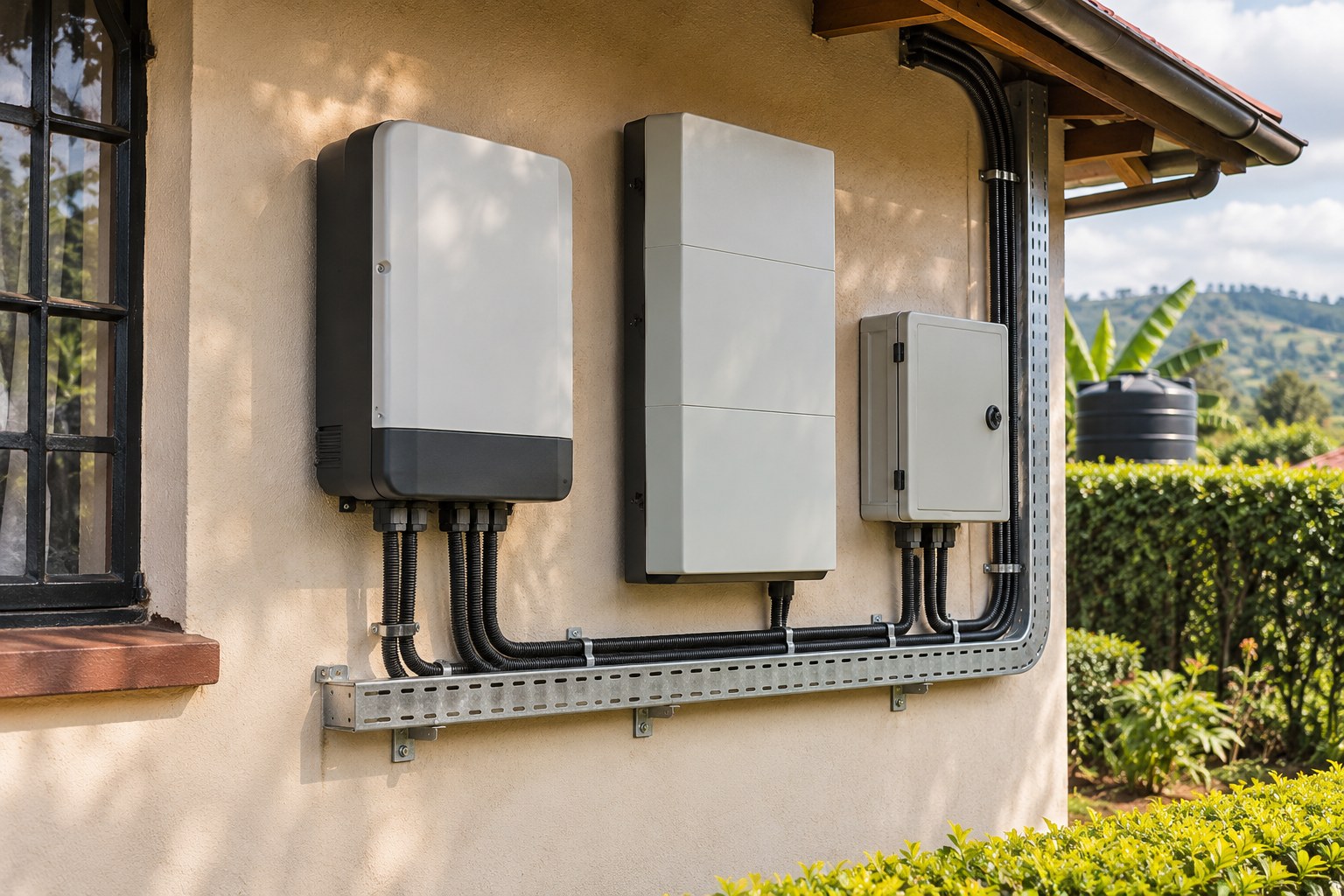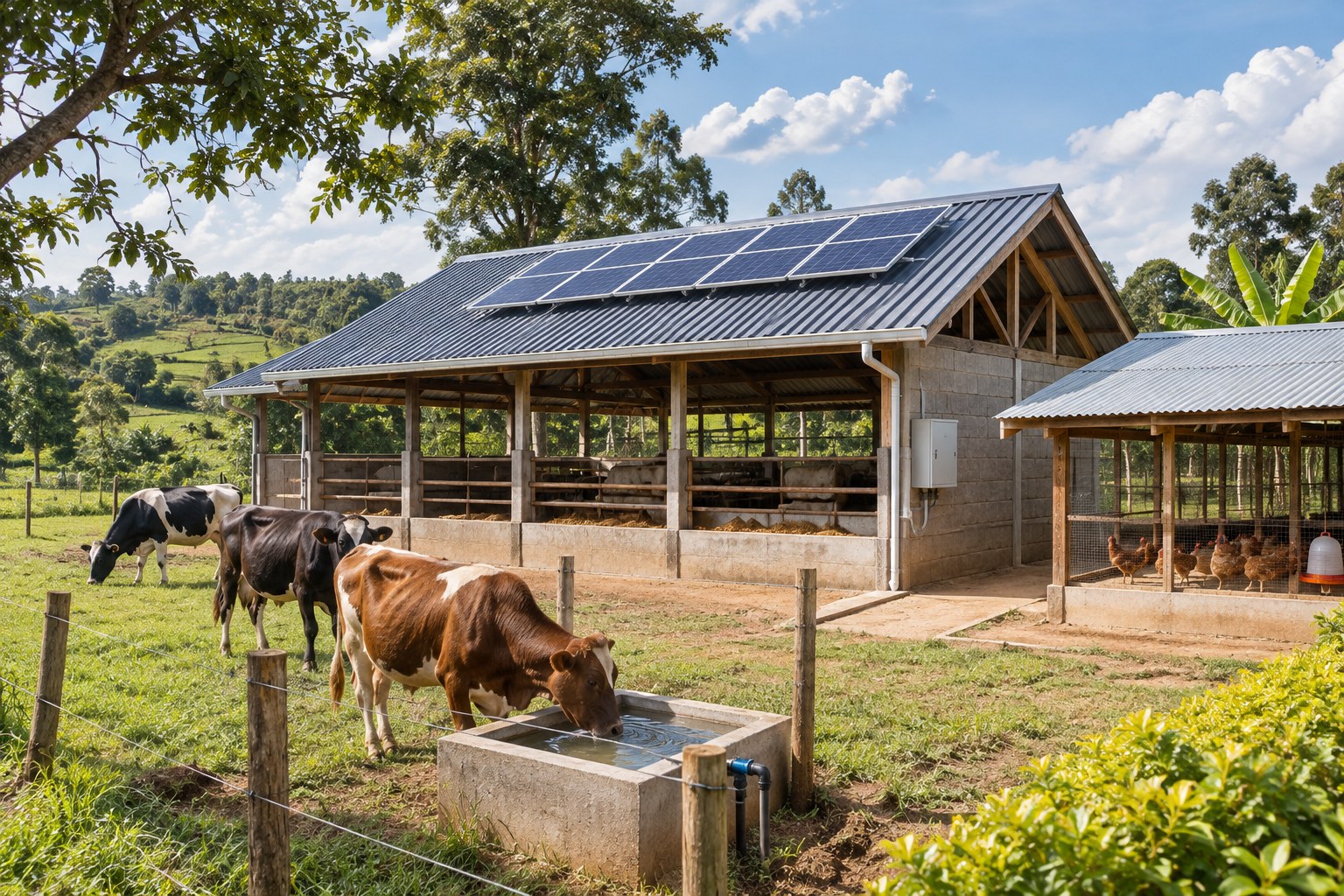
If you are assessing dairy farm solar power schedule, start with which farm activities can safely change time. Build one operating schedule for milking, cleaning, pumping and cooling; these demands can coincide at times of limited generation.
This decision guide was reviewed on 24 November 2026. The worked scenario is illustrative. It is not a measured customer result, an equipment recommendation or a company price offer.
Dairy farm solar power schedule: the decision to resolve
The practical question is whether the proposed arrangement demonstrates which farm activities can safely change time. Begin with the service you need, then ask what evidence would confirm that the proposal can provide it. Avoid replacing that question with a panel count, a product label or an unexplained system-size recommendation.
| Evidence to prepare | How to make the record useful |
|---|---|
| Milking times | Provide the actual source record and its date. Distinguish a measurement from an assumption, and identify anything that may change before installation. |
| Water demand | Use the relevant units and operating period. Include the limiting condition as well as the convenient survey-day condition. |
| Cooling batches | Supply model-specific information where equipment is involved. Keep document revisions and the party responsible for confirming the information. |
| Washdown schedule | State the required service and who approves it. Record unresolved questions so the quotation does not silently treat them as settled facts. |
A worked example for dairy farm solar power schedule
If pumping can move to midday but milk cooling cannot wait, prioritise the time-sensitive process and examine water storage as a scheduling tool. Do not shift a food-safety-critical operation merely to use more solar.
The lesson is the role of which farm activities can safely change time, not the purchase of a particular product. Replace the scenario assumptions with your own records before making a commitment. Ask the responsible designer to show which conclusion changes when the demand, timing or site condition changes. A sound quotation should make that reasoning visible.
Keep customer decisions separate from hazardous technical work
A customer can define needs, inspect documents and report observed symptoms without opening equipment or changing protective settings. Work on live circuits, high-voltage batteries, roofs, pressurised systems and other hazardous installations requires the appropriate qualified personnel and a safe method. A buying guide should not turn a design question into an improvised repair instruction.
For existing faults, record alarms, times and normal operating conditions from safe accessible interfaces. Report visible damage or unusual behaviour through the agreed service route. Follow the approved emergency instructions if the situation presents an immediate hazard. During procurement, ask for the professional test and commissioning evidence that relates to the actual installation. This gives the owner useful assurance without asking them to perform unsafe demonstrations.
Confirm the logistics for the actual property
A county or town name is not a complete service brief. Provide the exact property location, access arrangements and any restrictions that affect a survey or installation. Confirm availability, travel terms and responsibilities directly with the business. Do not assume a local office, fixed travel charge or guaranteed attendance time from a regional marketing label.
For farms and remote properties, road conditions, equipment delivery and access for future maintenance deserve early attention. For urban sites, occupancy, security checks and working hours can be equally important. Record these constraints in the project brief so the quotation reflects the real visit. The useful outcome is a practical survey and delivery plan, not a near-duplicate location article promising the same package everywhere.
Define an observable acceptance test
Acceptance should demonstrate the service the customer agreed to buy. Identify the test conditions, measurements, responsible witnesses and the evidence that will be retained. A dashboard showing normal status is useful, but it may not prove backup duration, delivered water, temperature continuity or a correctly functioning control sequence.
In practice, the test needs appropriate professional planning. Do not ask a customer to create unsafe faults, alter live wiring or bypass protection. Instead, have competent personnel test the agreed functions through a supported procedure. Record defects and the authority for return to service. If conditions prevent a meaningful performance test on the first visit, document the outstanding verification rather than quietly treating it as complete. A clear acceptance record protects both the buyer and the contractor.
Separate the electricity bill into relevant components
Use the customer's actual tariff category and bill history when estimating avoided costs. The average amount paid divided by imported kWh may combine energy charges with other items. A reduction in energy imports does not necessarily remove every charge. Demand-related charges also require attention to when the site's peak occurs.
For example, a PV array may reduce daytime purchases without eliminating an evening demand peak. Show self-consumed energy, approved exports and remaining purchases separately. Use current applicable information from the utility and regulator. Where that evidence is missing, retain a clearly labelled assumption rather than presenting it as the current Kenyan electricity price. A transparent estimate explains the relationship between the physical energy model and the financial calculation.
Further reading: EPRA electricity tariff guidance.
Read the remedy and claim conditions
A warranty length is only part of the comparison. Identify the responsible party, the covered component, operating conditions, exclusions and the remedy. Equipment defects, installation workmanship and performance undertakings can belong to different documents. Transport, access, diagnosis and replacement labour may also receive different treatment.
Before purchase, ask how a claim would proceed at the actual site. Keep serial numbers, invoices, commissioning records and maintenance evidence in the required form. Also consider the operating consequence while a claim is assessed. A long warranty does not by itself promise rapid restoration of service. Where continuity matters, discuss a separately defined support or temporary-supply arrangement. Never assume that a generic brochure overrides the specific terms supplied with the proposed equipment.
Choose a reserve policy and a recharge strategy
A backup reserve keeps some energy available for an interruption. This can reduce the energy used for routine bill reduction. The useful choice depends on essential demand, outage experience and the opportunity to recharge. There is no single reserve percentage that suits every home or business. Agree the objective before settings are chosen.
Then consider what happens after a long discharge. The system must supply ongoing loads while restoring the reserve. A design that balances an average day may recover slowly after several weak-generation days. State whether grid or generator charging is available and supported. Ask how operators recognise a low reserve and which actions are authorised. The customer's instructions should explain normal use and escalation, while configuration changes remain with the competent service provider.
Plan access for the life of the installation
Installation access and maintenance access are not always the same. Equipment may be easy to position during construction but difficult to inspect or replace later. Ask how authorised personnel will reach the relevant assets, isolate them safely and carry out the expected service work. Include any necessary access equipment in the cost comparison.
Also consider ordinary use of the property. Vehicle routes, roof access, water collection, storage areas and emergency paths should remain appropriate to the building or site. A layout that maximises equipment count may still be poor if it obstructs these functions. Have the responsible specialists coordinate the arrangement before purchase. This protects the usefulness of the installed system and avoids discovering an expensive access problem at the first maintenance visit.
Keep a handover file that matches the installed system
The customer should receive records for the equipment actually installed, not only the products originally proposed. Keep model and serial details, as-built drawings, commissioning results, warranty terms, approved operator instructions and the service contact route together. Record changes made during construction so later maintenance does not rely on an obsolete diagram.
Moreover, assign custody of the file to an accountable person or organisation. Staff, caretakers and service providers can change. Monitoring access should transfer through an authorised process rather than depend on somebody's private password. A well organised handover supports future troubleshooting and procurement decisions. It does not authorise unqualified users to open electrical equipment or change technical settings; the operator's instructions should make that boundary clear.
Turn the evidence into a clear go-or-no-go decision
For dairy farm solar power schedule, require an explanation of which farm activities can safely change time in the written proposal. A useful answer connects the project records to a stated service boundary. If essential information is missing, the next decision is to obtain the measurement or professional review that resolves it, rather than choose equipment around an optimistic guess.
- Proceed when the relevant evidence supports the proposed service and the responsible parties have closed material design questions.
- Revise the scope when the worked assumptions do not match the real site, operating pattern or equipment limits.
- Request further assessment when permissions, condition, compatibility or critical-service requirements remain unresolved.
Questions buyers ask
What should I prepare before requesting a quotation?
For this assessment, prepare milking times, water demand, cooling batches and washdown schedule. Explain the required outcome and any known limitations. Send records from safe accessible sources; a qualified person should collect hazardous measurements or inspect restricted equipment.
What matters most when comparing dairy farm solar power schedule?
Build one operating schedule for milking, cleaning, pumping and cooling; these demands can coincide at times of limited generation. Compare the alternatives against the same defined service and ask for model-specific supporting evidence. Where proposals use different assumptions, have those differences made explicit before comparing totals.
Can I use the worked example as my final design or price?
No. The example explains a decision method and uses stated assumptions. Your site may have different operating conditions, equipment limits and scope. A final design and quotation need the relevant assessment, written inclusions and applicable approvals.
Prepare your project-specific enquiry
Review our solar for poultry and dairy farms information, then request a site survey with the records listed above. For dairy farm solar power schedule, explain the required outcome, the property location and the operating constraints. Ask for a written scope, assumptions and exclusions before you commit to equipment.
The solar calculator can help organise a preliminary energy enquiry. Treat its result as an estimate and supply actual load and site records for the final assessment.
Reference: EPRA renewable-energy licensing information.
Reference: National Laboratory of the Rockies: photovoltaic performance modelling.