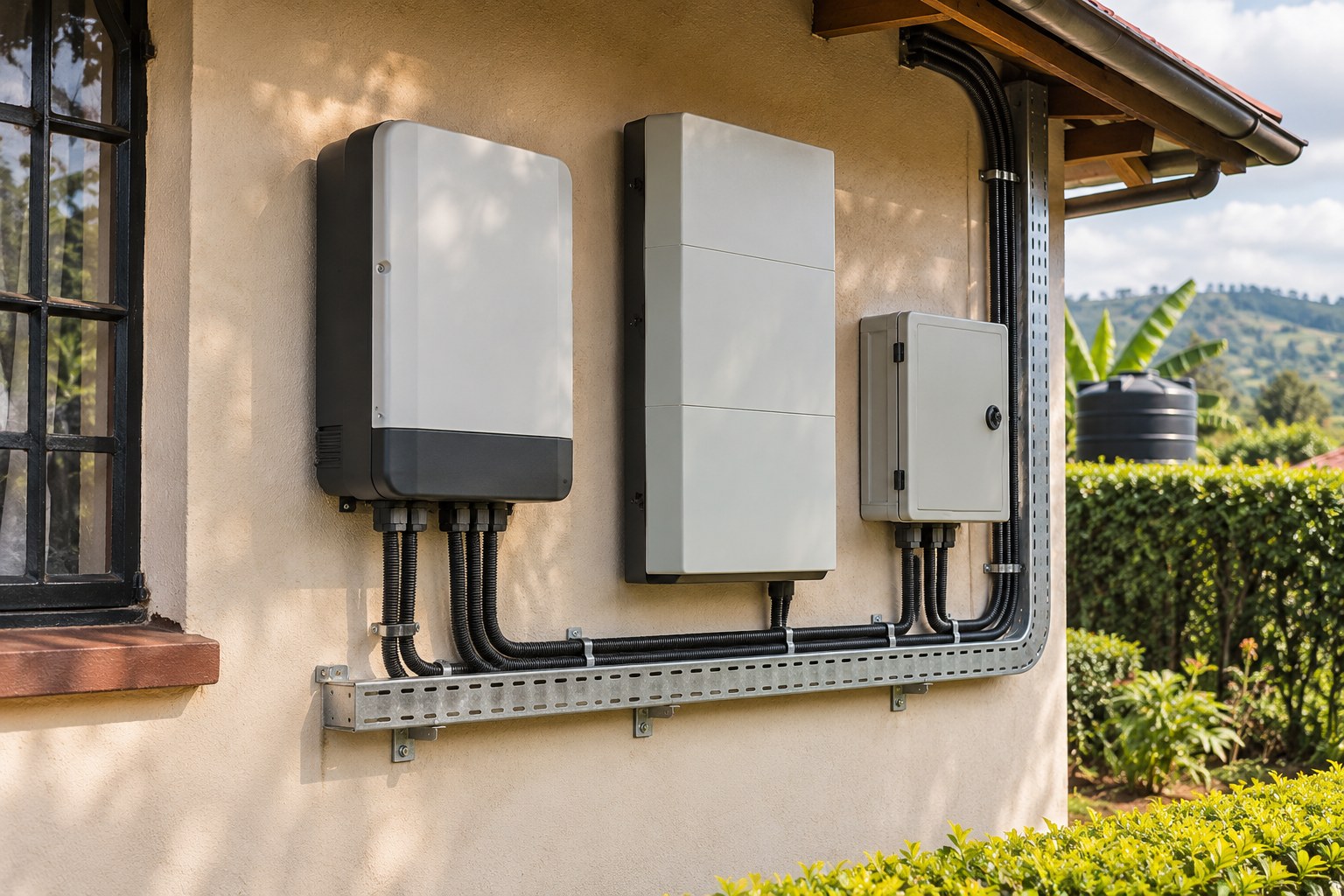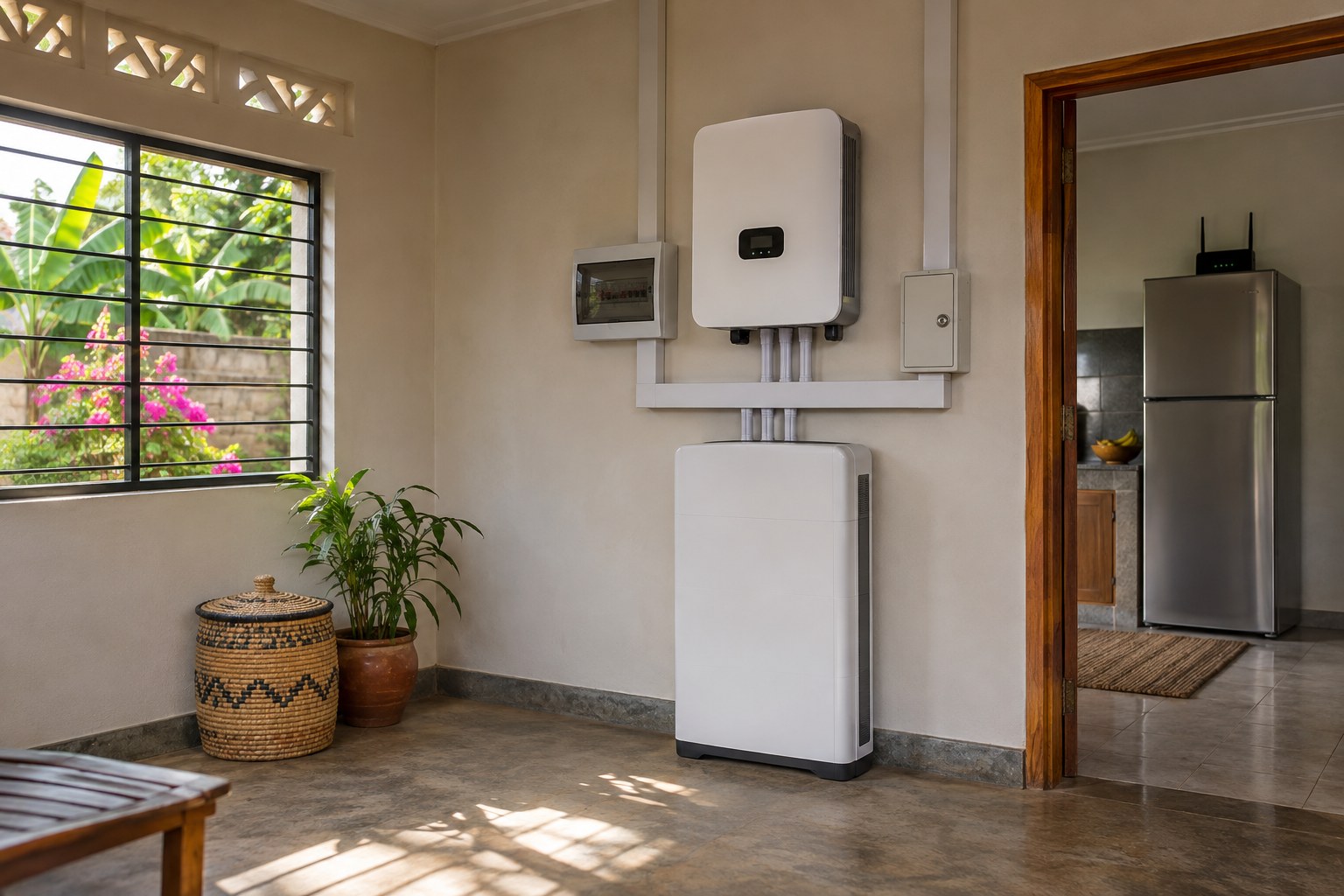
If you are assessing essential circuits vs whole-house backup, start with deliberate separation of essential and discretionary demand. Separating essential loads often makes a limited battery more useful. Whole-house backup must address heaters, cookers, pumps and simultaneous demand as well as ordinary sockets.
This decision guide was reviewed on 24 November 2026. The worked scenario is illustrative. It is not a measured customer result, an equipment recommendation or a company price offer.
Essential circuits vs whole-house backup: the decision to resolve
The practical question is whether the proposed arrangement demonstrates deliberate separation of essential and discretionary demand. Begin with the service you need, then ask what evidence would confirm that the proposal can provide it. Avoid replacing that question with a panel count, a product label or an unexplained system-size recommendation.
| Evidence to prepare | How to make the record useful |
|---|---|
| Essential circuit list | Provide the actual source record and its date. Distinguish a measurement from an assumption, and identify anything that may change before installation. |
| Large resistive loads | Use the relevant units and operating period. Include the limiting condition as well as the convenient survey-day condition. |
| Motor loads | Supply model-specific information where equipment is involved. Keep document revisions and the party responsible for confirming the information. |
| Household operating rules | State the required service and who approves it. Record unresolved questions so the quotation does not silently treat them as settled facts. |
A worked example for essential circuits vs whole-house backup
A 3 kW kettle running for ten minutes uses 0.5 kWh. That brief convenience can consume the same energy as a 50 W communications and lighting load running for ten hours.
The lesson is the role of deliberate separation of essential and discretionary demand, not the purchase of a particular product. Replace the scenario assumptions with your own records before making a commitment. Ask the responsible designer to show which conclusion changes when the demand, timing or site condition changes. A sound quotation should make that reasoning visible.
Define what backup means at the actual outlets
The word backup needs a circuit-level definition. Some installations support selected essential loads, while others have a broader supply arrangement. An ordinary grid-following PV inverter does not become an independent power source simply because the sun is shining. Grid failure and safe islanded operation require a specifically supported design.
Ask the contractor to identify the backed-up outlets and any loads that remain off during an outage. Also ask about transfer behaviour, restart conditions and low-energy operation. Test the agreed service chain, including networking or controls needed by the main appliance. A camera that stays powered while its recorder fails is not a functioning recording service. A handover demonstration should therefore follow the customer's real operating need rather than display only a running inverter screen.
Use monitoring to answer a defined operating question
A monitoring system is most useful when the owner knows what each value means. Generation, consumption, import, export, battery flow and state of charge describe different things. The sensor location and the software's definitions matter. Ask the installer to demonstrate the measurements needed for the customer's actual decisions.
Also check what happens when communications fail. Local data storage, remote alerts and historical export can have different availability. Agree who owns the account and who is authorised to receive alerts. A graph can help detect an unusual trend, but it does not replace appropriate physical testing or establish the cause of every fault. Use the records to support a targeted professional assessment, with timestamps and relevant operating context.
Define an observable acceptance test
Acceptance should demonstrate the service the customer agreed to buy. Identify the test conditions, measurements, responsible witnesses and the evidence that will be retained. A dashboard showing normal status is useful, but it may not prove backup duration, delivered water, temperature continuity or a correctly functioning control sequence.
In practice, the test needs appropriate professional planning. Do not ask a customer to create unsafe faults, alter live wiring or bypass protection. Instead, have competent personnel test the agreed functions through a supported procedure. Record defects and the authority for return to service. If conditions prevent a meaningful performance test on the first visit, document the outstanding verification rather than quietly treating it as complete. A clear acceptance record protects both the buyer and the contractor.
Keep removed equipment in a traceable disposal chain
When batteries or electrical equipment leave the site, identify who takes custody and what record the owner receives. The new product's delivery note is not evidence of responsible handling of the old one. Ask for the appropriate collection or disposal documentation and use suitable authorised operators for the relevant waste.
The record should distinguish reuse, repair, return to supplier and disposal where those apply. Avoid unsupported claims that a removed asset has been recycled simply because it was collected. Keep the transfer evidence with the service or replacement file. NEMA's published guidance identifies batteries and electronic waste among the materials that require appropriate handling; confirm the applicable current requirements for the actual waste stream.
Further reading: NEMA: appropriate handling of batteries and electronic waste.
Keep a handover file that matches the installed system
The customer should receive records for the equipment actually installed, not only the products originally proposed. Keep model and serial details, as-built drawings, commissioning results, warranty terms, approved operator instructions and the service contact route together. Record changes made during construction so later maintenance does not rely on an obsolete diagram.
Moreover, assign custody of the file to an accountable person or organisation. Staff, caretakers and service providers can change. Monitoring access should transfer through an authorised process rather than depend on somebody's private password. A well organised handover supports future troubleshooting and procurement decisions. It does not authorise unqualified users to open electrical equipment or change technical settings; the operator's instructions should make that boundary clear.
Keep one auditable version of the project budget
A useful budget separates the agreed base scope from provisional items, optional improvements and exclusions. Record the quotation date, currency, tax basis, validity and payment milestones. If a figure is an educational assumption, label it as such. Do not convert it into a claimed company price or market average without supporting evidence.
As survey findings change, revise the budget visibly. A roof repair, longer cable route or revised water duty can alter the project for legitimate reasons. Keep the customer's approved changes together with the final equipment and commissioning scope. This allows the customer to compare the delivered service with the original decision, instead of discovering at handover that important supporting work was never included in the headline figure.
Classify critical services with the responsible specialist
Critical-load classification belongs to the people accountable for the service, working with competent technical specialists. A hospital, laboratory, telecom site and domestic home can all need backup, but their permitted interruptions and recovery procedures differ. Do not translate a generic number of backup hours into a promise of uninterrupted operation at every outlet.
Map the whole service chain. Cooling, communications, control equipment and existing UPS interfaces may be essential to the main appliance. Then agree what happens during transfer, low reserve and failure of a supporting component. The acceptance plan should demonstrate the approved arrangement under suitable professional supervision. This provides a clearer assurance than describing the whole building as backed up without identifying what that actually means.
Keep data intervals, timestamps and meter boundaries consistent
A useful operating record identifies the quantity, measurement point, units and time basis. Import, generation, export and storage flow should not be mixed casually. If different files use different timezones or intervals, align them before comparing the values. Otherwise a calculation can assign production to the wrong consumption period.
Next, check for gaps, resets, duplicated readings or estimates. Preserve the original export and explain how any cleaning or aggregation was done. This is especially important when data support a savings, warranty or performance claim. A chart is a helpful presentation, but the underlying records make the conclusion auditable. Ask for export access and a retention arrangement that survives a change of staff or service provider.
Turn the evidence into a clear go-or-no-go decision
For essential circuits vs whole-house backup, require an explanation of deliberate separation of essential and discretionary demand in the written proposal. A useful answer connects the project records to a stated service boundary. If essential information is missing, the next decision is to obtain the measurement or professional review that resolves it, rather than choose equipment around an optimistic guess.
- Proceed when the relevant evidence supports the proposed service and the responsible parties have closed material design questions.
- Revise the scope when the worked assumptions do not match the real site, operating pattern or equipment limits.
- Request further assessment when permissions, condition, compatibility or critical-service requirements remain unresolved.
Questions buyers ask
What should I prepare before requesting a quotation?
For this assessment, prepare essential circuit list, large resistive loads, motor loads and household operating rules. Explain the required outcome and any known limitations. Send records from safe accessible sources; a qualified person should collect hazardous measurements or inspect restricted equipment.
What matters most when comparing essential circuits vs whole-house backup?
Separating essential loads often makes a limited battery more useful. Whole-house backup must address heaters, cookers, pumps and simultaneous demand as well as ordinary sockets. Compare the alternatives against the same defined service and ask for model-specific supporting evidence. Where proposals use different assumptions, have those differences made explicit before comparing totals.
Can I use the worked example as my final design or price?
No. The example explains a decision method and uses stated assumptions. Your site may have different operating conditions, equipment limits and scope. A final design and quotation need the relevant assessment, written inclusions and applicable approvals.
Prepare your project-specific enquiry
Review our home solar backup information, then request a site survey with the records listed above. For essential circuits vs whole-house backup, explain the required outcome, the property location and the operating constraints. Ask for a written scope, assumptions and exclusions before you commit to equipment.
The solar calculator can help organise a preliminary energy enquiry. Treat its result as an estimate and supply actual load and site records for the final assessment.
Reference: EPRA renewable-energy licensing information.
Reference: National Laboratory of the Rockies: photovoltaic performance modelling.