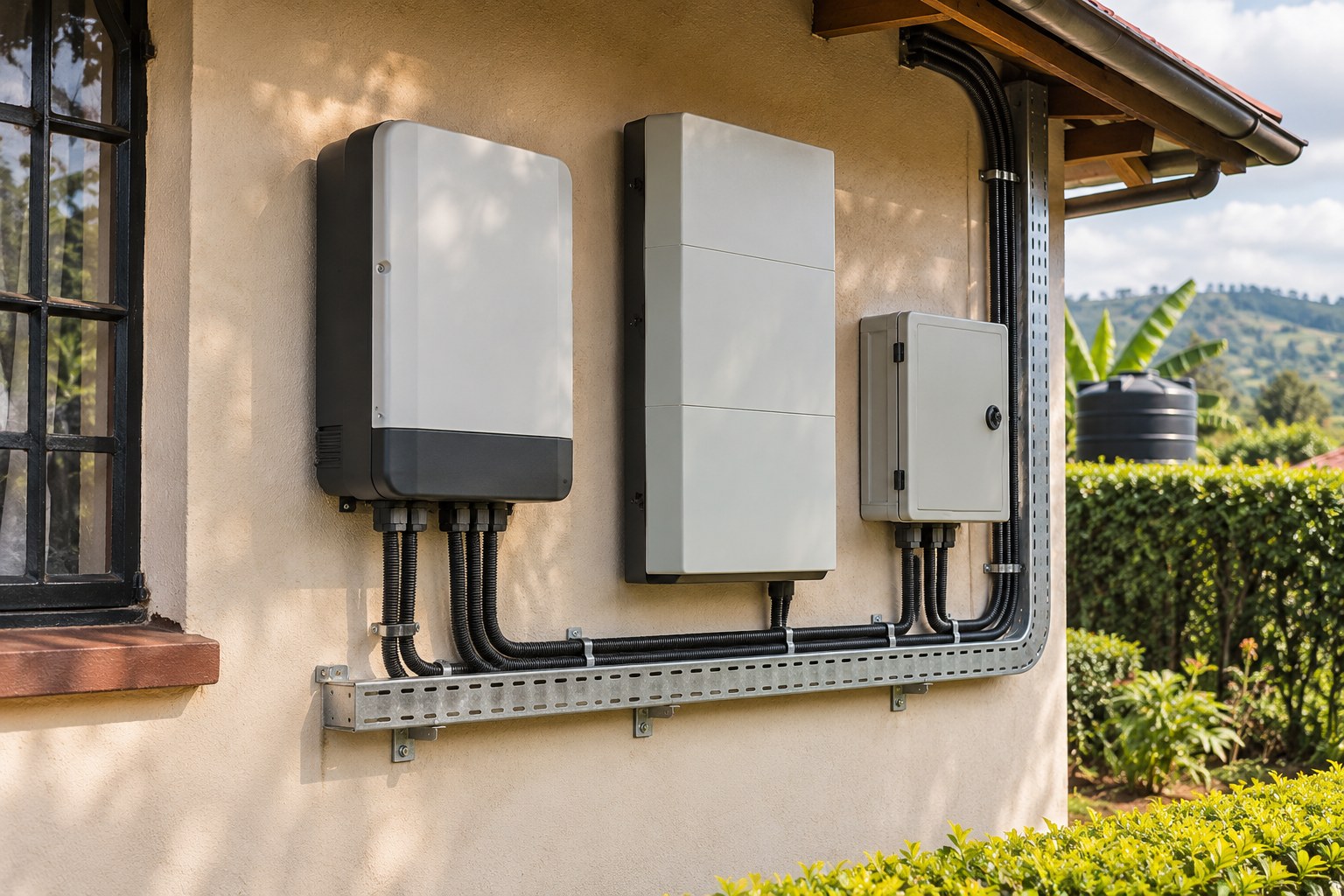
If you are assessing gate and fence backup maintenance handover, start with whole-service acceptance rather than isolated device tests. Handover should identify each security subsystem, its backup source, inspection owner and failure escalation. A functioning gate demonstration is not a complete estate security acceptance test.
This decision guide was reviewed on 24 November 2026. The worked scenario is illustrative. It is not a measured customer result, an equipment recommendation or a company price offer.
Gate and fence backup maintenance handover: the decision to resolve
The practical question is whether the proposed arrangement demonstrates whole-service acceptance rather than isolated device tests. Begin with the service you need, then ask what evidence would confirm that the proposal can provide it. Avoid replacing that question with a panel count, a product label or an unexplained system-size recommendation.
| Evidence to prepare | How to make the record useful |
|---|---|
| Asset register | Provide the actual source record and its date. Distinguish a measurement from an assumption, and identify anything that may change before installation. |
| Backup topology | Use the relevant units and operating period. Include the limiting condition as well as the convenient survey-day condition. |
| Test records | Supply model-specific information where equipment is involved. Keep document revisions and the party responsible for confirming the information. |
| Responsible caretaker | State the required service and who approves it. Record unresolved questions so the quotation does not silently treat them as settled facts. |
A worked example for gate and fence backup maintenance handover
Consider an estate where the gate motor is battery-backed but the intercom router remains on an unprotected socket. The gate may still move during an outage while visitor identification fails. Test the complete agreed service chain.
The lesson is the role of whole-service acceptance rather than isolated device tests, not the purchase of a particular product. Replace the scenario assumptions with your own records before making a commitment. Ask the responsible designer to show which conclusion changes when the demand, timing or site condition changes. A sound quotation should make that reasoning visible.
Write down the operating rules people actually need
A useful operator guide explains normal states, permitted user actions, alarms and the route for help. It should use the labels and interfaces found on the actual installation. Avoid a handover that consists only of manufacturer manuals for components the customer is not expected to configure.
For example, the owner may need to recognise a normal stopped pump, a low reserve or a lost monitoring connection. The guide should explain what information to report and when professional attendance is required. It should not encourage unsafe resets, bypasses or live work. Assign a responsible operator and a backup contact where staff or caretakers change. Clear instructions help people use the agreed service without inventing their own operating procedures.
Define what backup means at the actual outlets
The word backup needs a circuit-level definition. Some installations support selected essential loads, while others have a broader supply arrangement. An ordinary grid-following PV inverter does not become an independent power source simply because the sun is shining. Grid failure and safe islanded operation require a specifically supported design.
Ask the contractor to identify the backed-up outlets and any loads that remain off during an outage. Also ask about transfer behaviour, restart conditions and low-energy operation. Test the agreed service chain, including networking or controls needed by the main appliance. A camera that stays powered while its recorder fails is not a functioning recording service. A handover demonstration should therefore follow the customer's real operating need rather than display only a running inverter screen.
Price maintenance as an operating service
Maintenance needs a scope, not just a visit count. Distinguish visual inspection, testing, cleaning, monitoring review, adjustments by authorised personnel and repair work. State whether access equipment, travel, parts and emergency attendance are included. The appropriate programme depends on the installation and its documented requirements.
Then connect the visit to a useful report. Findings, measurements, defects, recommended actions and completed work should identify the relevant assets. Keep the records with the handover file. This allows the owner to compare performance over time and follow warranty conditions. It also makes the difference between planned preventive work and an unplanned repair clear. Avoid promising that routine maintenance eliminates all faults or extends every component's life by a fixed number of years.
Give measurements an identifiable source and date
Useful design evidence has a source, a date, a measurement point and units. Record whether each figure comes from a meter, manufacturer document, site survey or customer estimate. This helps a designer recognise which inputs are reliable and which need checking. It also prevents a preliminary assumption from becoming an undocumented contractual promise.
For instance, a motor's printed rating describes a different quantity from measured average operating energy. A tank's nominal capacity may differ from the usable volume between its operating levels. A screenshot without a time range may conceal gaps or unusual operation. Supply the original records where practical and explain any known limitations. Good evidence does not need to be elaborate; it needs to make the underlying service requirement and the uncertainty understandable.
Use measured usable roof space
Gross roof area is not the same as available array area. Obstructions, shading, rooflights, access routes and the building's condition can reduce the space that is usable. The survey should record these constraints before a panel count is promised. Actual module dimensions then need to be fitted into an approved layout.
Furthermore, the roof covering does not describe the whole supporting structure. A competent assessment must consider the proposed load path and attachment arrangement. Ask how existing defects, waterproofing and any roof warranty will be handled. The resulting drawing should preserve safe access for future service work. This is a procurement and coordination question for the owner; it is not a reason for an unqualified person to climb onto the roof or inspect live installation equipment.
Judge cleaning against site conditions and a fair comparison
Cleaning requirements vary with exposure, manufacturer guidance and safe access. Dust, deposits and local conditions do not affect every array equally. Use inspection findings and relevant operating records to decide whether an intervention is justified. A fixed interval copied from another roof is not evidence of the appropriate schedule for this one.
If production is compared before and after cleaning, account for the change in solar conditions and any other work performed. A sunnier day can improve output independently of cleaning. Keep the scope clear: surface cleaning is not automatically a complete electrical inspection or repair. Qualified contractors should define safe access and the approved method, while the customer receives useful evidence of completed work and any defects observed.
Tie commissioning results to identified equipment
Commissioning records should identify the installation, the relevant equipment, the date and the person responsible. Measurements and tests need an appropriate professional method and a clear acceptance basis. A generic form with unexplained ticks provides less useful evidence than results tied to the actual system and its design requirements.
Keep unresolved findings visible. If an item needs correction or later verification, record who owns the action and when it will be closed. The customer should understand whether the system is accepted, accepted with agreed outstanding items or not yet ready for normal service. This does not require the owner to repeat hazardous tests. It requires a coherent record that supports safe operation, later maintenance and accountability for the installed work.
Use more than one representative operating condition
Demand and available resources can change through the year. A school, farm, hotel and family home may each have busy and quiet periods. Identify the conditions that matter to the proposed service instead of extending a single favourable day across the whole annual forecast. The same principle applies to source water levels and access conditions.
Then distinguish a normal operating case from a limiting case and a contingency case. Explain which one determines equipment capacity and which one tests resilience. This makes the decision more transparent without pretending that a model predicts every future event. Where local evidence is unavailable, state the assumption and arrange the relevant survey or measurement rather than presenting a regional generalisation as a verified site fact.
Turn the evidence into a clear go-or-no-go decision
For gate and fence backup maintenance handover, require an explanation of whole-service acceptance rather than isolated device tests in the written proposal. A useful answer connects the project records to a stated service boundary. If essential information is missing, the next decision is to obtain the measurement or professional review that resolves it, rather than choose equipment around an optimistic guess.
- Proceed when the relevant evidence supports the proposed service and the responsible parties have closed material design questions.
- Revise the scope when the worked assumptions do not match the real site, operating pattern or equipment limits.
- Request further assessment when permissions, condition, compatibility or critical-service requirements remain unresolved.
Questions buyers ask
What should I prepare before requesting a quotation?
For this assessment, prepare asset register, backup topology, test records and responsible caretaker. Explain the required outcome and any known limitations. Send records from safe accessible sources; a qualified person should collect hazardous measurements or inspect restricted equipment.
What matters most when comparing gate and fence backup maintenance handover?
Handover should identify each security subsystem, its backup source, inspection owner and failure escalation. A functioning gate demonstration is not a complete estate security acceptance test. Compare the alternatives against the same defined service and ask for model-specific supporting evidence. Where proposals use different assumptions, have those differences made explicit before comparing totals.
Can I use the worked example as my final design or price?
No. The example explains a decision method and uses stated assumptions. Your site may have different operating conditions, equipment limits and scope. A final design and quotation need the relevant assessment, written inclusions and applicable approvals.
Prepare your project-specific enquiry
Review our solar gate motors and electric fence power information, then request a site survey with the records listed above. For gate and fence backup maintenance handover, explain the required outcome, the property location and the operating constraints. Ask for a written scope, assumptions and exclusions before you commit to equipment.
The solar calculator can help organise a preliminary energy enquiry. Treat its result as an estimate and supply actual load and site records for the final assessment.
Reference: EPRA renewable-energy licensing information.
Reference: National Laboratory of the Rockies: photovoltaic performance modelling.