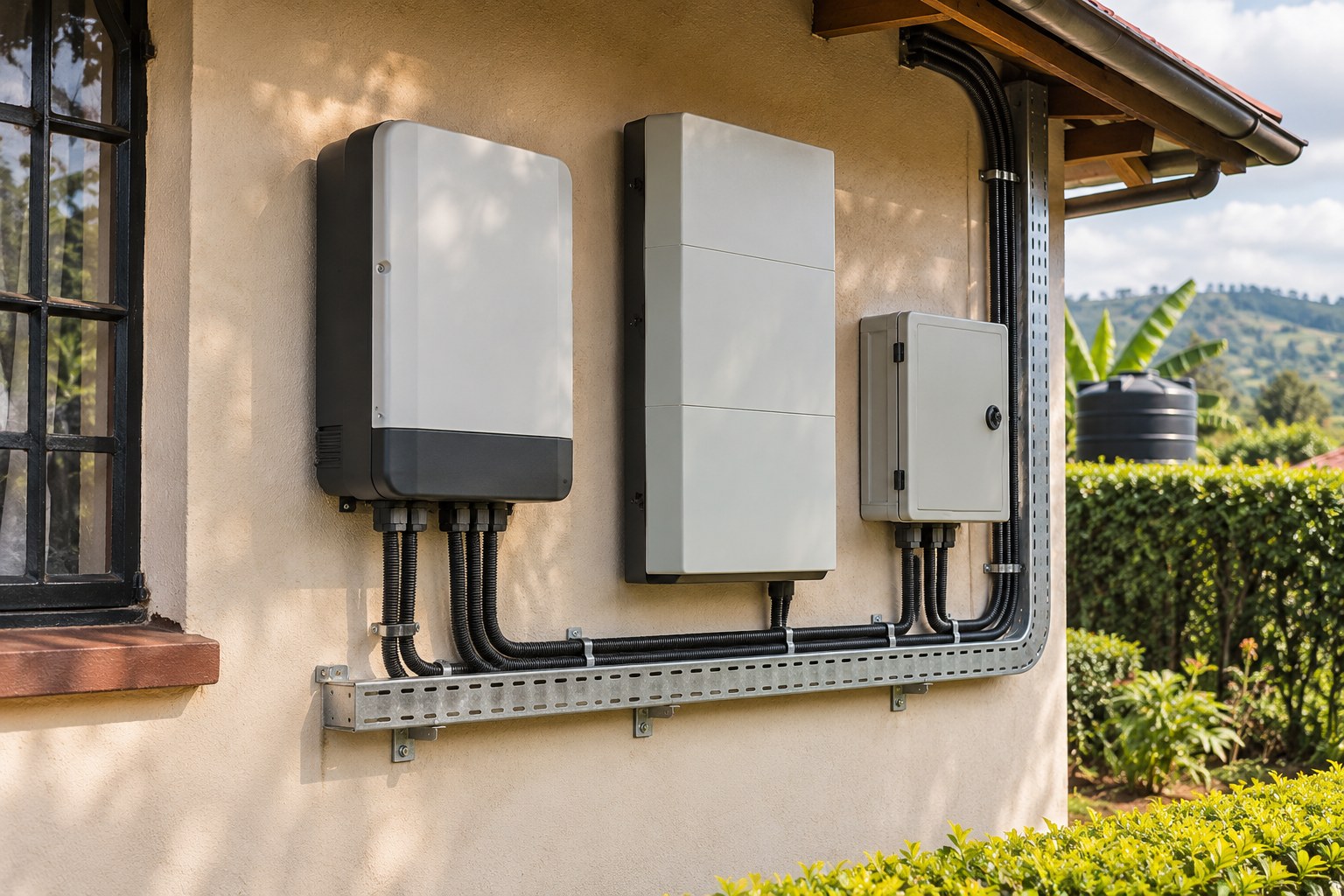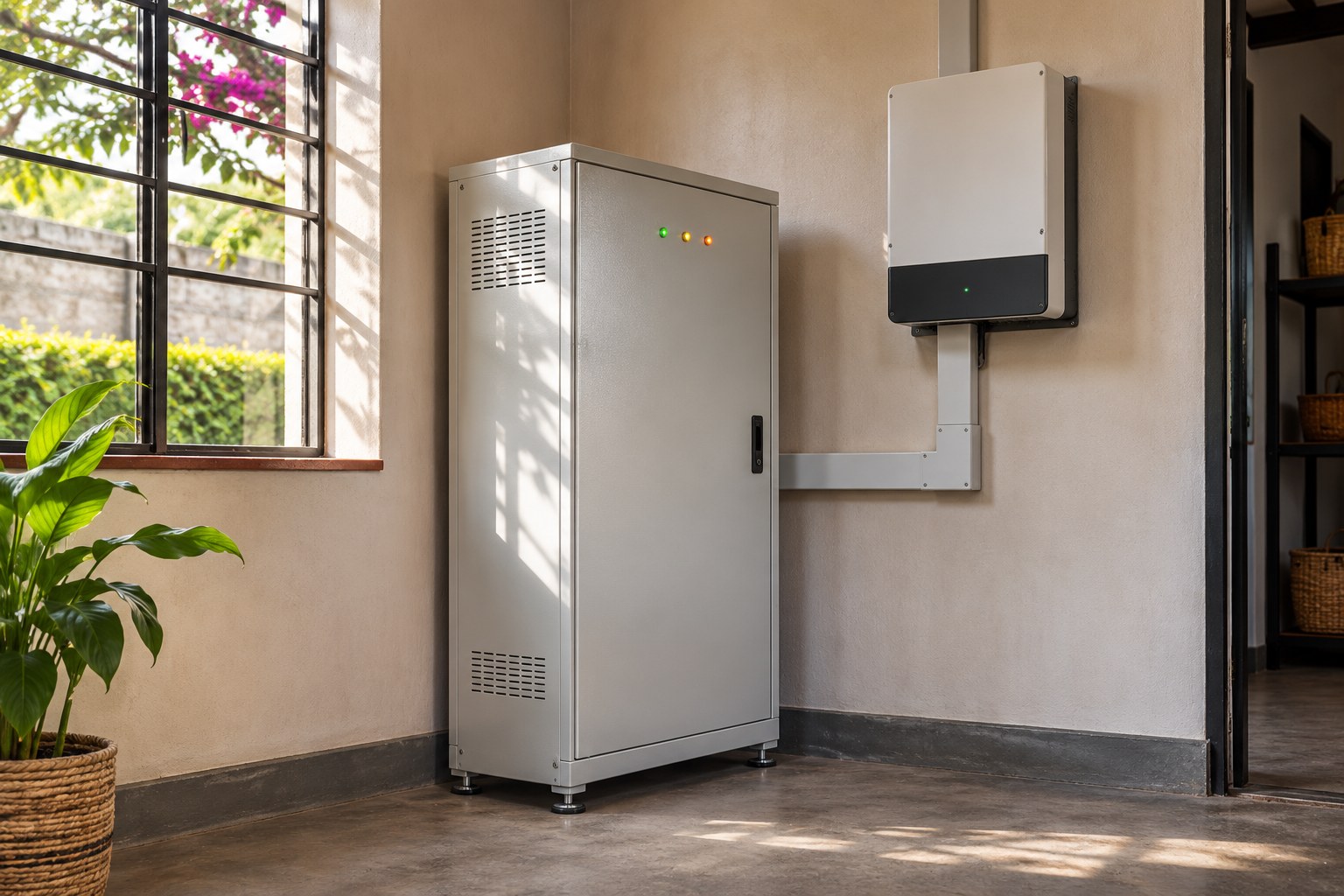
If you are assessing solar battery kWh vs kW, start with energy duration and power delivery as separate limits. kWh describes stored energy and kW describes delivery rate. A system needs enough of both for the intended load and duration.
This decision guide was reviewed on 24 November 2026. The worked scenario is illustrative. It is not a measured customer result, an equipment recommendation or a company price offer.
Solar battery kWh vs kW: the decision to resolve
The practical question is whether the proposed arrangement demonstrates energy duration and power delivery as separate limits. Begin with the service you need, then ask what evidence would confirm that the proposal can provide it. Avoid replacing that question with a panel count, a product label or an unexplained system-size recommendation.
| Evidence to prepare | How to make the record useful |
|---|---|
| Usable energy | Provide the actual source record and its date. Distinguish a measurement from an assumption, and identify anything that may change before installation. |
| Continuous power | Use the relevant units and operating period. Include the limiting condition as well as the convenient survey-day condition. |
| Peak power | Supply model-specific information where equipment is involved. Keep document revisions and the party responsible for confirming the information. |
| Backup duration | State the required service and who approves it. Record unresolved questions so the quotation does not silently treat them as settled facts. |
A worked example for solar battery kWh vs kW
A battery offering 5 kWh usable energy and 2.5 kW continuous output cannot be assumed to run a 4 kW load. A 1 kW load could theoretically use that energy for five hours before other allowances.
The lesson is the role of energy duration and power delivery as separate limits, not the purchase of a particular product. Replace the scenario assumptions with your own records before making a commitment. Ask the responsible designer to show which conclusion changes when the demand, timing or site condition changes. A sound quotation should make that reasoning visible.
Translate nameplate storage into usable service
Nominal battery energy is the starting point for an assessment, not the final amount available at the loads. The permitted operating window, starting charge, reserved energy and conversion losses affect useful delivery. Obtain the manufacturer's definitions so the same restriction is not applied twice. A figure already described as usable may include an allowance that another supplier applies separately.
However, an energy calculation still needs a power check. A large-capacity battery can have a relatively modest discharge limit. Temperature, state of charge and the supported system configuration may change available performance. Ask for the proposed service in plain terms: which loads, for how long, from what initial condition. Keep those assumptions beside the quoted capacity instead of treating a brand name or chemistry label as a runtime guarantee.
Further reading: US Department of Energy: solar energy and storage basics.
Build the energy budget from actual use
Energy and power answer different questions. Energy, measured in kWh, describes consumption over time. Power, measured in kW, describes the rate at a particular moment. Start with the service you need and its operating hours. Then calculate the energy for that defined period. A list of appliance ratings without durations is not a daily energy budget.
For example, a 100 W load running for ten hours consumes 1 kWh. That arithmetic does not establish battery size or inverter suitability. Add the other supported loads and distinguish measured consumption from estimates. Also record equipment that cycles on and off. A refrigerator's printed input rating should not be treated as a measurement of its average daily consumption.
Further reading: US Department of Energy: solar energy and storage basics.
Distinguish acknowledgement, attendance and restoration
Support promises need precise definitions. An acknowledged alarm, an engineer's arrival and restored service are different events. Parts availability, site access, communications and the cause of the fault can affect each one. Ask the provider to state the actual commitment and its conditions rather than relying on words such as immediate support.
For a remote or critical site, agree an escalation path and a practical contingency. Identify who can authorise access, which symptoms require urgent action and who manages the affected service until repair. Do not invent a response time that the business has not approved. A clear service arrangement is valuable precisely because it describes what can be delivered and what the customer must provide when something goes wrong.
Check simultaneous demand and starting capability
An installation can have enough stored energy yet fail to supply a particular operating combination. The inverter and battery must support the simultaneous load. Motors and some other equipment can add a short starting demand. Ask the designer to state the combinations the system supports, rather than relying on a single headline rating.
Next, separate continuous ratings from short-duration figures. A surge allowance has conditions and a time limit. It is not extra continuous capacity. The connected battery, wiring and protection also impose limits. Record whether a large appliance may operate while another starts. This gives the customer a useful operating boundary and provides a practical basis for the acceptance demonstration. Any live measurements or electrical tests belong to qualified personnel.
Assess the actual operating environment
Equipment ratings depend on defined conditions. Heat, ventilation, moisture, dust and the installation location can affect performance and maintenance. Ask the supplier to explain which environmental assumptions sit behind the proposed output and warranty. A product suitable for one location is not automatically suitable for every roof, plant room or outdoor enclosure.
For PV modules, sunlight and module temperature are different model inputs. For batteries and inverters, supported temperature ranges and any output reductions also matter. Leave the design of ventilation, protection and equipment placement to competent professionals. The buyer's task is to obtain the documented assessment and an accessible maintenance arrangement. Avoid treating a brief successful demonstration in mild conditions as evidence of full performance under the site's most demanding conditions.
Further reading: National Laboratory of the Rockies: photovoltaic performance modelling.
Choose a reserve policy and a recharge strategy
A backup reserve keeps some energy available for an interruption. This can reduce the energy used for routine bill reduction. The useful choice depends on essential demand, outage experience and the opportunity to recharge. There is no single reserve percentage that suits every home or business. Agree the objective before settings are chosen.
Then consider what happens after a long discharge. The system must supply ongoing loads while restoring the reserve. A design that balances an average day may recover slowly after several weak-generation days. State whether grid or generator charging is available and supported. Ask how operators recognise a low reserve and which actions are authorised. The customer's instructions should explain normal use and escalation, while configuration changes remain with the competent service provider.
Require support for the exact equipment combination
Compatibility is more than a matching voltage label or connector. Ask for the complete model codes, supported operating limits, communications requirements and relevant firmware versions. The documents should describe the combination being supplied. General statements that two manufacturers are compatible are weaker evidence than model-specific instructions.
In addition, establish who takes responsibility for integration. The battery manufacturer, inverter supplier and installer may have different warranty obligations. A working demonstration does not erase an unsupported configuration. Keep the relevant document revisions with the handover file. If any proposed substitution changes the model, controls or limits, ask for a fresh compatibility review before accepting it. Manufacturer guidance illustrates why these checks need to be specific; it is not a claim that the business has a partnership with that manufacturer.
Further reading: Victron Energy: battery compatibility documentation.
Read the remedy and claim conditions
A warranty length is only part of the comparison. Identify the responsible party, the covered component, operating conditions, exclusions and the remedy. Equipment defects, installation workmanship and performance undertakings can belong to different documents. Transport, access, diagnosis and replacement labour may also receive different treatment.
Before purchase, ask how a claim would proceed at the actual site. Keep serial numbers, invoices, commissioning records and maintenance evidence in the required form. Also consider the operating consequence while a claim is assessed. A long warranty does not by itself promise rapid restoration of service. Where continuity matters, discuss a separately defined support or temporary-supply arrangement. Never assume that a generic brochure overrides the specific terms supplied with the proposed equipment.
Turn the evidence into a clear go-or-no-go decision
For solar battery kWh vs kW, require an explanation of energy duration and power delivery as separate limits in the written proposal. A useful answer connects the project records to a stated service boundary. If essential information is missing, the next decision is to obtain the measurement or professional review that resolves it, rather than choose equipment around an optimistic guess.
- Proceed when the relevant evidence supports the proposed service and the responsible parties have closed material design questions.
- Revise the scope when the worked assumptions do not match the real site, operating pattern or equipment limits.
- Request further assessment when permissions, condition, compatibility or critical-service requirements remain unresolved.
Questions buyers ask
What should I prepare before requesting a quotation?
For this assessment, prepare usable energy, continuous power, peak power and backup duration. Explain the required outcome and any known limitations. Send records from safe accessible sources; a qualified person should collect hazardous measurements or inspect restricted equipment.
What matters most when comparing solar battery kWh vs kW?
kWh describes stored energy and kW describes delivery rate. A system needs enough of both for the intended load and duration. Compare the alternatives against the same defined service and ask for model-specific supporting evidence. Where proposals use different assumptions, have those differences made explicit before comparing totals.
Can I use the worked example as my final design or price?
No. The example explains a decision method and uses stated assumptions. Your site may have different operating conditions, equipment limits and scope. A final design and quotation need the relevant assessment, written inclusions and applicable approvals.
Prepare your project-specific enquiry
Review our solar batteries information, then request a site survey with the records listed above. For solar battery kWh vs kW, explain the required outcome, the property location and the operating constraints. Ask for a written scope, assumptions and exclusions before you commit to equipment.
The solar calculator can help organise a preliminary energy enquiry. Treat its result as an estimate and supply actual load and site records for the final assessment.