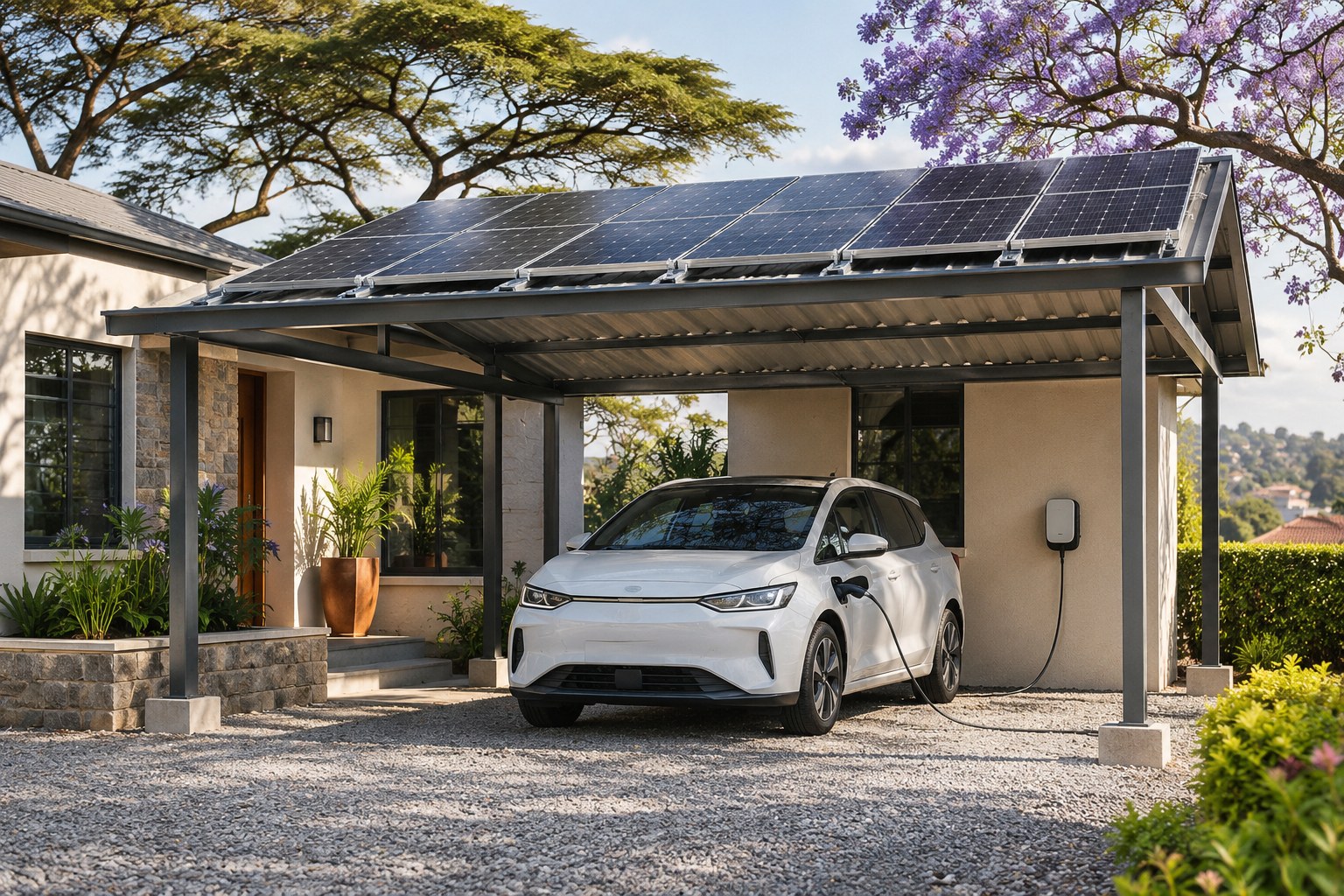
If you are assessing solar for two electric vehicles, start with staggered deadlines and managed charging priorities. Use coordinated charging and a shared daily energy budget before assuming that two cars require two chargers operating at maximum power simultaneously.
This decision guide was reviewed on 24 November 2026. The worked scenario is illustrative. It is not a measured customer result, an equipment recommendation or a company price offer.
Solar for two electric vehicles: the decision to resolve
The practical question is whether the proposed arrangement demonstrates staggered deadlines and managed charging priorities. Begin with the service you need, then ask what evidence would confirm that the proposal can provide it. Avoid replacing that question with a panel count, a product label or an unexplained system-size recommendation.
| Evidence to prepare | How to make the record useful |
|---|---|
| Two travel schedules | Provide the actual source record and its date. Distinguish a measurement from an assumption, and identify anything that may change before installation. |
| Arrival state of charge | Use the relevant units and operating period. Include the limiting condition as well as the convenient survey-day condition. |
| Departure deadlines | Supply model-specific information where equipment is involved. Keep document revisions and the party responsible for confirming the information. |
| Household supply limit | State the required service and who approves it. Record unresolved questions so the quotation does not silently treat them as settled facts. |
A worked example for solar for two electric vehicles
Car A needs 10 kWh by 07:00 and car B needs 14 kWh by 16:00. A 24 kWh daily charging requirement is an energy total, not a demand for 24 kW of simultaneous inverter output.
The lesson is the role of staggered deadlines and managed charging priorities, not the purchase of a particular product. Replace the scenario assumptions with your own records before making a commitment. Ask the responsible designer to show which conclusion changes when the demand, timing or site condition changes. A sound quotation should make that reasoning visible.
Make expansion a defined design scenario
Future readiness needs a named scenario. Describe the additional equipment, operating hours, location and intended service rather than asking for an unspecified percentage of spare capacity. The relevant constraint may be power, energy, roof space, electrical connection, hydraulic duty or control compatibility.
An installation can have room for more modules while lacking capacity at another interface. Therefore, ask which items support the proposed later phase and which will need reassessment, replacement or further approval. Keep that distinction in the design and quotation. This helps the customer avoid paying now for an undefined capability while also preventing a future contractor from treating an old allowance as blanket permission for any expansion.
Compare installed scope rather than headline package names
Ask each bidder to define the same service boundary. Equipment, mounting, protection, cabling, labour, access, transport, approvals, testing and aftercare can appear in different places in a quotation. An equipment-only price is not directly comparable with a commissioned installation. Missing items can explain a price difference without showing that either option is better value.
Also obtain written exclusions and the basis of any taxes. The quote should identify the exact equipment and the customer's responsibilities. If the site needs roof repairs, civil work, a distribution-board change or additional investigations, establish who prices and approves that work. A useful comparison keeps these differences visible. The goal is a complete agreed service at an understood cost, rather than choosing the smallest number beside a familiar system-size label.
Judge cleaning against site conditions and a fair comparison
Cleaning requirements vary with exposure, manufacturer guidance and safe access. Dust, deposits and local conditions do not affect every array equally. Use inspection findings and relevant operating records to decide whether an intervention is justified. A fixed interval copied from another roof is not evidence of the appropriate schedule for this one.
If production is compared before and after cleaning, account for the change in solar conditions and any other work performed. A sunnier day can improve output independently of cleaning. Keep the scope clear: surface cleaning is not automatically a complete electrical inspection or repair. Qualified contractors should define safe access and the approved method, while the customer receives useful evidence of completed work and any defects observed.
Check professional responsibility and applicable permissions
Ask who is responsible for the professional design, installation and commissioning work and verify the relevant current authorisation. The appropriate competence depends on the activity and project. A company's marketing description is not a substitute for the supporting registration or licence information.
Also separate the equipment supplier's role from utility, water-resource, structural or other approvals that may apply. Buying equipment does not grant those permissions. Record any unresolved requirement in the project programme and establish who obtains it. Do not assume a standard approval time or claim a licence class that has not been verified. The regulator's published information is the starting point for checking the current applicable process.
Further reading: EPRA renewable-energy licensing information.
Make shading and loss assumptions visible
A useful generation forecast records its weather source, array orientation, shading and loss assumptions. Nearby buildings, roof features or vegetation can change the result. A single photograph may not show how shade moves through the operating period. Ask which conditions the designer assessed and how those conditions entered the estimate.
However, avoid adding the same allowance twice. Some performance models calculate a particular effect separately from the general system-loss input. The designer should explain the model boundary and each important allowance. A forecast remains an estimate even when the software is well established. Use it to compare plausible scenarios, not as a guarantee that every month or day will deliver the same energy. Keep the assumptions so later performance reviews can distinguish changing conditions from equipment faults.
Further reading: National Laboratory of the Rockies: photovoltaic performance modelling.
Keep a handover file that matches the installed system
The customer should receive records for the equipment actually installed, not only the products originally proposed. Keep model and serial details, as-built drawings, commissioning results, warranty terms, approved operator instructions and the service contact route together. Record changes made during construction so later maintenance does not rely on an obsolete diagram.
Moreover, assign custody of the file to an accountable person or organisation. Staff, caretakers and service providers can change. Monitoring access should transfer through an authorised process rather than depend on somebody's private password. A well organised handover supports future troubleshooting and procurement decisions. It does not authorise unqualified users to open electrical equipment or change technical settings; the operator's instructions should make that boundary clear.
Translate nameplate storage into usable service
Nominal battery energy is the starting point for an assessment, not the final amount available at the loads. The permitted operating window, starting charge, reserved energy and conversion losses affect useful delivery. Obtain the manufacturer's definitions so the same restriction is not applied twice. A figure already described as usable may include an allowance that another supplier applies separately.
However, an energy calculation still needs a power check. A large-capacity battery can have a relatively modest discharge limit. Temperature, state of charge and the supported system configuration may change available performance. Ask for the proposed service in plain terms: which loads, for how long, from what initial condition. Keep those assumptions beside the quoted capacity instead of treating a brand name or chemistry label as a runtime guarantee.
Further reading: US Department of Energy: solar energy and storage basics.
Assess the actual operating environment
Equipment ratings depend on defined conditions. Heat, ventilation, moisture, dust and the installation location can affect performance and maintenance. Ask the supplier to explain which environmental assumptions sit behind the proposed output and warranty. A product suitable for one location is not automatically suitable for every roof, plant room or outdoor enclosure.
For PV modules, sunlight and module temperature are different model inputs. For batteries and inverters, supported temperature ranges and any output reductions also matter. Leave the design of ventilation, protection and equipment placement to competent professionals. The buyer's task is to obtain the documented assessment and an accessible maintenance arrangement. Avoid treating a brief successful demonstration in mild conditions as evidence of full performance under the site's most demanding conditions.
Further reading: National Laboratory of the Rockies: photovoltaic performance modelling.
Turn the evidence into a clear go-or-no-go decision
For solar for two electric vehicles, require an explanation of staggered deadlines and managed charging priorities in the written proposal. A useful answer connects the project records to a stated service boundary. If essential information is missing, the next decision is to obtain the measurement or professional review that resolves it, rather than choose equipment around an optimistic guess.
- Proceed when the relevant evidence supports the proposed service and the responsible parties have closed material design questions.
- Revise the scope when the worked assumptions do not match the real site, operating pattern or equipment limits.
- Request further assessment when permissions, condition, compatibility or critical-service requirements remain unresolved.
Questions buyers ask
What should I prepare before requesting a quotation?
For this assessment, prepare two travel schedules, arrival state of charge, departure deadlines and household supply limit. Explain the required outcome and any known limitations. Send records from safe accessible sources; a qualified person should collect hazardous measurements or inspect restricted equipment.
What matters most when comparing solar for two electric vehicles?
Use coordinated charging and a shared daily energy budget before assuming that two cars require two chargers operating at maximum power simultaneously. Compare the alternatives against the same defined service and ask for model-specific supporting evidence. Where proposals use different assumptions, have those differences made explicit before comparing totals.
Can I use the worked example as my final design or price?
No. The example explains a decision method and uses stated assumptions. Your site may have different operating conditions, equipment limits and scope. A final design and quotation need the relevant assessment, written inclusions and applicable approvals.
Prepare your project-specific enquiry
Review our ev charging with solar information, then request a site survey with the records listed above. For solar for two electric vehicles, explain the required outcome, the property location and the operating constraints. Ask for a written scope, assumptions and exclusions before you commit to equipment.
The solar calculator can help organise a preliminary energy enquiry. Treat its result as an estimate and supply actual load and site records for the final assessment.