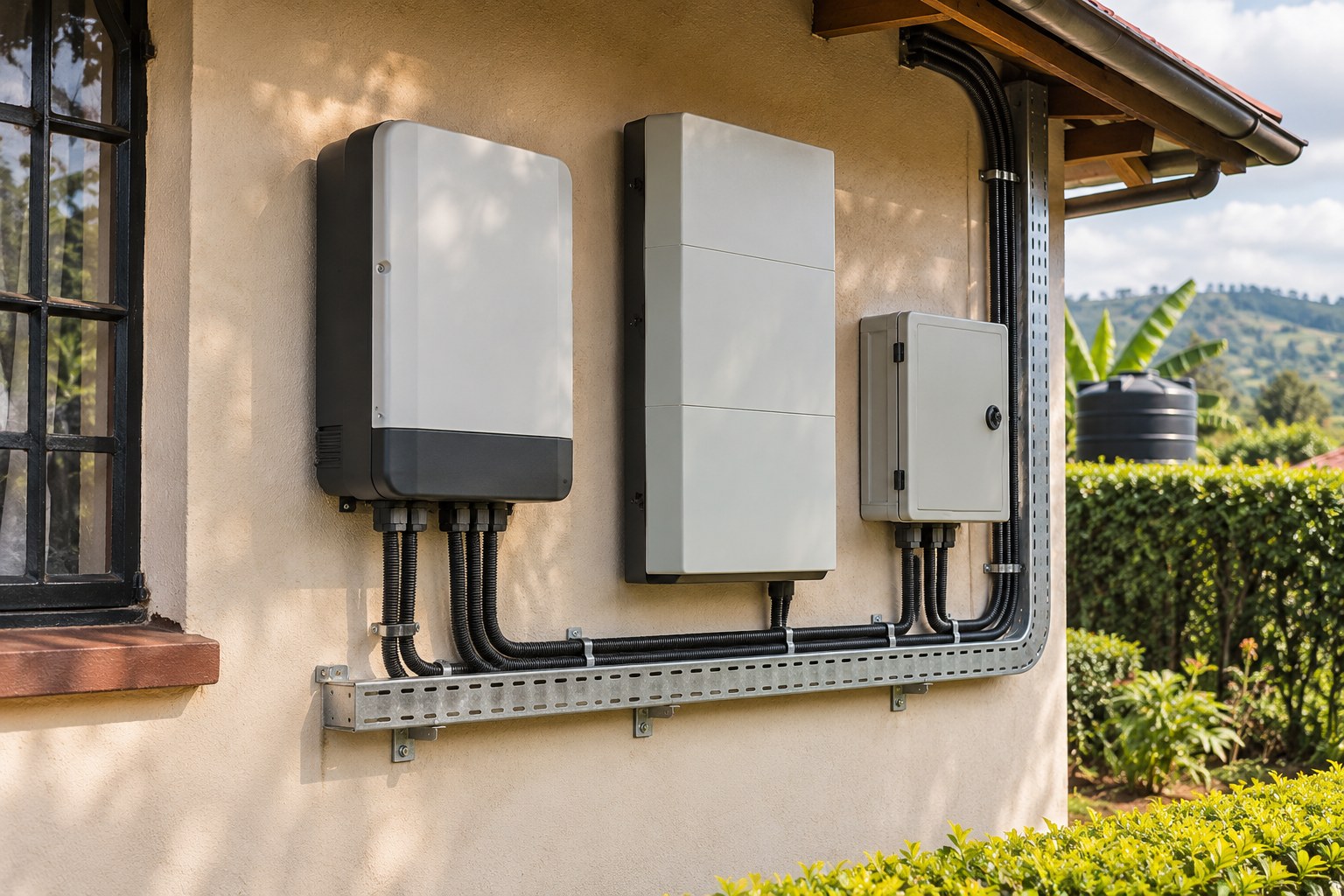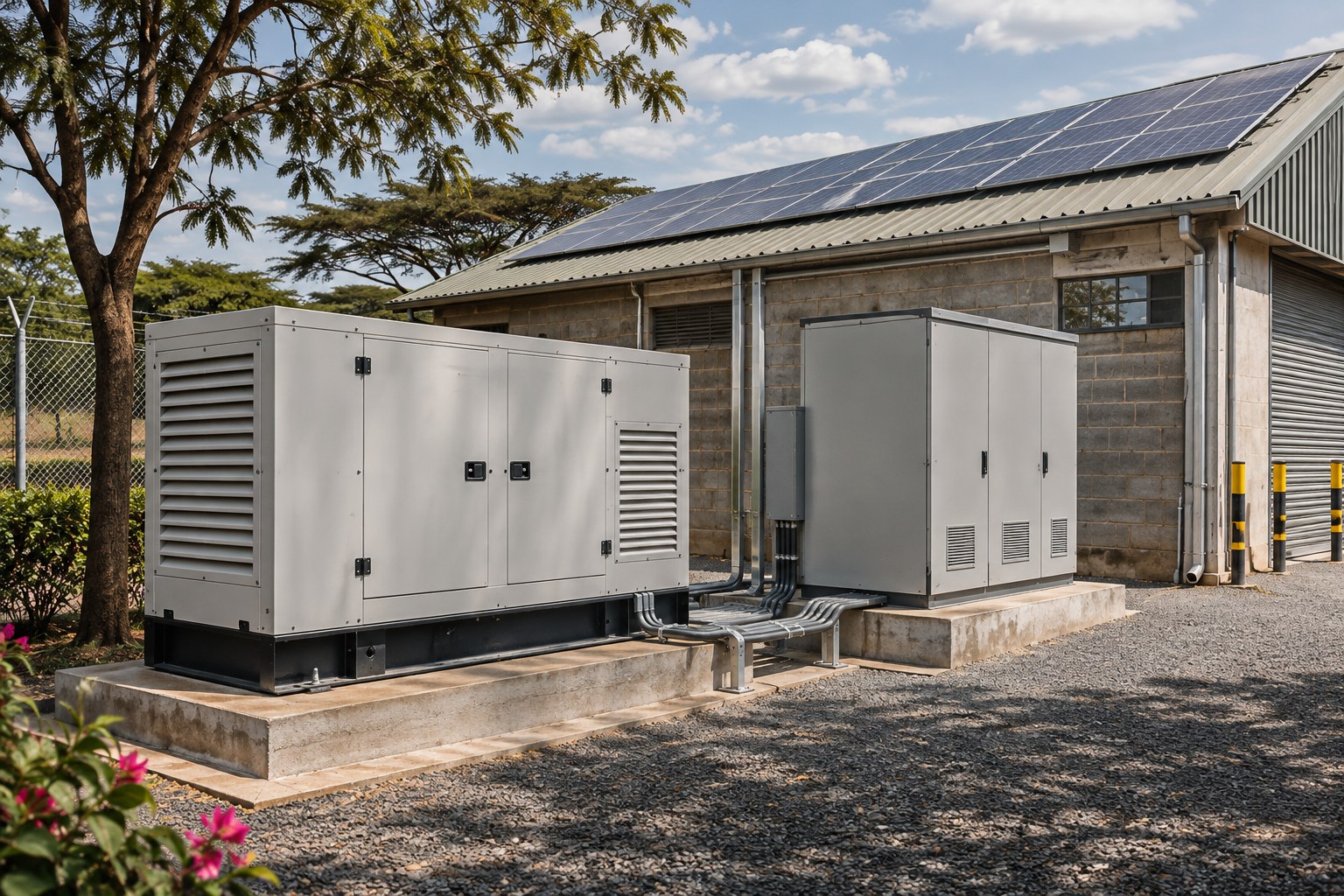
If you are assessing solar generator retrofit acceptance testing, start with verified behaviour during transitions and faults. Agree witnessed tests for transfer, load steps, charging, alarms and loss of communications; do not accept an integration solely because each component starts independently.
This decision guide was reviewed on 24 November 2026. The worked scenario is illustrative. It is not a measured customer result, an equipment recommendation or a company price offer.
Solar generator retrofit acceptance testing: the decision to resolve
The practical question is whether the proposed arrangement demonstrates verified behaviour during transitions and faults. Begin with the service you need, then ask what evidence would confirm that the proposal can provide it. Avoid replacing that question with a panel count, a product label or an unexplained system-size recommendation.
| Evidence to prepare | How to make the record useful |
|---|---|
| Approved integration diagram | Provide the actual source record and its date. Distinguish a measurement from an assumption, and identify anything that may change before installation. |
| Control sequence | Use the relevant units and operating period. Include the limiting condition as well as the convenient survey-day condition. |
| Test loads | Supply model-specific information where equipment is involved. Keep document revisions and the party responsible for confirming the information. |
| Failure scenarios | State the required service and who approves it. Record unresolved questions so the quotation does not silently treat them as settled facts. |
A worked example for solar generator retrofit acceptance testing
A retrofit may pass a sunny-day demonstration while failing when a large motor starts during generator charging. Put that permitted operating transition into the acceptance schedule before handover.
The lesson is the role of verified behaviour during transitions and faults, not the purchase of a particular product. Replace the scenario assumptions with your own records before making a commitment. Ask the responsible designer to show which conclusion changes when the demand, timing or site condition changes. A sound quotation should make that reasoning visible.
Define an observable acceptance test
Acceptance should demonstrate the service the customer agreed to buy. Identify the test conditions, measurements, responsible witnesses and the evidence that will be retained. A dashboard showing normal status is useful, but it may not prove backup duration, delivered water, temperature continuity or a correctly functioning control sequence.
In practice, the test needs appropriate professional planning. Do not ask a customer to create unsafe faults, alter live wiring or bypass protection. Instead, have competent personnel test the agreed functions through a supported procedure. Record defects and the authority for return to service. If conditions prevent a meaningful performance test on the first visit, document the outstanding verification rather than quietly treating it as complete. A clear acceptance record protects both the buyer and the contractor.
Compare alternatives at the same useful output
Choose a common service target before comparing options. This might be the same backed-up load and duration, the same delivered water duty, or the same hot-water demand. Equal nameplate power, tank litres or battery labels do not necessarily establish equivalent service. Include the supporting components required by each alternative.
However, avoid forcing every option into an artificial single number. An alternative may offer a different maintenance burden, operating flexibility or continuity arrangement. Describe those differences openly and decide which matter to the customer. A slightly cheaper equipment purchase can become the more expensive operating choice if it needs frequent access, unsupported controls or unavailable spares. The comparison should make the trade-off understandable instead of implying that one technology wins in every situation.
Plan access for the life of the installation
Installation access and maintenance access are not always the same. Equipment may be easy to position during construction but difficult to inspect or replace later. Ask how authorised personnel will reach the relevant assets, isolate them safely and carry out the expected service work. Include any necessary access equipment in the cost comparison.
Also consider ordinary use of the property. Vehicle routes, roof access, water collection, storage areas and emergency paths should remain appropriate to the building or site. A layout that maximises equipment count may still be poor if it obstructs these functions. Have the responsible specialists coordinate the arrangement before purchase. This protects the usefulness of the installed system and avoids discovering an expensive access problem at the first maintenance visit.
Assess environmental exposure rather than using a location stereotype
Coastal and other exposed sites need an assessment of the actual environment, materials and maintenance access. Salt, wind, moisture and corrosion risk can differ substantially between properties in the same region. Ask for supplier evidence and a project-specific review of the proposed materials and fixing arrangement.
In particular, compatible materials, coatings and fasteners belong in the specification. A generic phrase such as marine grade does not explain every component or warranty condition. The owner should understand the required inspection and maintenance plan as well as the initial purchase. Avoid inventing a local weather measurement or assigning an exposure category without evidence. A useful regional guide helps the buyer prepare questions for the specific site assessment.
Compare installed scope rather than headline package names
Ask each bidder to define the same service boundary. Equipment, mounting, protection, cabling, labour, access, transport, approvals, testing and aftercare can appear in different places in a quotation. An equipment-only price is not directly comparable with a commissioned installation. Missing items can explain a price difference without showing that either option is better value.
Also obtain written exclusions and the basis of any taxes. The quote should identify the exact equipment and the customer's responsibilities. If the site needs roof repairs, civil work, a distribution-board change or additional investigations, establish who prices and approves that work. A useful comparison keeps these differences visible. The goal is a complete agreed service at an understood cost, rather than choosing the smallest number beside a familiar system-size label.
Keep a handover file that matches the installed system
The customer should receive records for the equipment actually installed, not only the products originally proposed. Keep model and serial details, as-built drawings, commissioning results, warranty terms, approved operator instructions and the service contact route together. Record changes made during construction so later maintenance does not rely on an obsolete diagram.
Moreover, assign custody of the file to an accountable person or organisation. Staff, caretakers and service providers can change. Monitoring access should transfer through an authorised process rather than depend on somebody's private password. A well organised handover supports future troubleshooting and procurement decisions. It does not authorise unqualified users to open electrical equipment or change technical settings; the operator's instructions should make that boundary clear.
Distinguish acknowledgement, attendance and restoration
Support promises need precise definitions. An acknowledged alarm, an engineer's arrival and restored service are different events. Parts availability, site access, communications and the cause of the fault can affect each one. Ask the provider to state the actual commitment and its conditions rather than relying on words such as immediate support.
For a remote or critical site, agree an escalation path and a practical contingency. Identify who can authorise access, which symptoms require urgent action and who manages the affected service until repair. Do not invent a response time that the business has not approved. A clear service arrangement is valuable precisely because it describes what can be delivered and what the customer must provide when something goes wrong.
Choose a reserve policy and a recharge strategy
A backup reserve keeps some energy available for an interruption. This can reduce the energy used for routine bill reduction. The useful choice depends on essential demand, outage experience and the opportunity to recharge. There is no single reserve percentage that suits every home or business. Agree the objective before settings are chosen.
Then consider what happens after a long discharge. The system must supply ongoing loads while restoring the reserve. A design that balances an average day may recover slowly after several weak-generation days. State whether grid or generator charging is available and supported. Ask how operators recognise a low reserve and which actions are authorised. The customer's instructions should explain normal use and escalation, while configuration changes remain with the competent service provider.
Turn the evidence into a clear go-or-no-go decision
For solar generator retrofit acceptance testing, require an explanation of verified behaviour during transitions and faults in the written proposal. A useful answer connects the project records to a stated service boundary. If essential information is missing, the next decision is to obtain the measurement or professional review that resolves it, rather than choose equipment around an optimistic guess.
- Proceed when the relevant evidence supports the proposed service and the responsible parties have closed material design questions.
- Revise the scope when the worked assumptions do not match the real site, operating pattern or equipment limits.
- Request further assessment when permissions, condition, compatibility or critical-service requirements remain unresolved.
Questions buyers ask
What should I prepare before requesting a quotation?
For this assessment, prepare approved integration diagram, control sequence, test loads and failure scenarios. Explain the required outcome and any known limitations. Send records from safe accessible sources; a qualified person should collect hazardous measurements or inspect restricted equipment.
What matters most when comparing solar generator retrofit acceptance testing?
Agree witnessed tests for transfer, load steps, charging, alarms and loss of communications; do not accept an integration solely because each component starts independently. Compare the alternatives against the same defined service and ask for model-specific supporting evidence. Where proposals use different assumptions, have those differences made explicit before comparing totals.
Can I use the worked example as my final design or price?
No. The example explains a decision method and uses stated assumptions. Your site may have different operating conditions, equipment limits and scope. A final design and quotation need the relevant assessment, written inclusions and applicable approvals.
Prepare your project-specific enquiry
Review our diesel generator hybridisation information, then request a site survey with the records listed above. For solar generator retrofit acceptance testing, explain the required outcome, the property location and the operating constraints. Ask for a written scope, assumptions and exclusions before you commit to equipment.
The solar calculator can help organise a preliminary energy enquiry. Treat its result as an estimate and supply actual load and site records for the final assessment.
Reference: EPRA renewable-energy licensing information.
Reference: National Laboratory of the Rockies: photovoltaic performance modelling.