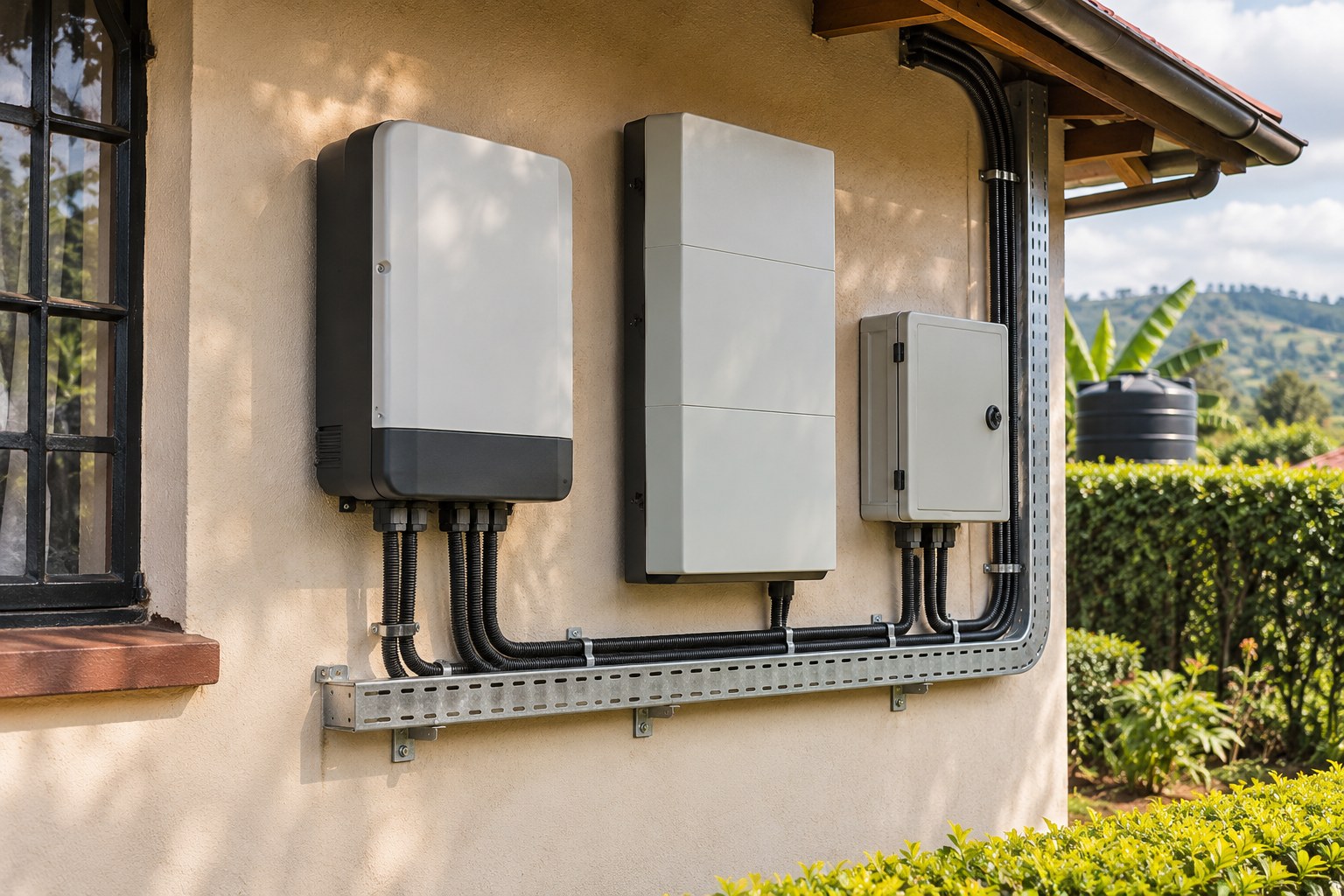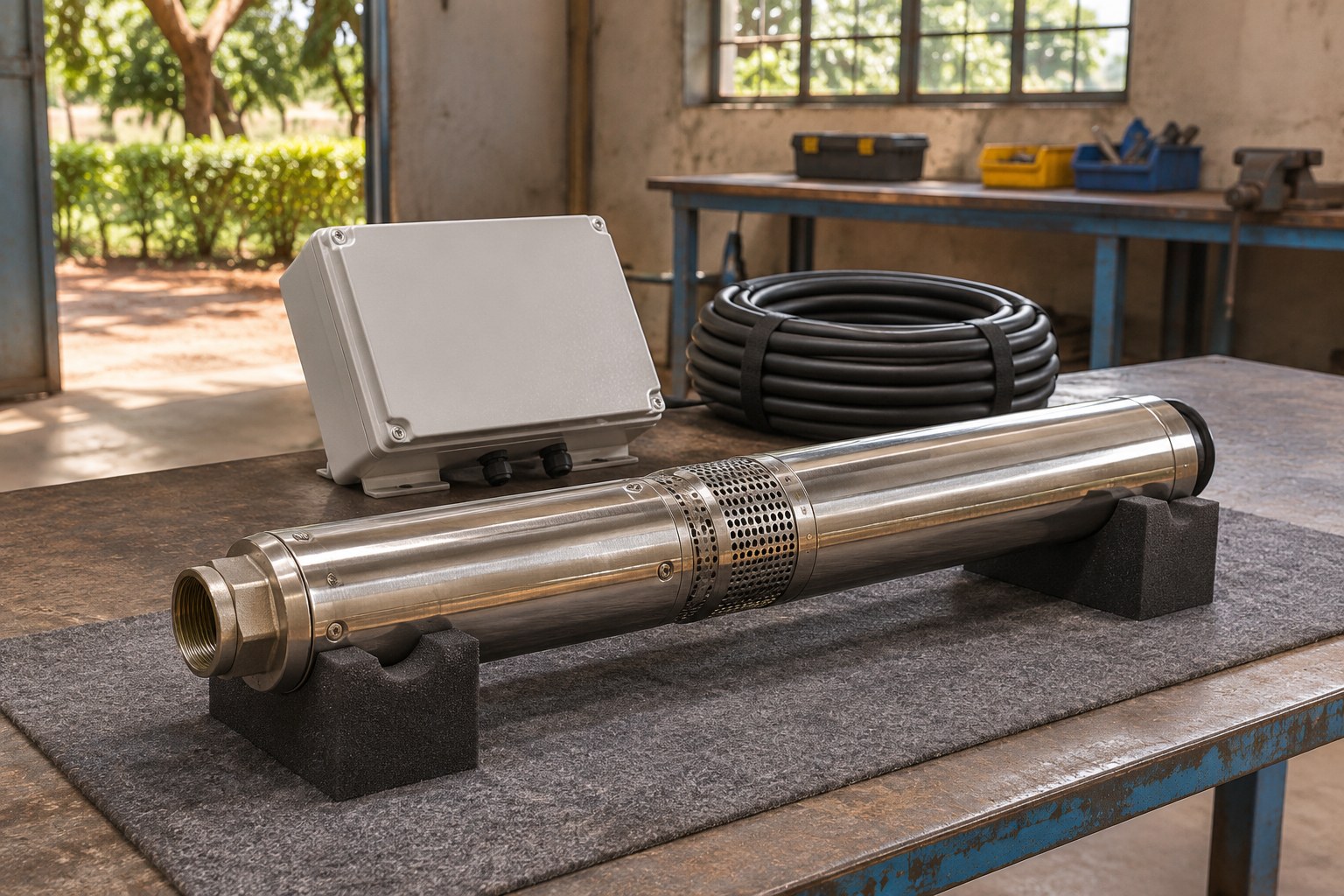
If you are assessing solar pump controller compatibility, start with supported interfaces and a credible repair route. Verify the exact motor, controller, PV input and protection combination and obtain a practical support route before procurement.
This decision guide was reviewed on 24 November 2026. The worked scenario is illustrative. It is not a measured customer result, an equipment recommendation or a company price offer.
Solar pump controller compatibility: the decision to resolve
The practical question is whether the proposed arrangement demonstrates supported interfaces and a credible repair route. Begin with the service you need, then ask what evidence would confirm that the proposal can provide it. Avoid replacing that question with a panel count, a product label or an unexplained system-size recommendation.
| Evidence to prepare | How to make the record useful |
|---|---|
| Motor data | Provide the actual source record and its date. Distinguish a measurement from an assumption, and identify anything that may change before installation. |
| Controller limits | Use the relevant units and operating period. Include the limiting condition as well as the convenient survey-day condition. |
| Approved configuration | Supply model-specific information where equipment is involved. Keep document revisions and the party responsible for confirming the information. |
| Spare availability | State the required service and who approves it. Record unresolved questions so the quotation does not silently treat them as settled facts. |
A worked example for solar pump controller compatibility
A replacement controller that accepts the array's nominal power can still be unsuitable for the motor or operating limits. Use the actual manufacturer-supported combination and record the commissioning parameters professionally.
The lesson is the role of supported interfaces and a credible repair route, not the purchase of a particular product. Replace the scenario assumptions with your own records before making a commitment. Ask the responsible designer to show which conclusion changes when the demand, timing or site condition changes. A sound quotation should make that reasoning visible.
Make normal stops distinguishable from protective stops
A system may stop because it has completed its task, because available input is low or because a protective condition exists. Those are different operating states. Ask the supplier to explain the supported control sequence and the information available to the operator. A single undifferentiated fault light can make responsible service decisions difficult.
Then agree how the important functions will be demonstrated professionally. This may include level supervision, demand control, loss of communications or an approved protective test. Customers should not bypass sensors or force unsafe conditions to see what happens. The handover should explain normal user actions, reporting and escalation. It should also identify which settings and tests remain under the authority of qualified service personnel.
Define delivered water before choosing pumping equipment
Start with the daily useful volume, the delivery points and the time when users need water. Then assess whether the source can support that demand sustainably. A pump's motor rating is not a daily delivery specification. Its flow changes with the hydraulic duty and available operating conditions.
For solar pumping, the effective operating period can vary with weather and control limits. Storage may separate pumping time from use, but it brings its own usable-volume and delivery-pressure requirements. Ask the designer to show a credible daily water balance. Where the input data are uncertain, identify the additional survey or professional interpretation needed. A larger array should not be used to justify abstraction beyond the source's tested capacity or applicable permission.
Further reading: Water Resources Authority: permitting and water-use allocation.
Compare direct pumping with stored-water delivery
Direct pumping links water delivery to the available operating conditions. Storage can make water available later, but only if the tank's usable capacity, support, levels and distribution arrangement suit the demand. Choosing water storage is therefore a hydraulic and structural decision as well as an energy decision.
Build a timetable showing pumping opportunities and draw-off peaks. Include any reserve that should remain untouched. Then examine what happens after a low-generation period or a pump outage. A tank that is nominally large enough may not provide adequate pressure or usable volume at the service point. Conversely, an appropriate storage arrangement may reduce the need to run a pump outside daylight. Compare complete service designs rather than assuming a tank and a battery are interchangeable products.
Keep data intervals, timestamps and meter boundaries consistent
A useful operating record identifies the quantity, measurement point, units and time basis. Import, generation, export and storage flow should not be mixed casually. If different files use different timezones or intervals, align them before comparing the values. Otherwise a calculation can assign production to the wrong consumption period.
Next, check for gaps, resets, duplicated readings or estimates. Preserve the original export and explain how any cleaning or aggregation was done. This is especially important when data support a savings, warranty or performance claim. A chart is a helpful presentation, but the underlying records make the conclusion auditable. Ask for export access and a retention arrangement that survives a change of staff or service provider.
Use more than one representative operating condition
Demand and available resources can change through the year. A school, farm, hotel and family home may each have busy and quiet periods. Identify the conditions that matter to the proposed service instead of extending a single favourable day across the whole annual forecast. The same principle applies to source water levels and access conditions.
Then distinguish a normal operating case from a limiting case and a contingency case. Explain which one determines equipment capacity and which one tests resilience. This makes the decision more transparent without pretending that a model predicts every future event. Where local evidence is unavailable, state the assumption and arrange the relevant survey or measurement rather than presenting a regional generalisation as a verified site fact.
Read the remedy and claim conditions
A warranty length is only part of the comparison. Identify the responsible party, the covered component, operating conditions, exclusions and the remedy. Equipment defects, installation workmanship and performance undertakings can belong to different documents. Transport, access, diagnosis and replacement labour may also receive different treatment.
Before purchase, ask how a claim would proceed at the actual site. Keep serial numbers, invoices, commissioning records and maintenance evidence in the required form. Also consider the operating consequence while a claim is assessed. A long warranty does not by itself promise rapid restoration of service. Where continuity matters, discuss a separately defined support or temporary-supply arrangement. Never assume that a generic brochure overrides the specific terms supplied with the proposed equipment.
Tie commissioning results to identified equipment
Commissioning records should identify the installation, the relevant equipment, the date and the person responsible. Measurements and tests need an appropriate professional method and a clear acceptance basis. A generic form with unexplained ticks provides less useful evidence than results tied to the actual system and its design requirements.
Keep unresolved findings visible. If an item needs correction or later verification, record who owns the action and when it will be closed. The customer should understand whether the system is accepted, accepted with agreed outstanding items or not yet ready for normal service. This does not require the owner to repeat hazardous tests. It requires a coherent record that supports safe operation, later maintenance and accountability for the installed work.
Use water-quality evidence for maintenance planning
Water characteristics can affect equipment suitability and service needs. Where scaling, sediment or corrosion has been a problem, supply the relevant history and any available water analysis. Have the equipment provider explain its supported operating and maintenance conditions. Do not assume that a generic low-maintenance claim applies to an unsuitable water supply.
However, a buying guide should not prescribe unapproved chemicals or customer cleaning procedures. Follow the actual manufacturer's requirements and use appropriate service personnel. Include access, inspection and any required consumables in the operating budget. Also read warranty conditions relating to water quality. This makes the expected maintenance responsibility clearer before purchase and gives future service visits a useful evidence base.
Further reading: US Department of Energy: solar water-heating systems.
Turn the evidence into a clear go-or-no-go decision
For solar pump controller compatibility, require an explanation of supported interfaces and a credible repair route in the written proposal. A useful answer connects the project records to a stated service boundary. If essential information is missing, the next decision is to obtain the measurement or professional review that resolves it, rather than choose equipment around an optimistic guess.
- Proceed when the relevant evidence supports the proposed service and the responsible parties have closed material design questions.
- Revise the scope when the worked assumptions do not match the real site, operating pattern or equipment limits.
- Request further assessment when permissions, condition, compatibility or critical-service requirements remain unresolved.
Questions buyers ask
What should I prepare before requesting a quotation?
For this assessment, prepare motor data, controller limits, approved configuration and spare availability. Explain the required outcome and any known limitations. Send records from safe accessible sources; a qualified person should collect hazardous measurements or inspect restricted equipment.
What matters most when comparing solar pump controller compatibility?
Verify the exact motor, controller, PV input and protection combination and obtain a practical support route before procurement. Compare the alternatives against the same defined service and ask for model-specific supporting evidence. Where proposals use different assumptions, have those differences made explicit before comparing totals.
Can I use the worked example as my final design or price?
No. The example explains a decision method and uses stated assumptions. Your site may have different operating conditions, equipment limits and scope. A final design and quotation need the relevant assessment, written inclusions and applicable approvals.
Prepare your project-specific enquiry
Review our solar pump equipment information, then request a site survey with the records listed above. For solar pump controller compatibility, explain the required outcome, the property location and the operating constraints. Ask for a written scope, assumptions and exclusions before you commit to equipment.