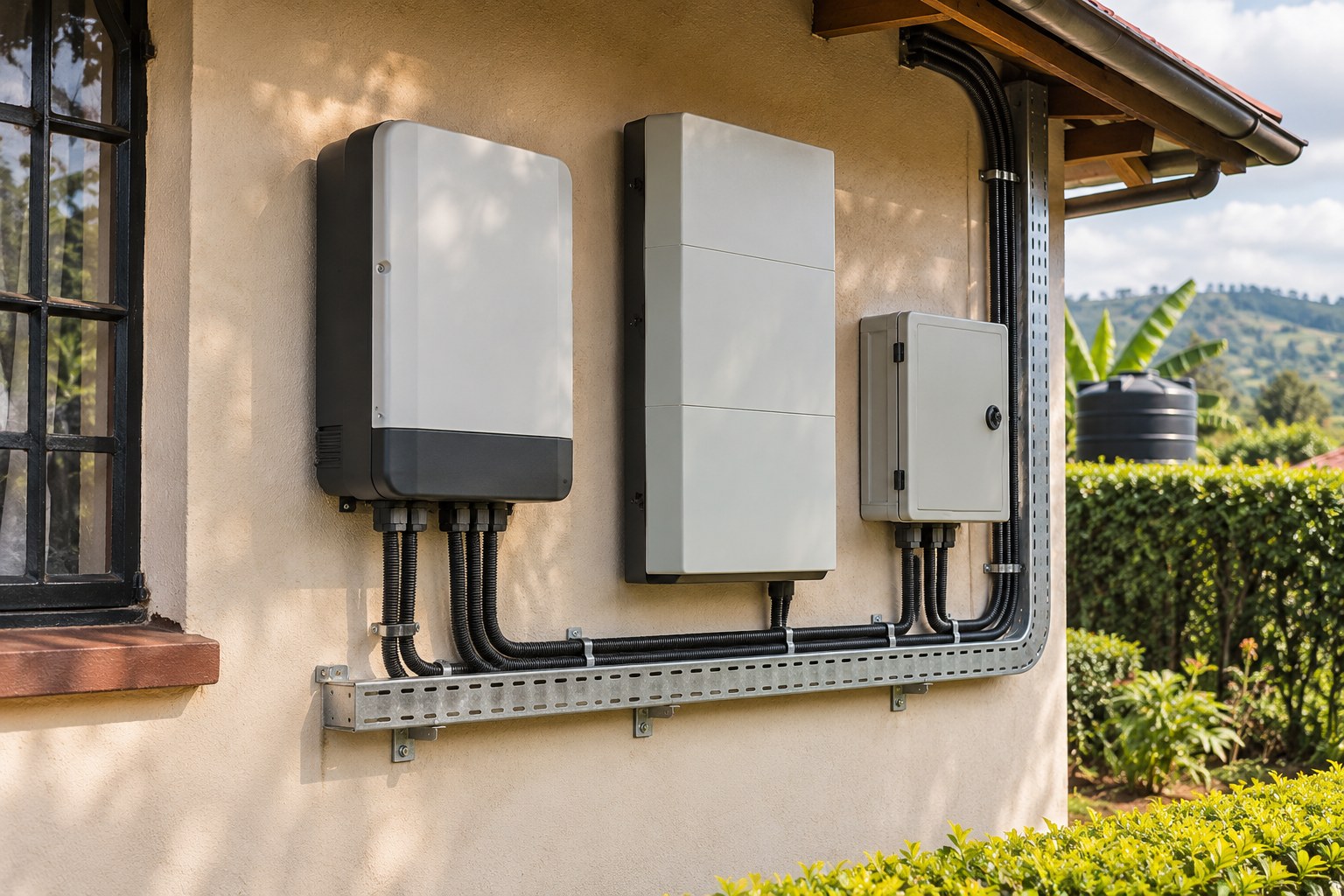
If you are assessing solar single-line diagram handover, start with an accurate as-built record rather than an obsolete proposal drawing. The as-built diagram should show the installed system's sources, distribution boundaries, protection and isolation references at an appropriate professional level.
This decision guide was reviewed on 24 November 2026. The worked scenario is illustrative. It is not a measured customer result, an equipment recommendation or a company price offer.
Solar single-line diagram handover: the decision to resolve
The practical question is whether the proposed arrangement demonstrates an accurate as-built record rather than an obsolete proposal drawing. Begin with the service you need, then ask what evidence would confirm that the proposal can provide it. Avoid replacing that question with a panel count, a product label or an unexplained system-size recommendation.
| Evidence to prepare | How to make the record useful |
|---|---|
| As-built revision | Provide the actual source record and its date. Distinguish a measurement from an assumption, and identify anything that may change before installation. |
| Equipment identifiers | Use the relevant units and operating period. Include the limiting condition as well as the convenient survey-day condition. |
| Isolation references | Supply model-specific information where equipment is involved. Keep document revisions and the party responsible for confirming the information. |
| Change records | State the required service and who approves it. Record unresolved questions so the quotation does not silently treat them as settled facts. |
A worked example for solar single-line diagram handover
A drawing issued before a later battery expansion may no longer describe the installation. Keep the revision that matches the commissioned system and record who is responsible for updating it after future work.
The lesson is the role of an accurate as-built record rather than an obsolete proposal drawing, not the purchase of a particular product. Replace the scenario assumptions with your own records before making a commitment. Ask the responsible designer to show which conclusion changes when the demand, timing or site condition changes. A sound quotation should make that reasoning visible.
Keep a handover file that matches the installed system
The customer should receive records for the equipment actually installed, not only the products originally proposed. Keep model and serial details, as-built drawings, commissioning results, warranty terms, approved operator instructions and the service contact route together. Record changes made during construction so later maintenance does not rely on an obsolete diagram.
Moreover, assign custody of the file to an accountable person or organisation. Staff, caretakers and service providers can change. Monitoring access should transfer through an authorised process rather than depend on somebody's private password. A well organised handover supports future troubleshooting and procurement decisions. It does not authorise unqualified users to open electrical equipment or change technical settings; the operator's instructions should make that boundary clear.
Write down the operating rules people actually need
A useful operator guide explains normal states, permitted user actions, alarms and the route for help. It should use the labels and interfaces found on the actual installation. Avoid a handover that consists only of manufacturer manuals for components the customer is not expected to configure.
For example, the owner may need to recognise a normal stopped pump, a low reserve or a lost monitoring connection. The guide should explain what information to report and when professional attendance is required. It should not encourage unsafe resets, bypasses or live work. Assign a responsible operator and a backup contact where staff or caretakers change. Clear instructions help people use the agreed service without inventing their own operating procedures.
Keep customer decisions separate from hazardous technical work
A customer can define needs, inspect documents and report observed symptoms without opening equipment or changing protective settings. Work on live circuits, high-voltage batteries, roofs, pressurised systems and other hazardous installations requires the appropriate qualified personnel and a safe method. A buying guide should not turn a design question into an improvised repair instruction.
For existing faults, record alarms, times and normal operating conditions from safe accessible interfaces. Report visible damage or unusual behaviour through the agreed service route. Follow the approved emergency instructions if the situation presents an immediate hazard. During procurement, ask for the professional test and commissioning evidence that relates to the actual installation. This gives the owner useful assurance without asking them to perform unsafe demonstrations.
Read the remedy and claim conditions
A warranty length is only part of the comparison. Identify the responsible party, the covered component, operating conditions, exclusions and the remedy. Equipment defects, installation workmanship and performance undertakings can belong to different documents. Transport, access, diagnosis and replacement labour may also receive different treatment.
Before purchase, ask how a claim would proceed at the actual site. Keep serial numbers, invoices, commissioning records and maintenance evidence in the required form. Also consider the operating consequence while a claim is assessed. A long warranty does not by itself promise rapid restoration of service. Where continuity matters, discuss a separately defined support or temporary-supply arrangement. Never assume that a generic brochure overrides the specific terms supplied with the proposed equipment.
Plan access for the life of the installation
Installation access and maintenance access are not always the same. Equipment may be easy to position during construction but difficult to inspect or replace later. Ask how authorised personnel will reach the relevant assets, isolate them safely and carry out the expected service work. Include any necessary access equipment in the cost comparison.
Also consider ordinary use of the property. Vehicle routes, roof access, water collection, storage areas and emergency paths should remain appropriate to the building or site. A layout that maximises equipment count may still be poor if it obstructs these functions. Have the responsible specialists coordinate the arrangement before purchase. This protects the usefulness of the installed system and avoids discovering an expensive access problem at the first maintenance visit.
Make expansion a defined design scenario
Future readiness needs a named scenario. Describe the additional equipment, operating hours, location and intended service rather than asking for an unspecified percentage of spare capacity. The relevant constraint may be power, energy, roof space, electrical connection, hydraulic duty or control compatibility.
An installation can have room for more modules while lacking capacity at another interface. Therefore, ask which items support the proposed later phase and which will need reassessment, replacement or further approval. Keep that distinction in the design and quotation. This helps the customer avoid paying now for an undefined capability while also preventing a future contractor from treating an old allowance as blanket permission for any expansion.
Separate asset condition from the wish for an upgrade
An upgrade and a repair solve different problems. A failed component may need replacement, but a larger system is not automatically the right response. Establish the existing condition, supported configuration and actual service shortfall first. This helps the customer distinguish a necessary intervention from optional additional capability.
For a battery or inverter change, compare the retained equipment's compatibility, age, support and warranty with the proposed replacement. A broader redesign may be justified, but the explanation should identify why. Ask which tests support the diagnosis and which new operating conditions will be demonstrated. The resulting quotation should state the removed and retained assets clearly, including any responsible disposal and updated handover records.
Distinguish acknowledgement, attendance and restoration
Support promises need precise definitions. An acknowledged alarm, an engineer's arrival and restored service are different events. Parts availability, site access, communications and the cause of the fault can affect each one. Ask the provider to state the actual commitment and its conditions rather than relying on words such as immediate support.
For a remote or critical site, agree an escalation path and a practical contingency. Identify who can authorise access, which symptoms require urgent action and who manages the affected service until repair. Do not invent a response time that the business has not approved. A clear service arrangement is valuable precisely because it describes what can be delivered and what the customer must provide when something goes wrong.
Turn the evidence into a clear go-or-no-go decision
For solar single-line diagram handover, require an explanation of an accurate as-built record rather than an obsolete proposal drawing in the written proposal. A useful answer connects the project records to a stated service boundary. If essential information is missing, the next decision is to obtain the measurement or professional review that resolves it, rather than choose equipment around an optimistic guess.
- Proceed when the relevant evidence supports the proposed service and the responsible parties have closed material design questions.
- Revise the scope when the worked assumptions do not match the real site, operating pattern or equipment limits.
- Request further assessment when permissions, condition, compatibility or critical-service requirements remain unresolved.
Questions buyers ask
What should I prepare before requesting a quotation?
For this assessment, prepare as-built revision, equipment identifiers, isolation references and change records. Explain the required outcome and any known limitations. Send records from safe accessible sources; a qualified person should collect hazardous measurements or inspect restricted equipment.
What matters most when comparing solar single-line diagram handover?
The as-built diagram should show the installed system's sources, distribution boundaries, protection and isolation references at an appropriate professional level. Compare the alternatives against the same defined service and ask for model-specific supporting evidence. Where proposals use different assumptions, have those differences made explicit before comparing totals.
Can I use the worked example as my final design or price?
No. The example explains a decision method and uses stated assumptions. Your site may have different operating conditions, equipment limits and scope. A final design and quotation need the relevant assessment, written inclusions and applicable approvals.
Prepare your project-specific enquiry
Review our solar system design and engineering information, then request a site survey with the records listed above. For solar single-line diagram handover, explain the required outcome, the property location and the operating constraints. Ask for a written scope, assumptions and exclusions before you commit to equipment.
The solar calculator can help organise a preliminary energy enquiry. Treat its result as an estimate and supply actual load and site records for the final assessment.
Reference: EPRA renewable-energy licensing information.
Reference: National Laboratory of the Rockies: photovoltaic performance modelling.