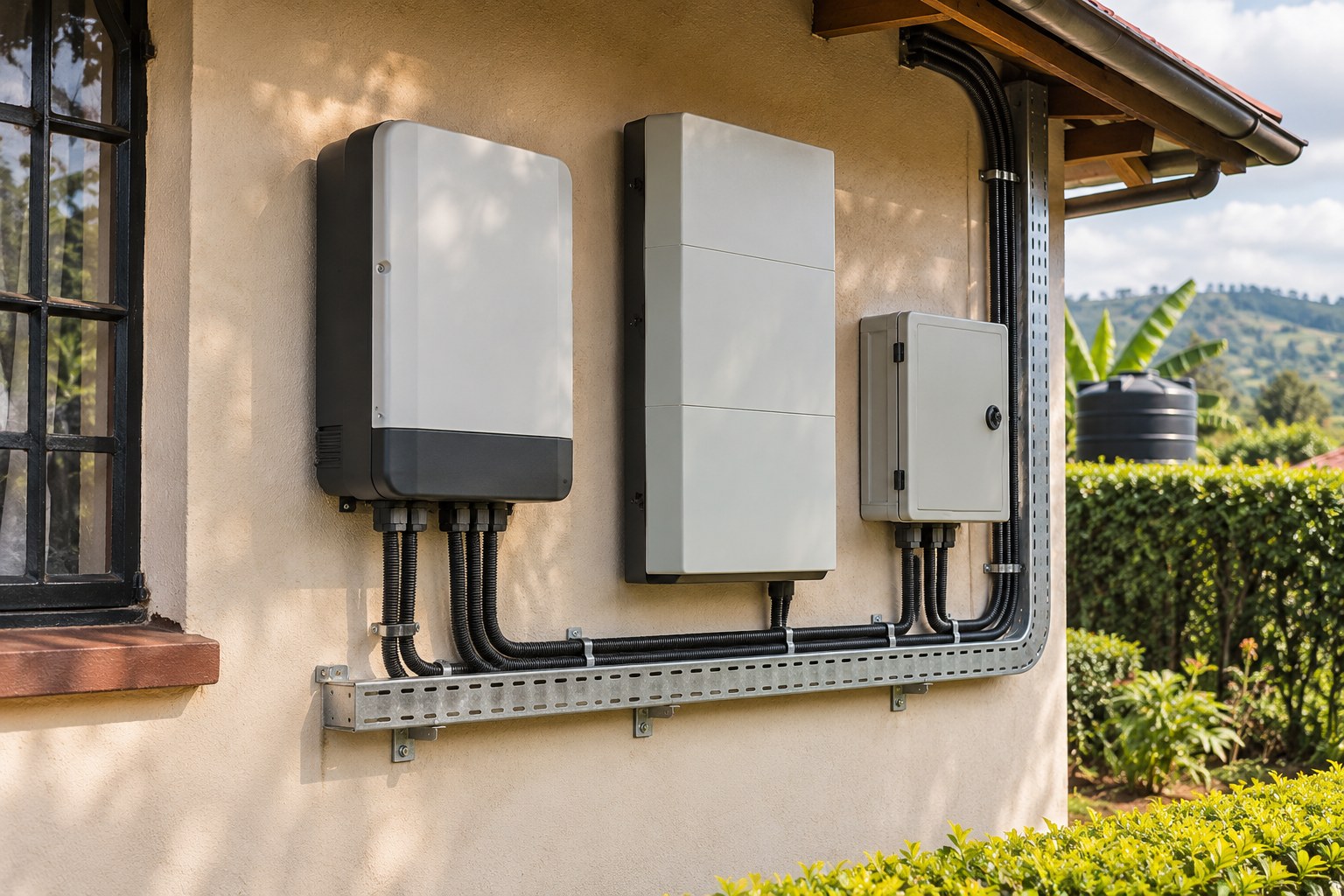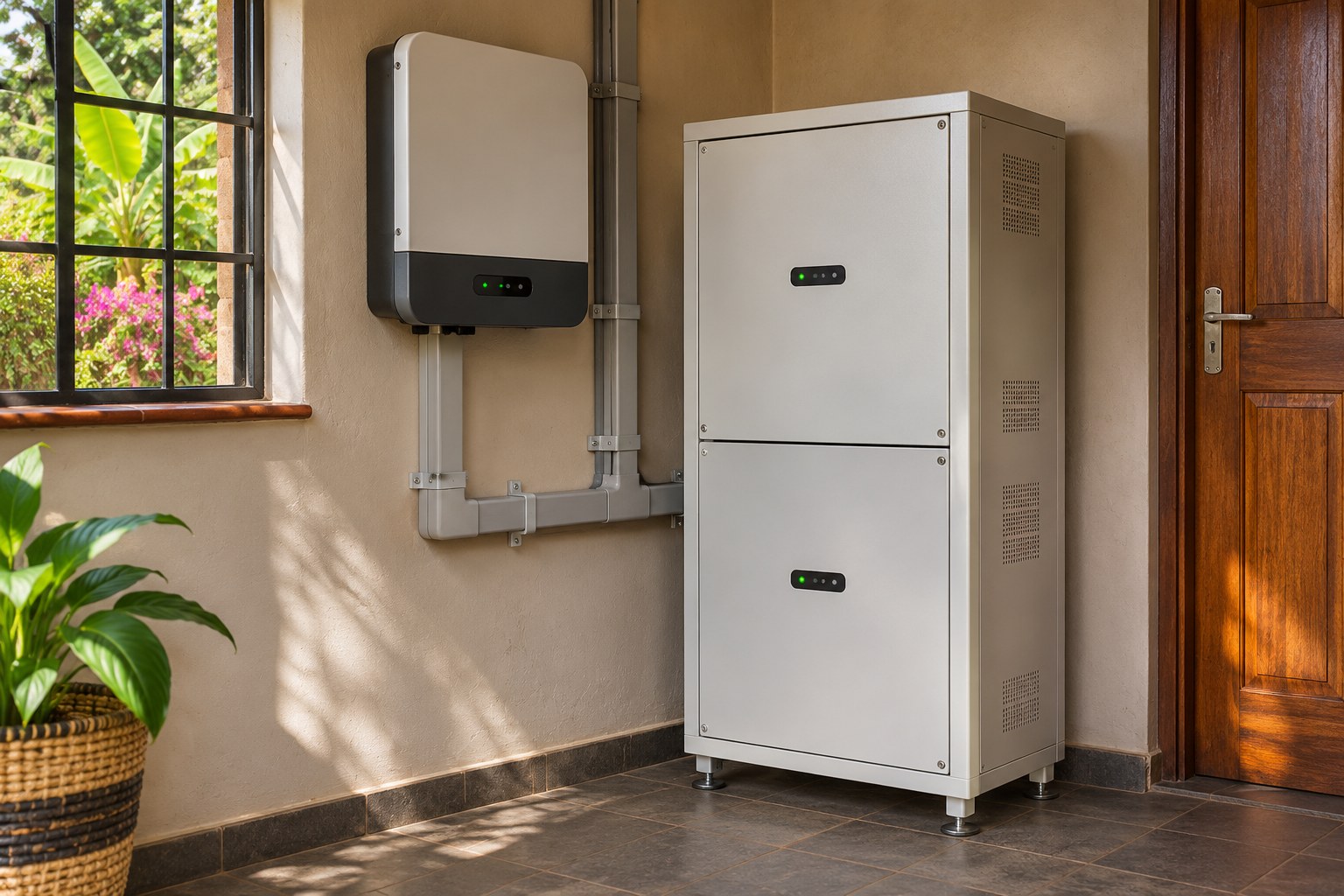
If you are assessing usable solar battery capacity comparison, start with usable energy under equivalent operating conditions. Compare energy delivered within the permitted operating window at the required discharge rate; equal nominal kWh does not mean equal service.
This decision guide was reviewed on 24 November 2026. The worked scenario is illustrative. It is not a measured customer result, an equipment recommendation or a company price offer.
Usable solar battery capacity comparison: the decision to resolve
The practical question is whether the proposed arrangement demonstrates usable energy under equivalent operating conditions. Begin with the service you need, then ask what evidence would confirm that the proposal can provide it. Avoid replacing that question with a panel count, a product label or an unexplained system-size recommendation.
| Evidence to prepare | How to make the record useful |
|---|---|
| Nominal energy | Provide the actual source record and its date. Distinguish a measurement from an assumption, and identify anything that may change before installation. |
| Permitted discharge window | Use the relevant units and operating period. Include the limiting condition as well as the convenient survey-day condition. |
| Power rating | Supply model-specific information where equipment is involved. Keep document revisions and the party responsible for confirming the information. |
| Temperature limits | State the required service and who approves it. Record unresolved questions so the quotation does not silently treat them as settled facts. |
A worked example for usable solar battery capacity comparison
Illustratively, 10 kWh nominal at a 50% energy window gives 5 kWh before conversion losses; 7 kWh nominal at an 80% window gives 5.6 kWh. The percentages are assumptions for arithmetic, not chemistry-wide guarantees.
The lesson is the role of usable energy under equivalent operating conditions, not the purchase of a particular product. Replace the scenario assumptions with your own records before making a commitment. Ask the responsible designer to show which conclusion changes when the demand, timing or site condition changes. A sound quotation should make that reasoning visible.
Translate nameplate storage into usable service
Nominal battery energy is the starting point for an assessment, not the final amount available at the loads. The permitted operating window, starting charge, reserved energy and conversion losses affect useful delivery. Obtain the manufacturer's definitions so the same restriction is not applied twice. A figure already described as usable may include an allowance that another supplier applies separately.
However, an energy calculation still needs a power check. A large-capacity battery can have a relatively modest discharge limit. Temperature, state of charge and the supported system configuration may change available performance. Ask for the proposed service in plain terms: which loads, for how long, from what initial condition. Keep those assumptions beside the quoted capacity instead of treating a brand name or chemistry label as a runtime guarantee.
Further reading: US Department of Energy: solar energy and storage basics.
Resolve ownership and access before installation
The physical owner, electricity-account holder, occupier and maintenance decision-maker may be different people. Clarify their roles before work proceeds. A tenant, estate committee or project donor needs an agreed basis for installation access, future inspection, funding and any asset transfer. Energy savings do not automatically settle these responsibilities.
In addition, consider what happens when occupancy or management changes. Equipment records, monitoring access and warranty rights may need an authorised transfer. Avoid a service arrangement that relies solely on one person's private account. Where a lease, ownership agreement or legal obligation requires interpretation, obtain appropriate professional advice. The solar quotation should identify the relevant project responsibilities without pretending to replace the underlying property or governance documents.
Keep data intervals, timestamps and meter boundaries consistent
A useful operating record identifies the quantity, measurement point, units and time basis. Import, generation, export and storage flow should not be mixed casually. If different files use different timezones or intervals, align them before comparing the values. Otherwise a calculation can assign production to the wrong consumption period.
Next, check for gaps, resets, duplicated readings or estimates. Preserve the original export and explain how any cleaning or aggregation was done. This is especially important when data support a savings, warranty or performance claim. A chart is a helpful presentation, but the underlying records make the conclusion auditable. Ask for export access and a retention arrangement that survives a change of staff or service provider.
Separate the electricity bill into relevant components
Use the customer's actual tariff category and bill history when estimating avoided costs. The average amount paid divided by imported kWh may combine energy charges with other items. A reduction in energy imports does not necessarily remove every charge. Demand-related charges also require attention to when the site's peak occurs.
For example, a PV array may reduce daytime purchases without eliminating an evening demand peak. Show self-consumed energy, approved exports and remaining purchases separately. Use current applicable information from the utility and regulator. Where that evidence is missing, retain a clearly labelled assumption rather than presenting it as the current Kenyan electricity price. A transparent estimate explains the relationship between the physical energy model and the financial calculation.
Further reading: EPRA electricity tariff guidance.
Price maintenance as an operating service
Maintenance needs a scope, not just a visit count. Distinguish visual inspection, testing, cleaning, monitoring review, adjustments by authorised personnel and repair work. State whether access equipment, travel, parts and emergency attendance are included. The appropriate programme depends on the installation and its documented requirements.
Then connect the visit to a useful report. Findings, measurements, defects, recommended actions and completed work should identify the relevant assets. Keep the records with the handover file. This allows the owner to compare performance over time and follow warranty conditions. It also makes the difference between planned preventive work and an unplanned repair clear. Avoid promising that routine maintenance eliminates all faults or extends every component's life by a fixed number of years.
Keep a handover file that matches the installed system
The customer should receive records for the equipment actually installed, not only the products originally proposed. Keep model and serial details, as-built drawings, commissioning results, warranty terms, approved operator instructions and the service contact route together. Record changes made during construction so later maintenance does not rely on an obsolete diagram.
Moreover, assign custody of the file to an accountable person or organisation. Staff, caretakers and service providers can change. Monitoring access should transfer through an authorised process rather than depend on somebody's private password. A well organised handover supports future troubleshooting and procurement decisions. It does not authorise unqualified users to open electrical equipment or change technical settings; the operator's instructions should make that boundary clear.
Keep customer decisions separate from hazardous technical work
A customer can define needs, inspect documents and report observed symptoms without opening equipment or changing protective settings. Work on live circuits, high-voltage batteries, roofs, pressurised systems and other hazardous installations requires the appropriate qualified personnel and a safe method. A buying guide should not turn a design question into an improvised repair instruction.
For existing faults, record alarms, times and normal operating conditions from safe accessible interfaces. Report visible damage or unusual behaviour through the agreed service route. Follow the approved emergency instructions if the situation presents an immediate hazard. During procurement, ask for the professional test and commissioning evidence that relates to the actual installation. This gives the owner useful assurance without asking them to perform unsafe demonstrations.
Make shading and loss assumptions visible
A useful generation forecast records its weather source, array orientation, shading and loss assumptions. Nearby buildings, roof features or vegetation can change the result. A single photograph may not show how shade moves through the operating period. Ask which conditions the designer assessed and how those conditions entered the estimate.
However, avoid adding the same allowance twice. Some performance models calculate a particular effect separately from the general system-loss input. The designer should explain the model boundary and each important allowance. A forecast remains an estimate even when the software is well established. Use it to compare plausible scenarios, not as a guarantee that every month or day will deliver the same energy. Keep the assumptions so later performance reviews can distinguish changing conditions from equipment faults.
Further reading: National Laboratory of the Rockies: photovoltaic performance modelling.
Turn the evidence into a clear go-or-no-go decision
For usable solar battery capacity comparison, require an explanation of usable energy under equivalent operating conditions in the written proposal. A useful answer connects the project records to a stated service boundary. If essential information is missing, the next decision is to obtain the measurement or professional review that resolves it, rather than choose equipment around an optimistic guess.
- Proceed when the relevant evidence supports the proposed service and the responsible parties have closed material design questions.
- Revise the scope when the worked assumptions do not match the real site, operating pattern or equipment limits.
- Request further assessment when permissions, condition, compatibility or critical-service requirements remain unresolved.
Questions buyers ask
What should I prepare before requesting a quotation?
For this assessment, prepare nominal energy, permitted discharge window, power rating and temperature limits. Explain the required outcome and any known limitations. Send records from safe accessible sources; a qualified person should collect hazardous measurements or inspect restricted equipment.
What matters most when comparing usable solar battery capacity comparison?
Compare energy delivered within the permitted operating window at the required discharge rate; equal nominal kWh does not mean equal service. Compare the alternatives against the same defined service and ask for model-specific supporting evidence. Where proposals use different assumptions, have those differences made explicit before comparing totals.
Can I use the worked example as my final design or price?
No. The example explains a decision method and uses stated assumptions. Your site may have different operating conditions, equipment limits and scope. A final design and quotation need the relevant assessment, written inclusions and applicable approvals.
Prepare your project-specific enquiry
Review our lithium battery upgrades information, then request a site survey with the records listed above. For usable solar battery capacity comparison, explain the required outcome, the property location and the operating constraints. Ask for a written scope, assumptions and exclusions before you commit to equipment.
The solar calculator can help organise a preliminary energy enquiry. Treat its result as an estimate and supply actual load and site records for the final assessment.