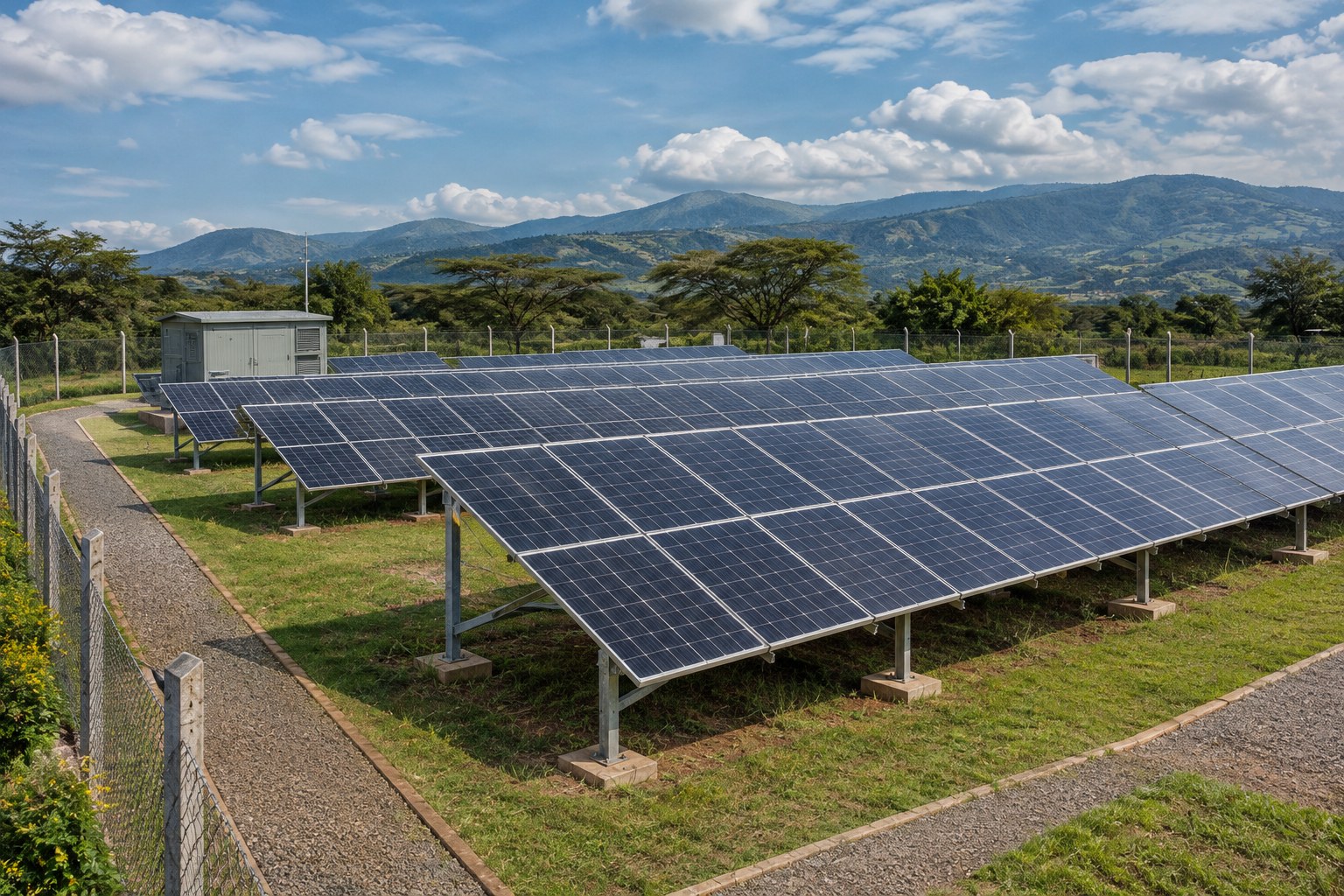
If you are assessing ground-mounted solar maintenance budget, start with explicit recurring land-management responsibilities. Security, vegetation control, drainage and safe service access belong in the operating budget from the outset.
This decision guide was reviewed on 24 November 2026. The worked scenario is illustrative. It is not a measured customer result, an equipment recommendation or a company price offer.
Ground-mounted solar maintenance budget: the decision to resolve
The practical question is whether the proposed arrangement demonstrates explicit recurring land-management responsibilities. Begin with the service you need, then ask what evidence would confirm that the proposal can provide it. Avoid replacing that question with a panel count, a product label or an unexplained system-size recommendation.
| Evidence to prepare | How to make the record useful |
|---|---|
| Access policy | Provide the actual source record and its date. Distinguish a measurement from an assumption, and identify anything that may change before installation. |
| Vegetation growth | Use the relevant units and operating period. Include the limiting condition as well as the convenient survey-day condition. |
| Fence scope | Supply model-specific information where equipment is involved. Keep document revisions and the party responsible for confirming the information. |
| Drain inspection | State the required service and who approves it. Record unresolved questions so the quotation does not silently treat them as settled facts. |
A worked example for ground-mounted solar maintenance budget
An assumed quarterly maintenance visit costs differently from monthly vegetation work. State which activity is included and who performs it; one annual maintenance figure should not hide unpriced recurring site work.
The lesson is the role of explicit recurring land-management responsibilities, not the purchase of a particular product. Replace the scenario assumptions with your own records before making a commitment. Ask the responsible designer to show which conclusion changes when the demand, timing or site condition changes. A sound quotation should make that reasoning visible.
Classify critical services with the responsible specialist
Critical-load classification belongs to the people accountable for the service, working with competent technical specialists. A hospital, laboratory, telecom site and domestic home can all need backup, but their permitted interruptions and recovery procedures differ. Do not translate a generic number of backup hours into a promise of uninterrupted operation at every outlet.
Map the whole service chain. Cooling, communications, control equipment and existing UPS interfaces may be essential to the main appliance. Then agree what happens during transfer, low reserve and failure of a supporting component. The acceptance plan should demonstrate the approved arrangement under suitable professional supervision. This provides a clearer assurance than describing the whole building as backed up without identifying what that actually means.
Plan access for the life of the installation
Installation access and maintenance access are not always the same. Equipment may be easy to position during construction but difficult to inspect or replace later. Ask how authorised personnel will reach the relevant assets, isolate them safely and carry out the expected service work. Include any necessary access equipment in the cost comparison.
Also consider ordinary use of the property. Vehicle routes, roof access, water collection, storage areas and emergency paths should remain appropriate to the building or site. A layout that maximises equipment count may still be poor if it obstructs these functions. Have the responsible specialists coordinate the arrangement before purchase. This protects the usefulness of the installed system and avoids discovering an expensive access problem at the first maintenance visit.
Keep one auditable version of the project budget
A useful budget separates the agreed base scope from provisional items, optional improvements and exclusions. Record the quotation date, currency, tax basis, validity and payment milestones. If a figure is an educational assumption, label it as such. Do not convert it into a claimed company price or market average without supporting evidence.
As survey findings change, revise the budget visibly. A roof repair, longer cable route or revised water duty can alter the project for legitimate reasons. Keep the customer's approved changes together with the final equipment and commissioning scope. This allows the customer to compare the delivered service with the original decision, instead of discovering at handover that important supporting work was never included in the headline figure.
Price maintenance as an operating service
Maintenance needs a scope, not just a visit count. Distinguish visual inspection, testing, cleaning, monitoring review, adjustments by authorised personnel and repair work. State whether access equipment, travel, parts and emergency attendance are included. The appropriate programme depends on the installation and its documented requirements.
Then connect the visit to a useful report. Findings, measurements, defects, recommended actions and completed work should identify the relevant assets. Keep the records with the handover file. This allows the owner to compare performance over time and follow warranty conditions. It also makes the difference between planned preventive work and an unplanned repair clear. Avoid promising that routine maintenance eliminates all faults or extends every component's life by a fixed number of years.
Check professional responsibility and applicable permissions
Ask who is responsible for the professional design, installation and commissioning work and verify the relevant current authorisation. The appropriate competence depends on the activity and project. A company's marketing description is not a substitute for the supporting registration or licence information.
Also separate the equipment supplier's role from utility, water-resource, structural or other approvals that may apply. Buying equipment does not grant those permissions. Record any unresolved requirement in the project programme and establish who obtains it. Do not assume a standard approval time or claim a licence class that has not been verified. The regulator's published information is the starting point for checking the current applicable process.
Further reading: EPRA renewable-energy licensing information.
Keep a handover file that matches the installed system
The customer should receive records for the equipment actually installed, not only the products originally proposed. Keep model and serial details, as-built drawings, commissioning results, warranty terms, approved operator instructions and the service contact route together. Record changes made during construction so later maintenance does not rely on an obsolete diagram.
Moreover, assign custody of the file to an accountable person or organisation. Staff, caretakers and service providers can change. Monitoring access should transfer through an authorised process rather than depend on somebody's private password. A well organised handover supports future troubleshooting and procurement decisions. It does not authorise unqualified users to open electrical equipment or change technical settings; the operator's instructions should make that boundary clear.
Read the remedy and claim conditions
A warranty length is only part of the comparison. Identify the responsible party, the covered component, operating conditions, exclusions and the remedy. Equipment defects, installation workmanship and performance undertakings can belong to different documents. Transport, access, diagnosis and replacement labour may also receive different treatment.
Before purchase, ask how a claim would proceed at the actual site. Keep serial numbers, invoices, commissioning records and maintenance evidence in the required form. Also consider the operating consequence while a claim is assessed. A long warranty does not by itself promise rapid restoration of service. Where continuity matters, discuss a separately defined support or temporary-supply arrangement. Never assume that a generic brochure overrides the specific terms supplied with the proposed equipment.
Build the energy budget from actual use
Energy and power answer different questions. Energy, measured in kWh, describes consumption over time. Power, measured in kW, describes the rate at a particular moment. Start with the service you need and its operating hours. Then calculate the energy for that defined period. A list of appliance ratings without durations is not a daily energy budget.
For example, a 100 W load running for ten hours consumes 1 kWh. That arithmetic does not establish battery size or inverter suitability. Add the other supported loads and distinguish measured consumption from estimates. Also record equipment that cycles on and off. A refrigerator's printed input rating should not be treated as a measurement of its average daily consumption.
Further reading: US Department of Energy: solar energy and storage basics.
Make expansion a defined design scenario
Future readiness needs a named scenario. Describe the additional equipment, operating hours, location and intended service rather than asking for an unspecified percentage of spare capacity. The relevant constraint may be power, energy, roof space, electrical connection, hydraulic duty or control compatibility.
An installation can have room for more modules while lacking capacity at another interface. Therefore, ask which items support the proposed later phase and which will need reassessment, replacement or further approval. Keep that distinction in the design and quotation. This helps the customer avoid paying now for an undefined capability while also preventing a future contractor from treating an old allowance as blanket permission for any expansion.
Turn the evidence into a clear go-or-no-go decision
For ground-mounted solar maintenance budget, require an explanation of explicit recurring land-management responsibilities in the written proposal. A useful answer connects the project records to a stated service boundary. If essential information is missing, the next decision is to obtain the measurement or professional review that resolves it, rather than choose equipment around an optimistic guess.
- Proceed when the relevant evidence supports the proposed service and the responsible parties have closed material design questions.
- Revise the scope when the worked assumptions do not match the real site, operating pattern or equipment limits.
- Request further assessment when permissions, condition, compatibility or critical-service requirements remain unresolved.
Questions buyers ask
What should I prepare before requesting a quotation?
For this assessment, prepare access policy, vegetation growth, fence scope and drain inspection. Explain the required outcome and any known limitations. Send records from safe accessible sources; a qualified person should collect hazardous measurements or inspect restricted equipment.
What matters most when comparing ground-mounted solar maintenance budget?
Security, vegetation control, drainage and safe service access belong in the operating budget from the outset. Compare the alternatives against the same defined service and ask for model-specific supporting evidence. Where proposals use different assumptions, have those differences made explicit before comparing totals.
Can I use the worked example as my final design or price?
No. The example explains a decision method and uses stated assumptions. Your site may have different operating conditions, equipment limits and scope. A final design and quotation need the relevant assessment, written inclusions and applicable approvals.
Prepare your project-specific enquiry
Review our ground mounted solar plants information, then request a site survey with the records listed above. For ground-mounted solar maintenance budget, explain the required outcome, the property location and the operating constraints. Ask for a written scope, assumptions and exclusions before you commit to equipment.
The solar calculator can help organise a preliminary energy enquiry. Treat its result as an estimate and supply actual load and site records for the final assessment.