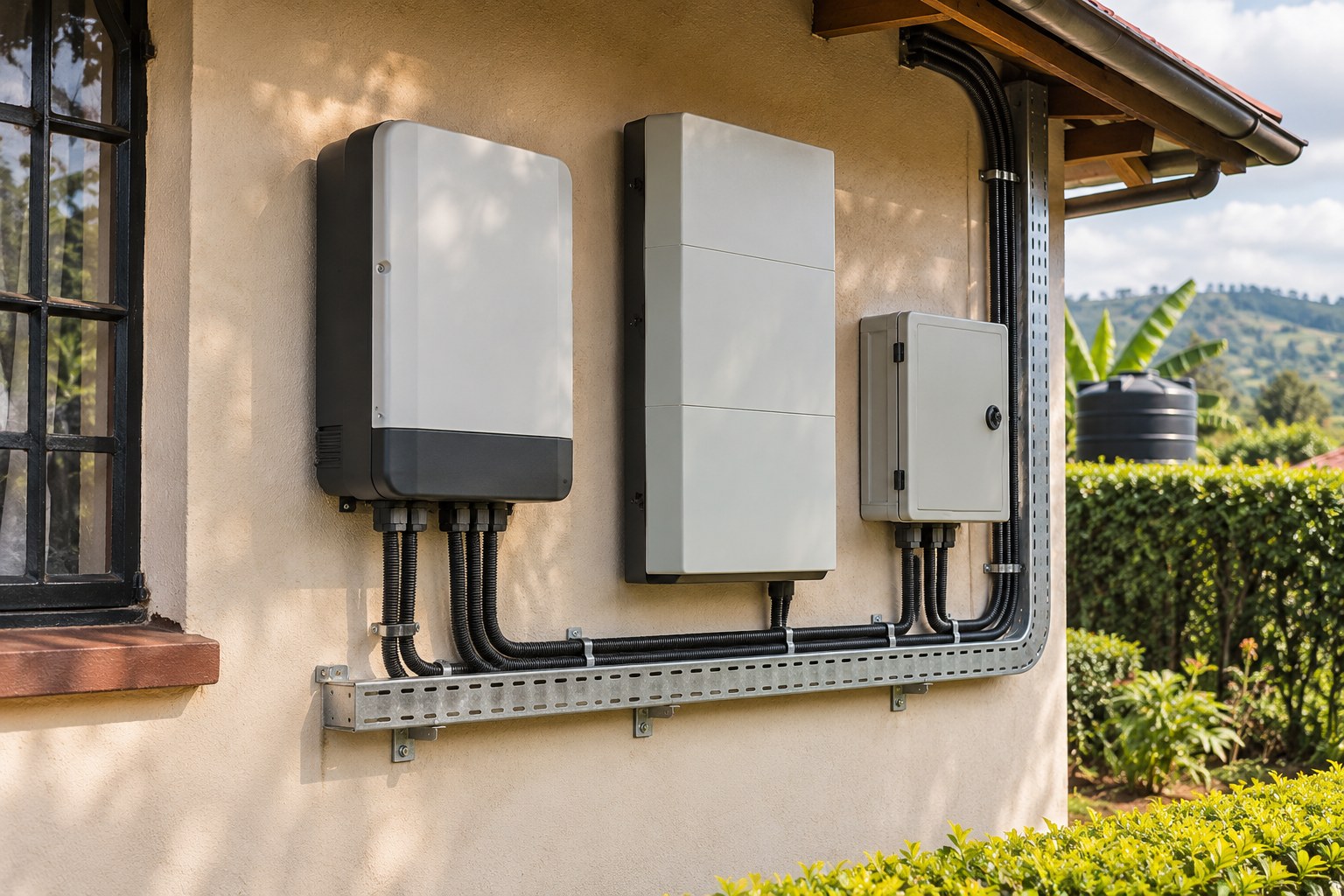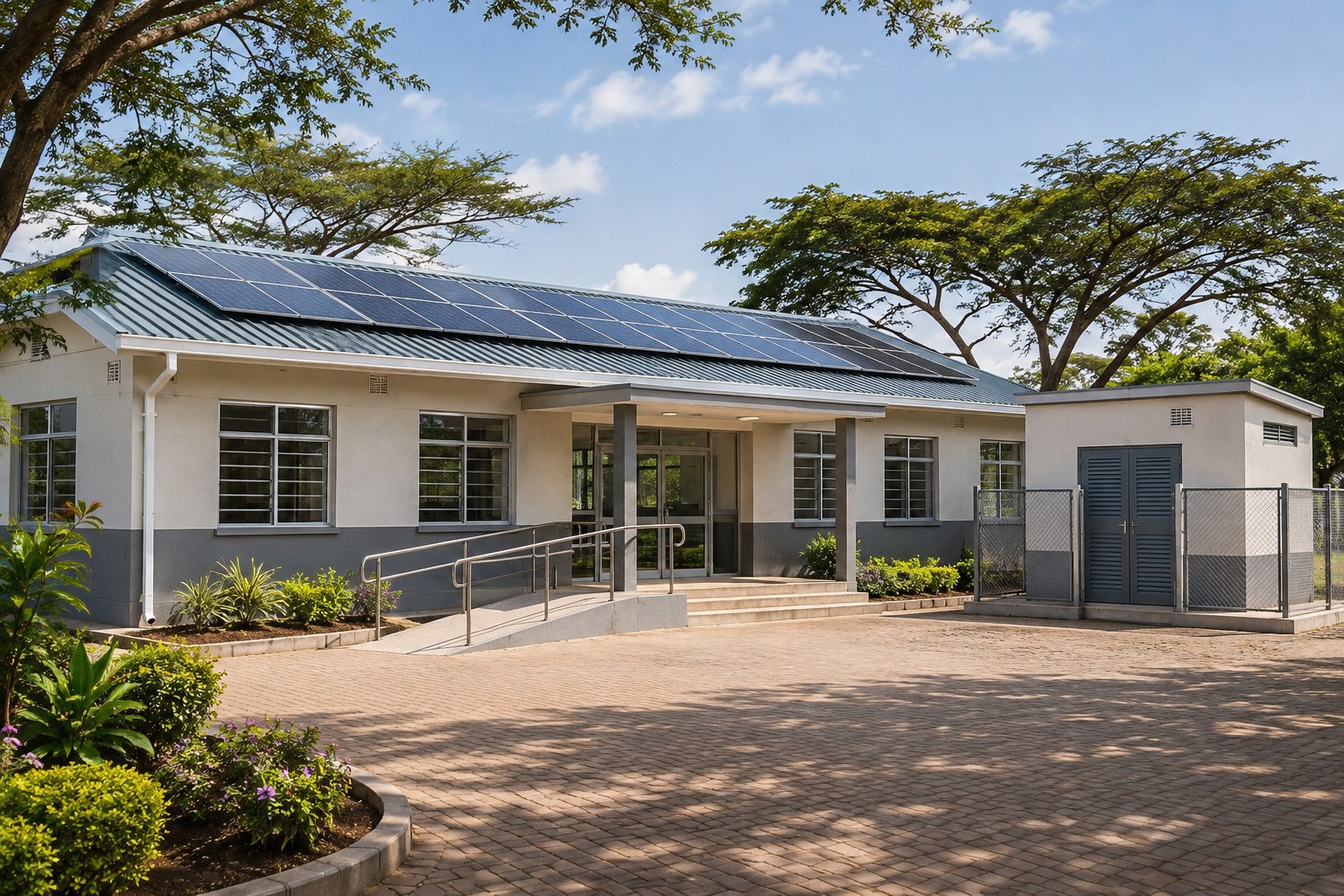
If you are assessing hospital solar maintenance planning, start with patient-service coordination during planned maintenance. Schedule maintenance around approved clinical continuity arrangements, safe isolation, infection-control access and emergency escalation responsibilities.
This decision guide was reviewed on 24 November 2026. The worked scenario is illustrative. It is not a measured customer result, an equipment recommendation or a company price offer.
Hospital solar maintenance planning: the decision to resolve
The practical question is whether the proposed arrangement demonstrates patient-service coordination during planned maintenance. Begin with the service you need, then ask what evidence would confirm that the proposal can provide it. Avoid replacing that question with a panel count, a product label or an unexplained system-size recommendation.
| Evidence to prepare | How to make the record useful |
|---|---|
| Department approvals | Provide the actual source record and its date. Distinguish a measurement from an assumption, and identify anything that may change before installation. |
| Maintenance window | Use the relevant units and operating period. Include the limiting condition as well as the convenient survey-day condition. |
| Temporary supply | Supply model-specific information where equipment is involved. Keep document revisions and the party responsible for confirming the information. |
| Specialist support | State the required service and who approves it. Record unresolved questions so the quotation does not silently treat them as settled facts. |
A worked example for hospital solar maintenance planning
A preventive visit that includes an isolation test may need coordination beyond the maintenance contractor. Document which clinical authority approves the test and how service is maintained if an unexpected defect appears.
The lesson is the role of patient-service coordination during planned maintenance, not the purchase of a particular product. Replace the scenario assumptions with your own records before making a commitment. Ask the responsible designer to show which conclusion changes when the demand, timing or site condition changes. A sound quotation should make that reasoning visible.
Classify critical services with the responsible specialist
Critical-load classification belongs to the people accountable for the service, working with competent technical specialists. A hospital, laboratory, telecom site and domestic home can all need backup, but their permitted interruptions and recovery procedures differ. Do not translate a generic number of backup hours into a promise of uninterrupted operation at every outlet.
Map the whole service chain. Cooling, communications, control equipment and existing UPS interfaces may be essential to the main appliance. Then agree what happens during transfer, low reserve and failure of a supporting component. The acceptance plan should demonstrate the approved arrangement under suitable professional supervision. This provides a clearer assurance than describing the whole building as backed up without identifying what that actually means.
Price maintenance as an operating service
Maintenance needs a scope, not just a visit count. Distinguish visual inspection, testing, cleaning, monitoring review, adjustments by authorised personnel and repair work. State whether access equipment, travel, parts and emergency attendance are included. The appropriate programme depends on the installation and its documented requirements.
Then connect the visit to a useful report. Findings, measurements, defects, recommended actions and completed work should identify the relevant assets. Keep the records with the handover file. This allows the owner to compare performance over time and follow warranty conditions. It also makes the difference between planned preventive work and an unplanned repair clear. Avoid promising that routine maintenance eliminates all faults or extends every component's life by a fixed number of years.
Record product arrivals as cooling events
A cold store's work changes when new product arrives. Record the mass, arrival condition, delivery time and the required next process step. A continuous average electrical load can conceal the short period when the refrigeration plant has the most work to do. It can also conceal a conflict with another important farm or building load.
For a milk cooler, the responsible dairy specialist should define the required process and performance. For a produce store, the product specialist should define the handling and storage conditions. The solar designer can then assess the corresponding energy and power. Do not extend a calculation for one product into a claim about another. The useful comparison is the cooling service delivered under the specified batch and arrival pattern.
Read the remedy and claim conditions
A warranty length is only part of the comparison. Identify the responsible party, the covered component, operating conditions, exclusions and the remedy. Equipment defects, installation workmanship and performance undertakings can belong to different documents. Transport, access, diagnosis and replacement labour may also receive different treatment.
Before purchase, ask how a claim would proceed at the actual site. Keep serial numbers, invoices, commissioning records and maintenance evidence in the required form. Also consider the operating consequence while a claim is assessed. A long warranty does not by itself promise rapid restoration of service. Where continuity matters, discuss a separately defined support or temporary-supply arrangement. Never assume that a generic brochure overrides the specific terms supplied with the proposed equipment.
Keep a handover file that matches the installed system
The customer should receive records for the equipment actually installed, not only the products originally proposed. Keep model and serial details, as-built drawings, commissioning results, warranty terms, approved operator instructions and the service contact route together. Record changes made during construction so later maintenance does not rely on an obsolete diagram.
Moreover, assign custody of the file to an accountable person or organisation. Staff, caretakers and service providers can change. Monitoring access should transfer through an authorised process rather than depend on somebody's private password. A well organised handover supports future troubleshooting and procurement decisions. It does not authorise unqualified users to open electrical equipment or change technical settings; the operator's instructions should make that boundary clear.
Distinguish a thermal buffer from a battery
A battery stores energy for electrical loads. A thermal buffer stores useful heating or cooling in a particular physical arrangement. The two can support different operating strategies, but their capacity labels cannot be compared directly. A useful thermal-storage proposal must show the service maintained over time, including the relevant process conditions.
Also identify what still needs electricity. Controls, pumps, fans, communications or other supporting equipment may remain necessary even where the main heat or cooling store provides resilience. Review the full service chain and the recovery arrangement. A smaller electrical battery may be suitable in one coordinated design, while another site needs a different approach. Select from demonstrated process requirements rather than assume thermal storage makes electrical continuity irrelevant.
Check professional responsibility and applicable permissions
Ask who is responsible for the professional design, installation and commissioning work and verify the relevant current authorisation. The appropriate competence depends on the activity and project. A company's marketing description is not a substitute for the supporting registration or licence information.
Also separate the equipment supplier's role from utility, water-resource, structural or other approvals that may apply. Buying equipment does not grant those permissions. Record any unresolved requirement in the project programme and establish who obtains it. Do not assume a standard approval time or claim a licence class that has not been verified. The regulator's published information is the starting point for checking the current applicable process.
Further reading: EPRA renewable-energy licensing information.
Keep one auditable version of the project budget
A useful budget separates the agreed base scope from provisional items, optional improvements and exclusions. Record the quotation date, currency, tax basis, validity and payment milestones. If a figure is an educational assumption, label it as such. Do not convert it into a claimed company price or market average without supporting evidence.
As survey findings change, revise the budget visibly. A roof repair, longer cable route or revised water duty can alter the project for legitimate reasons. Keep the customer's approved changes together with the final equipment and commissioning scope. This allows the customer to compare the delivered service with the original decision, instead of discovering at handover that important supporting work was never included in the headline figure.
Tie commissioning results to identified equipment
Commissioning records should identify the installation, the relevant equipment, the date and the person responsible. Measurements and tests need an appropriate professional method and a clear acceptance basis. A generic form with unexplained ticks provides less useful evidence than results tied to the actual system and its design requirements.
Keep unresolved findings visible. If an item needs correction or later verification, record who owns the action and when it will be closed. The customer should understand whether the system is accepted, accepted with agreed outstanding items or not yet ready for normal service. This does not require the owner to repeat hazardous tests. It requires a coherent record that supports safe operation, later maintenance and accountability for the installed work.
Turn the evidence into a clear go-or-no-go decision
For hospital solar maintenance planning, require an explanation of patient-service coordination during planned maintenance in the written proposal. A useful answer connects the project records to a stated service boundary. If essential information is missing, the next decision is to obtain the measurement or professional review that resolves it, rather than choose equipment around an optimistic guess.
- Proceed when the relevant evidence supports the proposed service and the responsible parties have closed material design questions.
- Revise the scope when the worked assumptions do not match the real site, operating pattern or equipment limits.
- Request further assessment when permissions, condition, compatibility or critical-service requirements remain unresolved.
Questions buyers ask
What should I prepare before requesting a quotation?
For this assessment, prepare department approvals, maintenance window, temporary supply and specialist support. Explain the required outcome and any known limitations. Send records from safe accessible sources; a qualified person should collect hazardous measurements or inspect restricted equipment.
What matters most when comparing hospital solar maintenance planning?
Schedule maintenance around approved clinical continuity arrangements, safe isolation, infection-control access and emergency escalation responsibilities. Compare the alternatives against the same defined service and ask for model-specific supporting evidence. Where proposals use different assumptions, have those differences made explicit before comparing totals.
Can I use the worked example as my final design or price?
No. The example explains a decision method and uses stated assumptions. Your site may have different operating conditions, equipment limits and scope. A final design and quotation need the relevant assessment, written inclusions and applicable approvals.
Prepare your project-specific enquiry
Review our solar for hospitals and clinics information, then request a site survey with the records listed above. For hospital solar maintenance planning, explain the required outcome, the property location and the operating constraints. Ask for a written scope, assumptions and exclusions before you commit to equipment.
Reference: WHO: refrigerators, freezers and temperature monitoring.