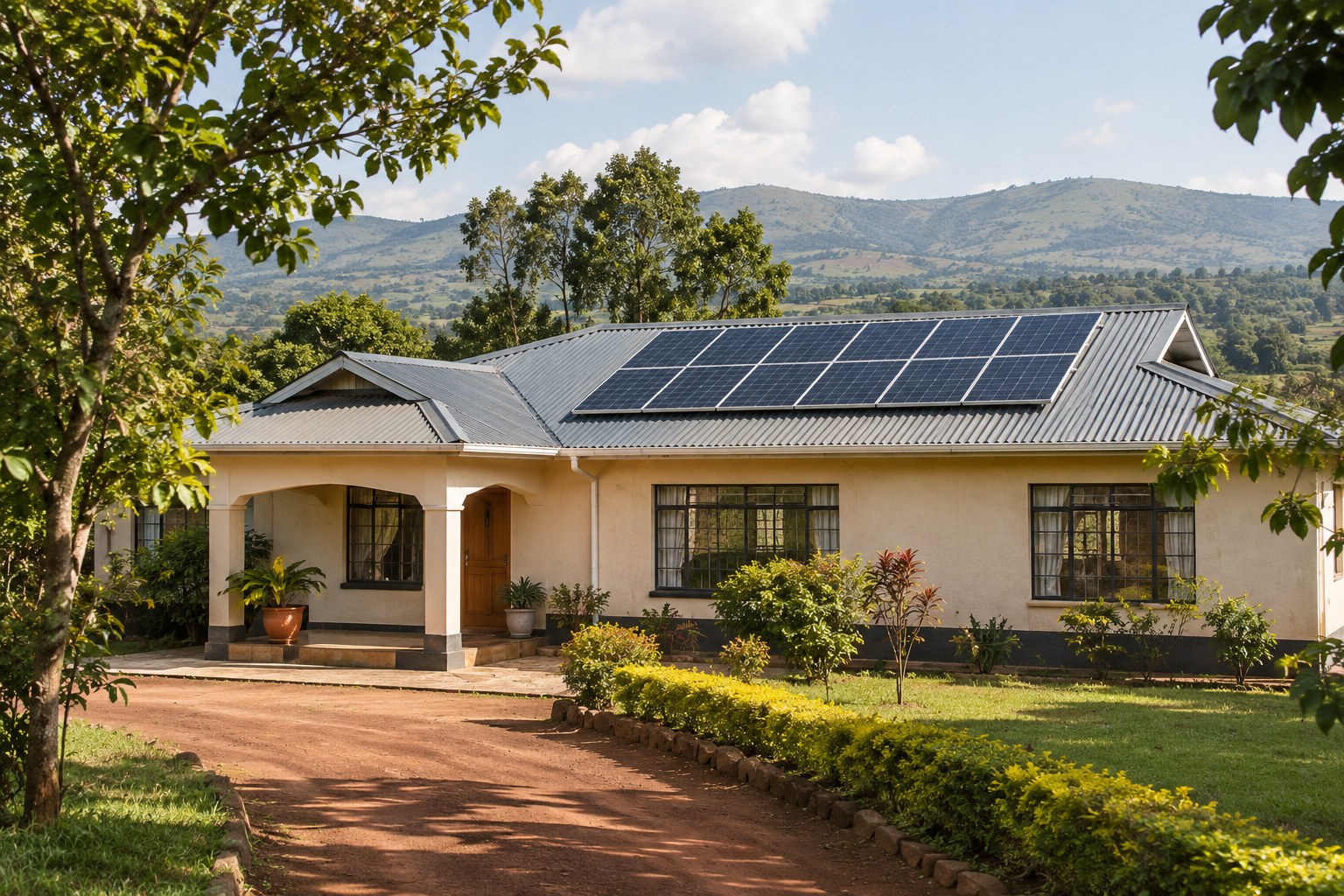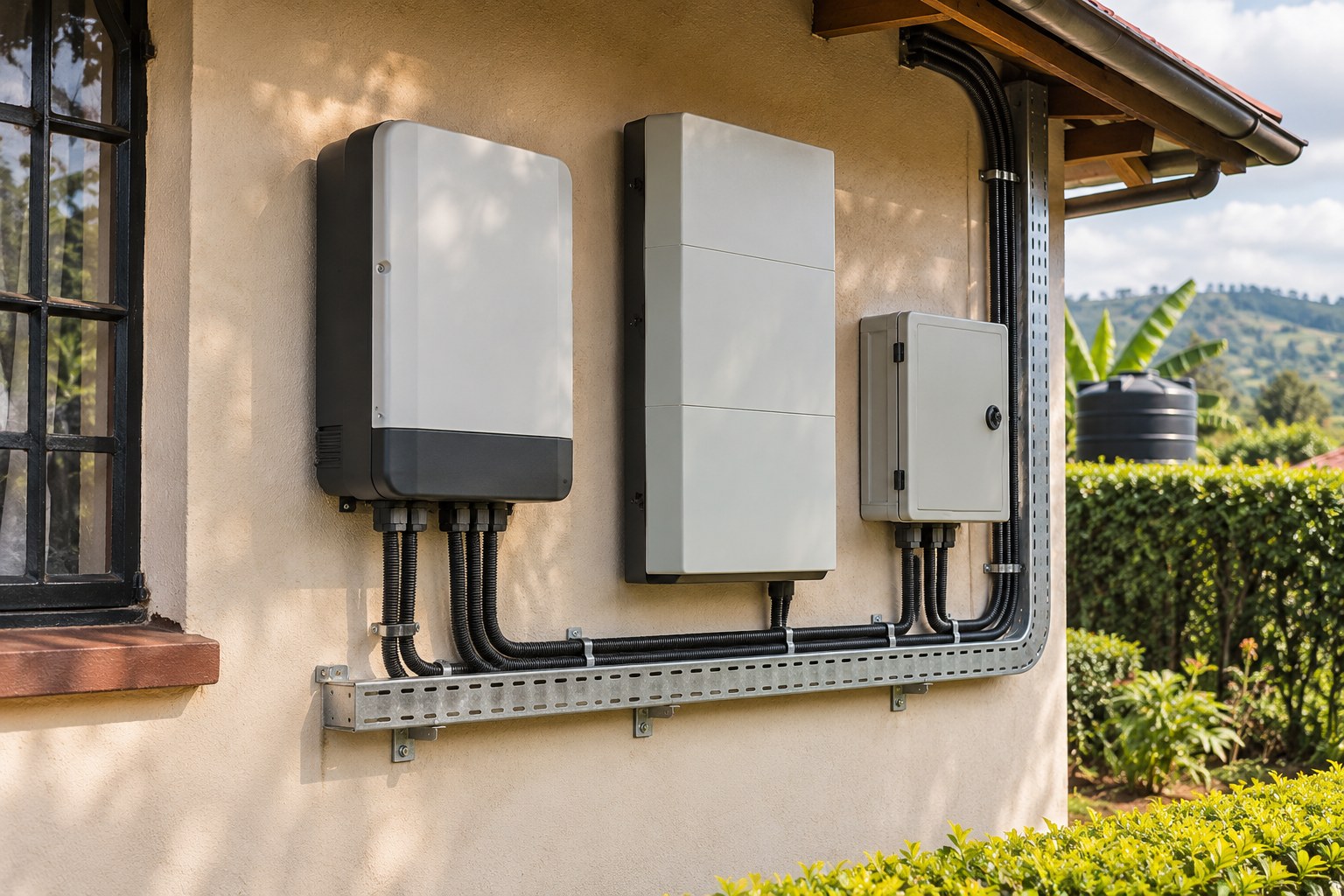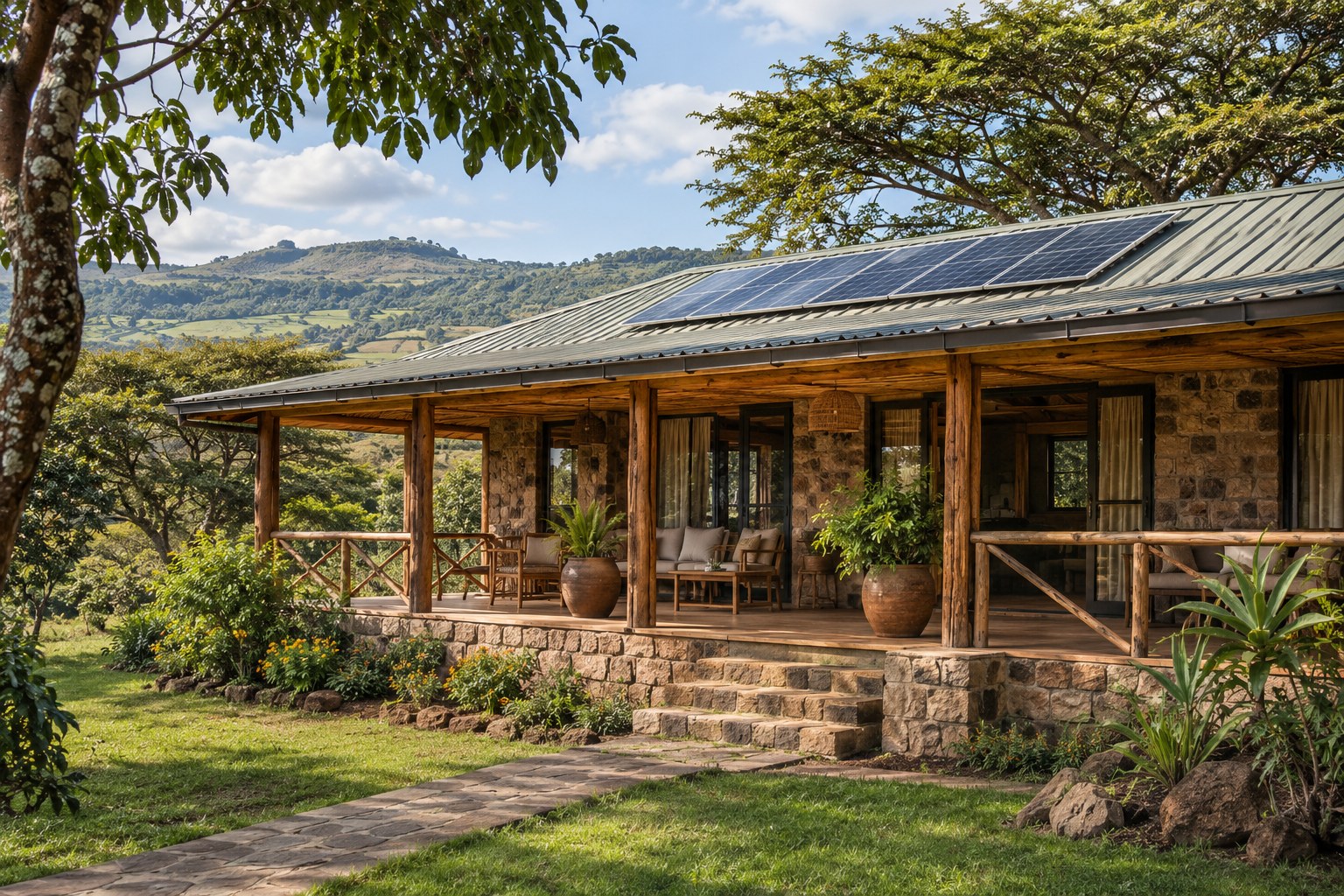
If you are assessing solar for remote lodges Kenya, start with seasonal hospitality demand and remote support. Build a seasonal load and service model for guest accommodation, water, communications and back-of-house operations. Remote access changes both maintenance logistics and the required contingency.
This decision guide was reviewed on 24 November 2026. The worked scenario is illustrative. It is not a measured customer result, an equipment recommendation or a company price offer.
Solar for remote lodges Kenya: the decision to resolve
The practical question is whether the proposed arrangement demonstrates seasonal hospitality demand and remote support. Begin with the service you need, then ask what evidence would confirm that the proposal can provide it. Avoid replacing that question with a panel count, a product label or an unexplained system-size recommendation.
| Evidence to prepare | How to make the record useful |
|---|---|
| Occupancy pattern | Provide the actual source record and its date. Distinguish a measurement from an assumption, and identify anything that may change before installation. |
| Water pumping | Use the relevant units and operating period. Include the limiting condition as well as the convenient survey-day condition. |
| Generator records | Supply model-specific information where equipment is involved. Keep document revisions and the party responsible for confirming the information. |
| Spare-parts access | State the required service and who approves it. Record unresolved questions so the quotation does not silently treat them as settled facts. |
A worked example for solar for remote lodges Kenya
A lodge with 20 occupied rooms may need very different hot-water and refrigeration capacity from the same site at low occupancy. Size and forecast against explicit seasonal scenarios rather than the busiest week alone.
The lesson is the role of seasonal hospitality demand and remote support, not the purchase of a particular product. Replace the scenario assumptions with your own records before making a commitment. Ask the responsible designer to show which conclusion changes when the demand, timing or site condition changes. A sound quotation should make that reasoning visible.
Distinguish acknowledgement, attendance and restoration
Support promises need precise definitions. An acknowledged alarm, an engineer's arrival and restored service are different events. Parts availability, site access, communications and the cause of the fault can affect each one. Ask the provider to state the actual commitment and its conditions rather than relying on words such as immediate support.
For a remote or critical site, agree an escalation path and a practical contingency. Identify who can authorise access, which symptoms require urgent action and who manages the affected service until repair. Do not invent a response time that the business has not approved. A clear service arrangement is valuable precisely because it describes what can be delivered and what the customer must provide when something goes wrong.
Separate the electricity bill into relevant components
Use the customer's actual tariff category and bill history when estimating avoided costs. The average amount paid divided by imported kWh may combine energy charges with other items. A reduction in energy imports does not necessarily remove every charge. Demand-related charges also require attention to when the site's peak occurs.
For example, a PV array may reduce daytime purchases without eliminating an evening demand peak. Show self-consumed energy, approved exports and remaining purchases separately. Use current applicable information from the utility and regulator. Where that evidence is missing, retain a clearly labelled assumption rather than presenting it as the current Kenyan electricity price. A transparent estimate explains the relationship between the physical energy model and the financial calculation.
Further reading: EPRA electricity tariff guidance.
Match generation to the load timetable
Solar generation changes through the day, while customers use energy on their own schedules. Compare the two profiles instead of subtracting an annual production estimate from annual consumption. The timing matters even when the totals look similar. A large midday surplus cannot automatically supply a load that operates much later.
For a grid-connected installation, unused production may need approved export, supported storage or curtailment. For an independent installation, the energy balance needs an alternative response when demand exceeds supply. Identify flexible loads that can move into daylight without disrupting the service they provide. Also keep genuinely time-sensitive loads separate. Scheduling can improve utilisation, but it should not compromise security, clinical care, product quality or an approved production process.
Further reading: National Laboratory of the Rockies: photovoltaic performance modelling.
Resolve ownership and access before installation
The physical owner, electricity-account holder, occupier and maintenance decision-maker may be different people. Clarify their roles before work proceeds. A tenant, estate committee or project donor needs an agreed basis for installation access, future inspection, funding and any asset transfer. Energy savings do not automatically settle these responsibilities.
In addition, consider what happens when occupancy or management changes. Equipment records, monitoring access and warranty rights may need an authorised transfer. Avoid a service arrangement that relies solely on one person's private account. Where a lease, ownership agreement or legal obligation requires interpretation, obtain appropriate professional advice. The solar quotation should identify the relevant project responsibilities without pretending to replace the underlying property or governance documents.
Classify critical services with the responsible specialist
Critical-load classification belongs to the people accountable for the service, working with competent technical specialists. A hospital, laboratory, telecom site and domestic home can all need backup, but their permitted interruptions and recovery procedures differ. Do not translate a generic number of backup hours into a promise of uninterrupted operation at every outlet.
Map the whole service chain. Cooling, communications, control equipment and existing UPS interfaces may be essential to the main appliance. Then agree what happens during transfer, low reserve and failure of a supporting component. The acceptance plan should demonstrate the approved arrangement under suitable professional supervision. This provides a clearer assurance than describing the whole building as backed up without identifying what that actually means.
Use more than one representative operating condition
Demand and available resources can change through the year. A school, farm, hotel and family home may each have busy and quiet periods. Identify the conditions that matter to the proposed service instead of extending a single favourable day across the whole annual forecast. The same principle applies to source water levels and access conditions.
Then distinguish a normal operating case from a limiting case and a contingency case. Explain which one determines equipment capacity and which one tests resilience. This makes the decision more transparent without pretending that a model predicts every future event. Where local evidence is unavailable, state the assumption and arrange the relevant survey or measurement rather than presenting a regional generalisation as a verified site fact.
Agree a fair baseline before claiming savings
A baseline describes the service and consumption against which a change will be assessed. Record the period, meter boundaries, operating activity and known unusual events before work starts. Otherwise a later bill reduction can be attributed to the wrong cause. Lower occupancy, fewer production hours or a change in tariff can alter the result independently of solar.
Therefore, agree how the comparison will handle such changes. A factory may need production data; a lodge may need occupied room-nights; a pumping project may need delivered water volume and head. Select a measure that reflects the actual service. Report missing data and uncertainty rather than filling gaps with an optimistic assumption. This makes performance review more useful to the customer and prevents an attractive headline from hiding a weak comparison.
Check simultaneous demand and starting capability
An installation can have enough stored energy yet fail to supply a particular operating combination. The inverter and battery must support the simultaneous load. Motors and some other equipment can add a short starting demand. Ask the designer to state the combinations the system supports, rather than relying on a single headline rating.
Next, separate continuous ratings from short-duration figures. A surge allowance has conditions and a time limit. It is not extra continuous capacity. The connected battery, wiring and protection also impose limits. Record whether a large appliance may operate while another starts. This gives the customer a useful operating boundary and provides a practical basis for the acceptance demonstration. Any live measurements or electrical tests belong to qualified personnel.
Turn the evidence into a clear go-or-no-go decision
For solar for remote lodges Kenya, require an explanation of seasonal hospitality demand and remote support in the written proposal. A useful answer connects the project records to a stated service boundary. If essential information is missing, the next decision is to obtain the measurement or professional review that resolves it, rather than choose equipment around an optimistic guess.
- Proceed when the relevant evidence supports the proposed service and the responsible parties have closed material design questions.
- Revise the scope when the worked assumptions do not match the real site, operating pattern or equipment limits.
- Request further assessment when permissions, condition, compatibility or critical-service requirements remain unresolved.
Questions buyers ask
What should I prepare before requesting a quotation?
For this assessment, prepare occupancy pattern, water pumping, generator records and spare-parts access. Explain the required outcome and any known limitations. Send records from safe accessible sources; a qualified person should collect hazardous measurements or inspect restricted equipment.
What matters most when comparing solar for remote lodges Kenya?
Build a seasonal load and service model for guest accommodation, water, communications and back-of-house operations. Remote access changes both maintenance logistics and the required contingency. Compare the alternatives against the same defined service and ask for model-specific supporting evidence. Where proposals use different assumptions, have those differences made explicit before comparing totals.
Can I use the worked example as my final design or price?
No. The example explains a decision method and uses stated assumptions. Your site may have different operating conditions, equipment limits and scope. A final design and quotation need the relevant assessment, written inclusions and applicable approvals.
Prepare your project-specific enquiry
Review our solar for hotels lodges and camps information, then request a site survey with the records listed above. For solar for remote lodges Kenya, explain the required outcome, the property location and the operating constraints. Ask for a written scope, assumptions and exclusions before you commit to equipment.
The solar calculator can help organise a preliminary energy enquiry. Treat its result as an estimate and supply actual load and site records for the final assessment.