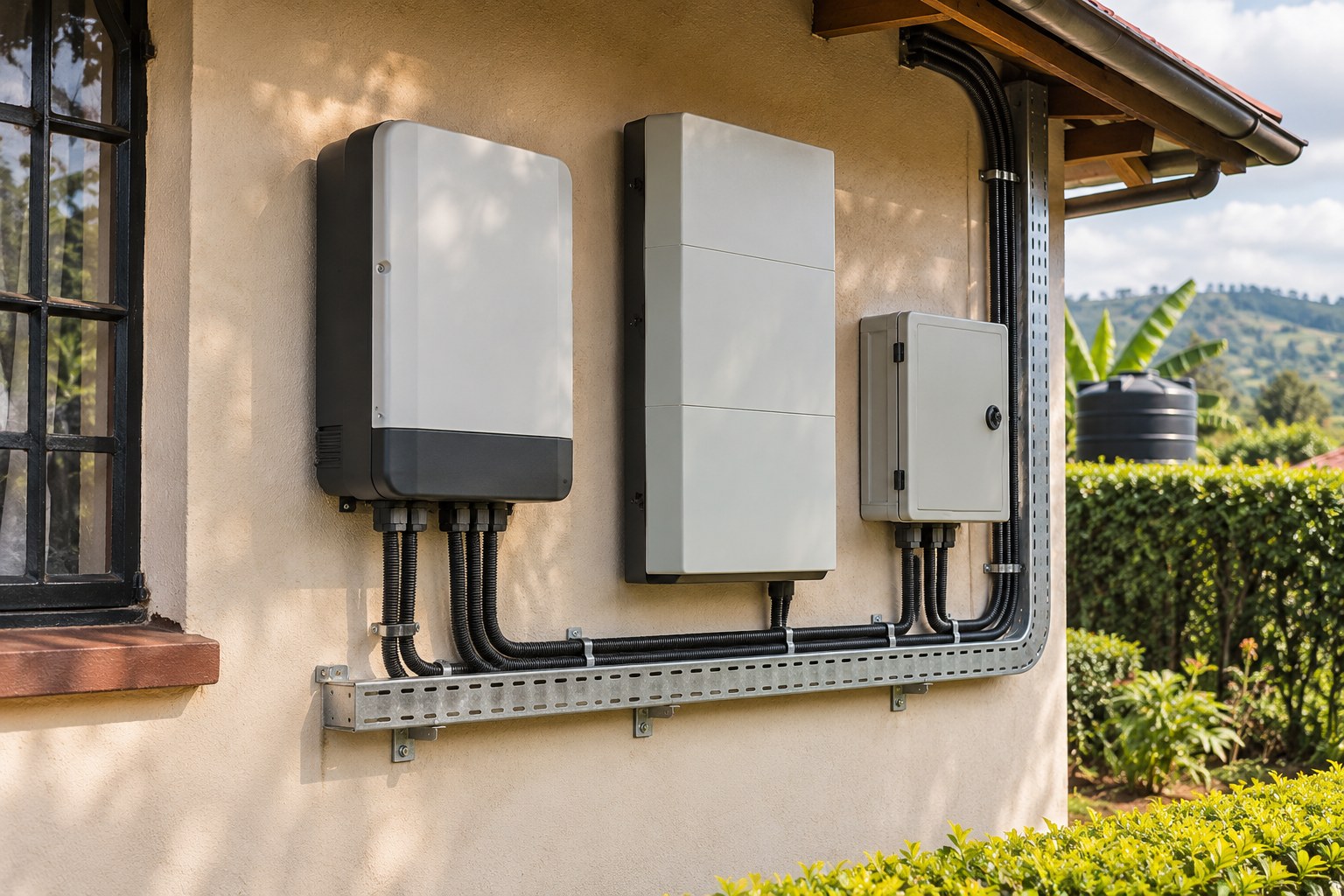
If you are assessing solar forecourt feasibility review, start with specialist approval of site-specific risks and interfaces. Treat hazardous locations, vehicle movement, emergency systems and safe work procedures as specialist design matters. A generic rooftop package does not establish forecourt suitability.
This decision guide was reviewed on 24 November 2026. The worked scenario is illustrative. It is not a measured customer result, an equipment recommendation or a company price offer.
Solar forecourt feasibility review: the decision to resolve
The practical question is whether the proposed arrangement demonstrates specialist approval of site-specific risks and interfaces. Begin with the service you need, then ask what evidence would confirm that the proposal can provide it. Avoid replacing that question with a panel count, a product label or an unexplained system-size recommendation.
| Evidence to prepare | How to make the record useful |
|---|---|
| Hazardous-area documentation | Provide the actual source record and its date. Distinguish a measurement from an assumption, and identify anything that may change before installation. |
| Emergency systems | Use the relevant units and operating period. Include the limiting condition as well as the convenient survey-day condition. |
| Contractor competence | Supply model-specific information where equipment is involved. Keep document revisions and the party responsible for confirming the information. |
| Approved work access | State the required service and who approves it. Record unresolved questions so the quotation does not silently treat them as settled facts. |
A worked example for solar forecourt feasibility review
A proposed inverter location beside a dispensing area needs competent review even if the roof has abundant space. Equipment location and cable routes are part of feasibility, not details to settle after purchase.
The lesson is the role of specialist approval of site-specific risks and interfaces, not the purchase of a particular product. Replace the scenario assumptions with your own records before making a commitment. Ask the responsible designer to show which conclusion changes when the demand, timing or site condition changes. A sound quotation should make that reasoning visible.
Keep customer decisions separate from hazardous technical work
A customer can define needs, inspect documents and report observed symptoms without opening equipment or changing protective settings. Work on live circuits, high-voltage batteries, roofs, pressurised systems and other hazardous installations requires the appropriate qualified personnel and a safe method. A buying guide should not turn a design question into an improvised repair instruction.
For existing faults, record alarms, times and normal operating conditions from safe accessible interfaces. Report visible damage or unusual behaviour through the agreed service route. Follow the approved emergency instructions if the situation presents an immediate hazard. During procurement, ask for the professional test and commissioning evidence that relates to the actual installation. This gives the owner useful assurance without asking them to perform unsafe demonstrations.
Build the energy budget from actual use
Energy and power answer different questions. Energy, measured in kWh, describes consumption over time. Power, measured in kW, describes the rate at a particular moment. Start with the service you need and its operating hours. Then calculate the energy for that defined period. A list of appliance ratings without durations is not a daily energy budget.
For example, a 100 W load running for ten hours consumes 1 kWh. That arithmetic does not establish battery size or inverter suitability. Add the other supported loads and distinguish measured consumption from estimates. Also record equipment that cycles on and off. A refrigerator's printed input rating should not be treated as a measurement of its average daily consumption.
Further reading: US Department of Energy: solar energy and storage basics.
Give measurements an identifiable source and date
Useful design evidence has a source, a date, a measurement point and units. Record whether each figure comes from a meter, manufacturer document, site survey or customer estimate. This helps a designer recognise which inputs are reliable and which need checking. It also prevents a preliminary assumption from becoming an undocumented contractual promise.
For instance, a motor's printed rating describes a different quantity from measured average operating energy. A tank's nominal capacity may differ from the usable volume between its operating levels. A screenshot without a time range may conceal gaps or unusual operation. Supply the original records where practical and explain any known limitations. Good evidence does not need to be elaborate; it needs to make the underlying service requirement and the uncertainty understandable.
Use monitoring to answer a defined operating question
A monitoring system is most useful when the owner knows what each value means. Generation, consumption, import, export, battery flow and state of charge describe different things. The sensor location and the software's definitions matter. Ask the installer to demonstrate the measurements needed for the customer's actual decisions.
Also check what happens when communications fail. Local data storage, remote alerts and historical export can have different availability. Agree who owns the account and who is authorised to receive alerts. A graph can help detect an unusual trend, but it does not replace appropriate physical testing or establish the cause of every fault. Use the records to support a targeted professional assessment, with timestamps and relevant operating context.
Keep removed equipment in a traceable disposal chain
When batteries or electrical equipment leave the site, identify who takes custody and what record the owner receives. The new product's delivery note is not evidence of responsible handling of the old one. Ask for the appropriate collection or disposal documentation and use suitable authorised operators for the relevant waste.
The record should distinguish reuse, repair, return to supplier and disposal where those apply. Avoid unsupported claims that a removed asset has been recycled simply because it was collected. Keep the transfer evidence with the service or replacement file. NEMA's published guidance identifies batteries and electronic waste among the materials that require appropriate handling; confirm the applicable current requirements for the actual waste stream.
Further reading: NEMA: appropriate handling of batteries and electronic waste.
Define an observable acceptance test
Acceptance should demonstrate the service the customer agreed to buy. Identify the test conditions, measurements, responsible witnesses and the evidence that will be retained. A dashboard showing normal status is useful, but it may not prove backup duration, delivered water, temperature continuity or a correctly functioning control sequence.
In practice, the test needs appropriate professional planning. Do not ask a customer to create unsafe faults, alter live wiring or bypass protection. Instead, have competent personnel test the agreed functions through a supported procedure. Record defects and the authority for return to service. If conditions prevent a meaningful performance test on the first visit, document the outstanding verification rather than quietly treating it as complete. A clear acceptance record protects both the buyer and the contractor.
Check professional responsibility and applicable permissions
Ask who is responsible for the professional design, installation and commissioning work and verify the relevant current authorisation. The appropriate competence depends on the activity and project. A company's marketing description is not a substitute for the supporting registration or licence information.
Also separate the equipment supplier's role from utility, water-resource, structural or other approvals that may apply. Buying equipment does not grant those permissions. Record any unresolved requirement in the project programme and establish who obtains it. Do not assume a standard approval time or claim a licence class that has not been verified. The regulator's published information is the starting point for checking the current applicable process.
Further reading: EPRA renewable-energy licensing information.
Keep financial scenarios distinct from promises
A financial comparison should show its installed scope, assumed annual benefit and recurring costs. Separate cash purchase, financing costs, replacements and any residual value. Simple payback can help explain a scenario, but it is not a discounted return or a guarantee of recovery by a particular date. A detailed investment decision may need independent financial advice.
Next, change the inputs that are uncertain. Test lower self-consumption, weaker generation, altered operating hours and realistic maintenance costs. Show the effect instead of hiding it inside a single confident number. Any KSh figures used for an educational calculation should be labelled as assumptions with a date. They must not be presented as verified market prices, an approved company quotation or confirmed VAT treatment when no such evidence exists.
Turn the evidence into a clear go-or-no-go decision
For solar forecourt feasibility review, require an explanation of specialist approval of site-specific risks and interfaces in the written proposal. A useful answer connects the project records to a stated service boundary. If essential information is missing, the next decision is to obtain the measurement or professional review that resolves it, rather than choose equipment around an optimistic guess.
- Proceed when the relevant evidence supports the proposed service and the responsible parties have closed material design questions.
- Revise the scope when the worked assumptions do not match the real site, operating pattern or equipment limits.
- Request further assessment when permissions, condition, compatibility or critical-service requirements remain unresolved.
Questions buyers ask
What should I prepare before requesting a quotation?
For this assessment, prepare hazardous-area documentation, emergency systems, contractor competence and approved work access. Explain the required outcome and any known limitations. Send records from safe accessible sources; a qualified person should collect hazardous measurements or inspect restricted equipment.
What matters most when comparing solar forecourt feasibility review?
Treat hazardous locations, vehicle movement, emergency systems and safe work procedures as specialist design matters. A generic rooftop package does not establish forecourt suitability. Compare the alternatives against the same defined service and ask for model-specific supporting evidence. Where proposals use different assumptions, have those differences made explicit before comparing totals.
Can I use the worked example as my final design or price?
No. The example explains a decision method and uses stated assumptions. Your site may have different operating conditions, equipment limits and scope. A final design and quotation need the relevant assessment, written inclusions and applicable approvals.
Prepare your project-specific enquiry
Review our solar for petrol stations and retail information, then request a site survey with the records listed above. For solar forecourt feasibility review, explain the required outcome, the property location and the operating constraints. Ask for a written scope, assumptions and exclusions before you commit to equipment.
The solar calculator can help organise a preliminary energy enquiry. Treat its result as an estimate and supply actual load and site records for the final assessment.