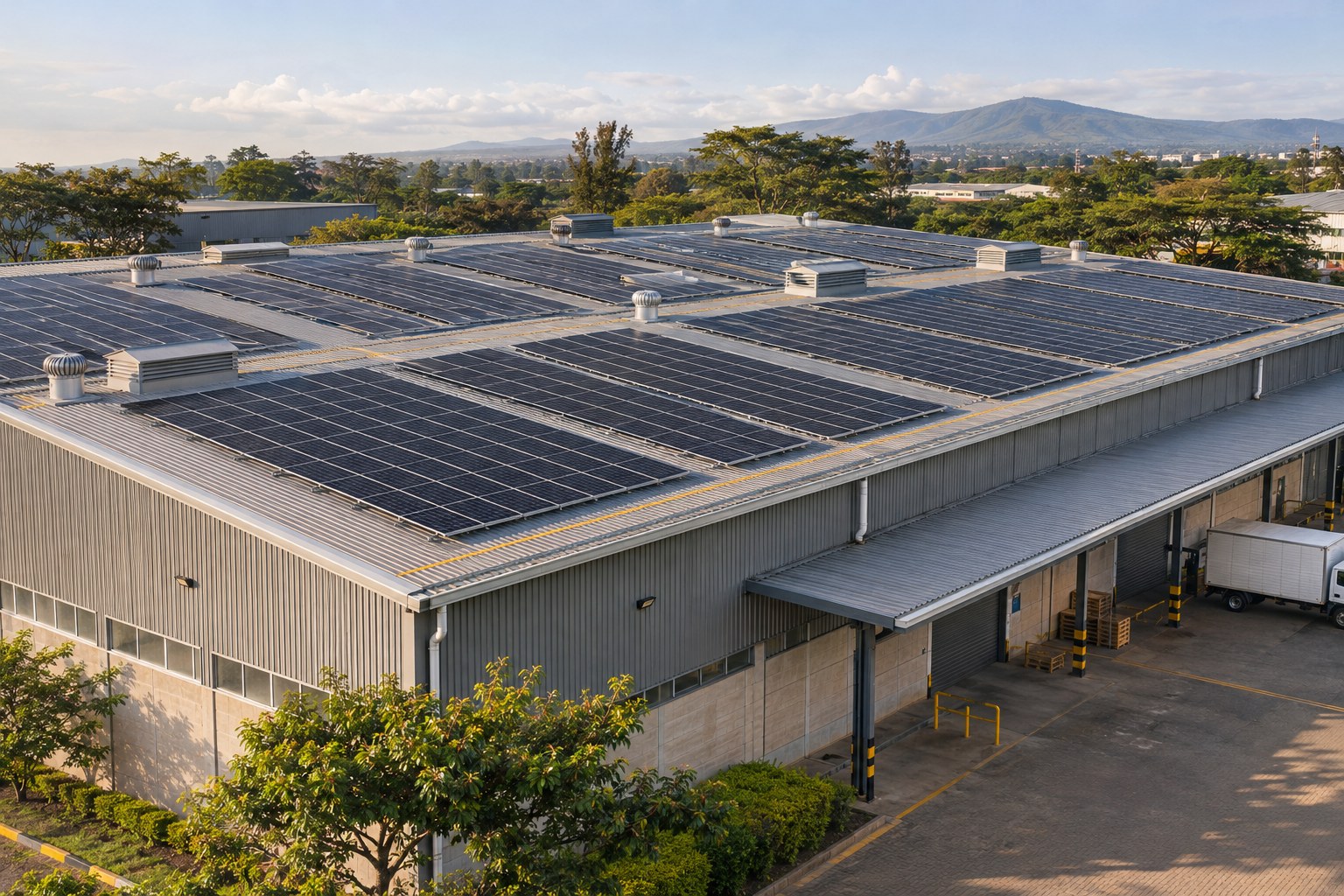
If you are assessing solar on a leased warehouse roof, start with documented rights to use and maintain the roof. Resolve landlord consent, roof condition, access, asset ownership and end-of-lease arrangements before equipment orders.
This decision guide was reviewed on 24 November 2026. The worked scenario is illustrative. It is not a measured customer result, an equipment recommendation or a company price offer.
Solar on a leased warehouse roof: the decision to resolve
The practical question is whether the proposed arrangement demonstrates documented rights to use and maintain the roof. Begin with the service you need, then ask what evidence would confirm that the proposal can provide it. Avoid replacing that question with a panel count, a product label or an unexplained system-size recommendation.
| Evidence to prepare | How to make the record useful |
|---|---|
| Lease term | Provide the actual source record and its date. Distinguish a measurement from an assumption, and identify anything that may change before installation. |
| Roof warranty | Use the relevant units and operating period. Include the limiting condition as well as the convenient survey-day condition. |
| Removal responsibility | Supply model-specific information where equipment is involved. Keep document revisions and the party responsible for confirming the information. |
| Insurance arrangements | State the required service and who approves it. Record unresolved questions so the quotation does not silently treat them as settled facts. |
A worked example for solar on a leased warehouse roof
A tenant with four years remaining on a lease cannot treat a twenty-year generation model as secured site access. Compare written renewal, transfer and removal options before relying on long-term savings.
The lesson is the role of documented rights to use and maintain the roof, not the purchase of a particular product. Replace the scenario assumptions with your own records before making a commitment. Ask the responsible designer to show which conclusion changes when the demand, timing or site condition changes. A sound quotation should make that reasoning visible.
Resolve ownership and access before installation
The physical owner, electricity-account holder, occupier and maintenance decision-maker may be different people. Clarify their roles before work proceeds. A tenant, estate committee or project donor needs an agreed basis for installation access, future inspection, funding and any asset transfer. Energy savings do not automatically settle these responsibilities.
In addition, consider what happens when occupancy or management changes. Equipment records, monitoring access and warranty rights may need an authorised transfer. Avoid a service arrangement that relies solely on one person's private account. Where a lease, ownership agreement or legal obligation requires interpretation, obtain appropriate professional advice. The solar quotation should identify the relevant project responsibilities without pretending to replace the underlying property or governance documents.
Use measured usable roof space
Gross roof area is not the same as available array area. Obstructions, shading, rooflights, access routes and the building's condition can reduce the space that is usable. The survey should record these constraints before a panel count is promised. Actual module dimensions then need to be fitted into an approved layout.
Furthermore, the roof covering does not describe the whole supporting structure. A competent assessment must consider the proposed load path and attachment arrangement. Ask how existing defects, waterproofing and any roof warranty will be handled. The resulting drawing should preserve safe access for future service work. This is a procurement and coordination question for the owner; it is not a reason for an unqualified person to climb onto the roof or inspect live installation equipment.
Check simultaneous demand and starting capability
An installation can have enough stored energy yet fail to supply a particular operating combination. The inverter and battery must support the simultaneous load. Motors and some other equipment can add a short starting demand. Ask the designer to state the combinations the system supports, rather than relying on a single headline rating.
Next, separate continuous ratings from short-duration figures. A surge allowance has conditions and a time limit. It is not extra continuous capacity. The connected battery, wiring and protection also impose limits. Record whether a large appliance may operate while another starts. This gives the customer a useful operating boundary and provides a practical basis for the acceptance demonstration. Any live measurements or electrical tests belong to qualified personnel.
Understand the phase arrangement before comparing ratings
Single-phase and three-phase equipment cannot be compared only by total kW. The building's supply, the load distribution and the supported inverter arrangement all matter. Some equipment has per-phase limits or specific balance requirements. A combined system rating does not promise that its entire output is available on any one phase.
For a commercial site, obtain phase-level measurements during representative operation. Record large motors, cooling equipment and other concentrated demand. Then ask the designer to explain the proposed allocation of essential circuits. The assessment should include the actual equipment's requirements, not a theoretical equal split of the site's monthly energy. Keep the phase arrangement and permitted operating combinations in the design record so future additions receive an appropriate review.
Control substitutions and unresolved assumptions
A procurement comparison is stronger when every bidder responds to the same assumptions. List the required service, proposed operating conditions and acceptance evidence. Ask bidders to mark departures clearly. Otherwise a lower price may describe a smaller duty, a different warranty or an omitted supporting component.
After selection, keep a written change process. A replacement model can alter dimensions, controls, support or performance. It should not enter the project merely because its headline rating looks similar. Obtain the revised documents and the responsible designer's approval where appropriate. Also close important survey uncertainties before irreversible purchasing decisions. This reduces later arguments about whether the original quote included the work needed to deliver the actual service.
Translate nameplate storage into usable service
Nominal battery energy is the starting point for an assessment, not the final amount available at the loads. The permitted operating window, starting charge, reserved energy and conversion losses affect useful delivery. Obtain the manufacturer's definitions so the same restriction is not applied twice. A figure already described as usable may include an allowance that another supplier applies separately.
However, an energy calculation still needs a power check. A large-capacity battery can have a relatively modest discharge limit. Temperature, state of charge and the supported system configuration may change available performance. Ask for the proposed service in plain terms: which loads, for how long, from what initial condition. Keep those assumptions beside the quoted capacity instead of treating a brand name or chemistry label as a runtime guarantee.
Further reading: US Department of Energy: solar energy and storage basics.
Read the remedy and claim conditions
A warranty length is only part of the comparison. Identify the responsible party, the covered component, operating conditions, exclusions and the remedy. Equipment defects, installation workmanship and performance undertakings can belong to different documents. Transport, access, diagnosis and replacement labour may also receive different treatment.
Before purchase, ask how a claim would proceed at the actual site. Keep serial numbers, invoices, commissioning records and maintenance evidence in the required form. Also consider the operating consequence while a claim is assessed. A long warranty does not by itself promise rapid restoration of service. Where continuity matters, discuss a separately defined support or temporary-supply arrangement. Never assume that a generic brochure overrides the specific terms supplied with the proposed equipment.
Give organisations control of their operating information
Monitoring and project records often outlive the person who first set them up. Use an appropriate organisational account and define administrator, operator and service-provider roles. Avoid routine dependence on a private password shared informally among staff. Ask how access changes when a service contract or property ownership changes.
Where monitoring or security records contain personal information, handle access and sharing through the applicable data-protection requirements. Do not collect more information than the task needs. Also check export capability, retention and any subscription dependency before purchase. A customer should know what information remains available if connectivity fails or a supplier relationship ends. These questions are part of a durable handover rather than optional software conveniences.
Further reading: ODPC: Kenyan data-protection laws.
Turn the evidence into a clear go-or-no-go decision
For solar on a leased warehouse roof, require an explanation of documented rights to use and maintain the roof in the written proposal. A useful answer connects the project records to a stated service boundary. If essential information is missing, the next decision is to obtain the measurement or professional review that resolves it, rather than choose equipment around an optimistic guess.
- Proceed when the relevant evidence supports the proposed service and the responsible parties have closed material design questions.
- Revise the scope when the worked assumptions do not match the real site, operating pattern or equipment limits.
- Request further assessment when permissions, condition, compatibility or critical-service requirements remain unresolved.
Questions buyers ask
What should I prepare before requesting a quotation?
For this assessment, prepare lease term, roof warranty, removal responsibility and insurance arrangements. Explain the required outcome and any known limitations. Send records from safe accessible sources; a qualified person should collect hazardous measurements or inspect restricted equipment.
What matters most when comparing solar on a leased warehouse roof?
Resolve landlord consent, roof condition, access, asset ownership and end-of-lease arrangements before equipment orders. Compare the alternatives against the same defined service and ask for model-specific supporting evidence. Where proposals use different assumptions, have those differences made explicit before comparing totals.
Can I use the worked example as my final design or price?
No. The example explains a decision method and uses stated assumptions. Your site may have different operating conditions, equipment limits and scope. A final design and quotation need the relevant assessment, written inclusions and applicable approvals.
Prepare your project-specific enquiry
Review our commercial and industrial rooftop solar information, then request a site survey with the records listed above. For solar on a leased warehouse roof, explain the required outcome, the property location and the operating constraints. Ask for a written scope, assumptions and exclusions before you commit to equipment.
The solar calculator can help organise a preliminary energy enquiry. Treat its result as an estimate and supply actual load and site records for the final assessment.