If you are assessing solar water heater retrofit survey, start with the full installed structural and plumbing load. A retrofit survey must assess structural support, pipe routes, pressure compatibility, drainage, access and how existing heating is retained or changed.
This decision guide was reviewed on 24 November 2026. The worked scenario is illustrative. It is not a measured customer result, an equipment recommendation or a company price offer.
Solar water heater retrofit survey: the decision to resolve
The practical question is whether the proposed arrangement demonstrates the full installed structural and plumbing load. Begin with the service you need, then ask what evidence would confirm that the proposal can provide it. Avoid replacing that question with a panel count, a product label or an unexplained system-size recommendation.
| Evidence to prepare | How to make the record useful |
|---|---|
| Roof condition | Provide the actual source record and its date. Distinguish a measurement from an assumption, and identify anything that may change before installation. |
| Full tank loading | Use the relevant units and operating period. Include the limiting condition as well as the convenient survey-day condition. |
| Pipe routes | Supply model-specific information where equipment is involved. Keep document revisions and the party responsible for confirming the information. |
| Isolation and maintenance access | State the required service and who approves it. Record unresolved questions so the quotation does not silently treat them as settled facts. |
A worked example for solar water heater retrofit survey
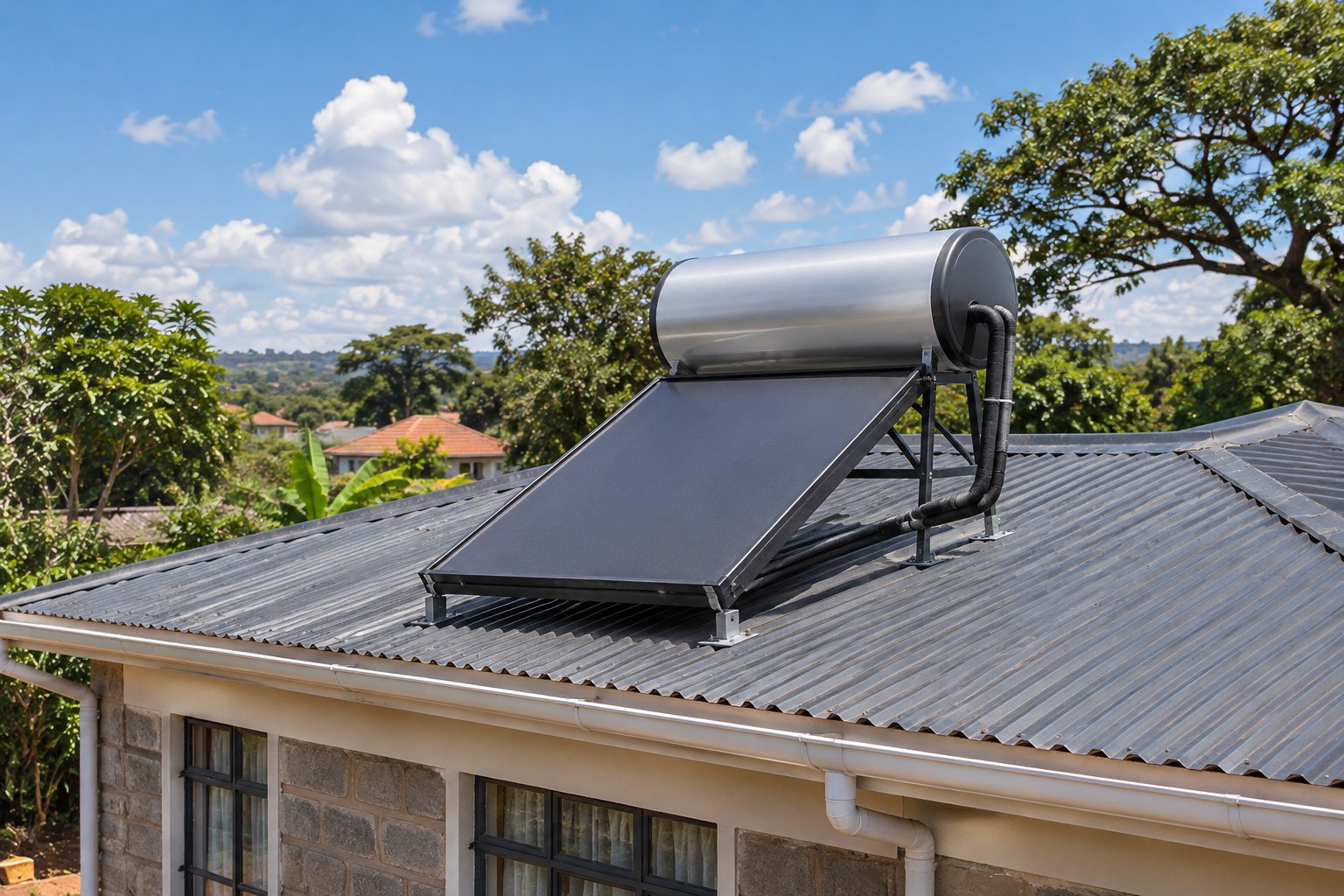
A 200-litre tank contains roughly 200 kg of water before counting the tank, frame and collectors. The supporting arrangement therefore needs a structural assessment rather than an assumption based on the empty equipment weight.
The lesson is the role of the full installed structural and plumbing load, not the purchase of a particular product. Replace the scenario assumptions with your own records before making a commitment. Ask the responsible designer to show which conclusion changes when the demand, timing or site condition changes. A sound quotation should make that reasoning visible.
Size useful hot water around the draw-off schedule
Daily litres are only part of a hot-water brief. Record when hot water is needed, the expected draw-off pattern and the delivery conditions. Morning demand can depend on stored heat from the previous day. A large midday heating opportunity does not by itself prove that early users receive enough useful hot water.
Also consider the existing backup heater and the intended control arrangement. The designer needs to account for storage and distribution losses, not just collector area. In a hotel or institution, occupancy and service schedules can change the duty substantially. Compare the proposed systems against the same demand scenario and obtain suitable performance information. A tank-volume comparison alone can hide important differences in available heat, pressure compatibility and maintenance requirements.
Further reading: US Department of Energy: solar water-heating systems.
Check pressure and hydraulic compatibility
Pressure suitability depends on the actual supply and the permitted arrangement of every relevant component. A larger tank or a more powerful pump does not resolve an incompatible pressure rating. Ask the specialist to assess the source, booster equipment, operating levels and delivery requirements together.
In a hot-water installation, storage support, pipework, fittings and the manufacturer's safety arrangements also matter. Terms such as pressurised, non-pressurised, direct and indirect describe different aspects of a system. They should not be treated as interchangeable product tiers. Obtain the supported configuration for the building and the required service. The owner should receive approved operating and maintenance information, without being asked to adjust pressure controls or modify plumbing safety devices.
Read the remedy and claim conditions
A warranty length is only part of the comparison. Identify the responsible party, the covered component, operating conditions, exclusions and the remedy. Equipment defects, installation workmanship and performance undertakings can belong to different documents. Transport, access, diagnosis and replacement labour may also receive different treatment.
Before purchase, ask how a claim would proceed at the actual site. Keep serial numbers, invoices, commissioning records and maintenance evidence in the required form. Also consider the operating consequence while a claim is assessed. A long warranty does not by itself promise rapid restoration of service. Where continuity matters, discuss a separately defined support or temporary-supply arrangement. Never assume that a generic brochure overrides the specific terms supplied with the proposed equipment.
Keep customer decisions separate from hazardous technical work
A customer can define needs, inspect documents and report observed symptoms without opening equipment or changing protective settings. Work on live circuits, high-voltage batteries, roofs, pressurised systems and other hazardous installations requires the appropriate qualified personnel and a safe method. A buying guide should not turn a design question into an improvised repair instruction.
For existing faults, record alarms, times and normal operating conditions from safe accessible interfaces. Report visible damage or unusual behaviour through the agreed service route. Follow the approved emergency instructions if the situation presents an immediate hazard. During procurement, ask for the professional test and commissioning evidence that relates to the actual installation. This gives the owner useful assurance without asking them to perform unsafe demonstrations.
Keep a handover file that matches the installed system
The customer should receive records for the equipment actually installed, not only the products originally proposed. Keep model and serial details, as-built drawings, commissioning results, warranty terms, approved operator instructions and the service contact route together. Record changes made during construction so later maintenance does not rely on an obsolete diagram.
Moreover, assign custody of the file to an accountable person or organisation. Staff, caretakers and service providers can change. Monitoring access should transfer through an authorised process rather than depend on somebody's private password. A well organised handover supports future troubleshooting and procurement decisions. It does not authorise unqualified users to open electrical equipment or change technical settings; the operator's instructions should make that boundary clear.
Keep one auditable version of the project budget
A useful budget separates the agreed base scope from provisional items, optional improvements and exclusions. Record the quotation date, currency, tax basis, validity and payment milestones. If a figure is an educational assumption, label it as such. Do not convert it into a claimed company price or market average without supporting evidence.
As survey findings change, revise the budget visibly. A roof repair, longer cable route or revised water duty can alter the project for legitimate reasons. Keep the customer's approved changes together with the final equipment and commissioning scope. This allows the customer to compare the delivered service with the original decision, instead of discovering at handover that important supporting work was never included in the headline figure.
Check professional responsibility and applicable permissions
Ask who is responsible for the professional design, installation and commissioning work and verify the relevant current authorisation. The appropriate competence depends on the activity and project. A company's marketing description is not a substitute for the supporting registration or licence information.
Also separate the equipment supplier's role from utility, water-resource, structural or other approvals that may apply. Buying equipment does not grant those permissions. Record any unresolved requirement in the project programme and establish who obtains it. Do not assume a standard approval time or claim a licence class that has not been verified. The regulator's published information is the starting point for checking the current applicable process.
Further reading: EPRA renewable-energy licensing information.
Price maintenance as an operating service
Maintenance needs a scope, not just a visit count. Distinguish visual inspection, testing, cleaning, monitoring review, adjustments by authorised personnel and repair work. State whether access equipment, travel, parts and emergency attendance are included. The appropriate programme depends on the installation and its documented requirements.
Then connect the visit to a useful report. Findings, measurements, defects, recommended actions and completed work should identify the relevant assets. Keep the records with the handover file. This allows the owner to compare performance over time and follow warranty conditions. It also makes the difference between planned preventive work and an unplanned repair clear. Avoid promising that routine maintenance eliminates all faults or extends every component's life by a fixed number of years.
Turn the evidence into a clear go-or-no-go decision
For solar water heater retrofit survey, require an explanation of the full installed structural and plumbing load in the written proposal. A useful answer connects the project records to a stated service boundary. If essential information is missing, the next decision is to obtain the measurement or professional review that resolves it, rather than choose equipment around an optimistic guess.
- Proceed when the relevant evidence supports the proposed service and the responsible parties have closed material design questions.
- Revise the scope when the worked assumptions do not match the real site, operating pattern or equipment limits.
- Request further assessment when permissions, condition, compatibility or critical-service requirements remain unresolved.
Questions buyers ask
What should I prepare before requesting a quotation?
For this assessment, prepare roof condition, full tank loading, pipe routes and isolation and maintenance access. Explain the required outcome and any known limitations. Send records from safe accessible sources; a qualified person should collect hazardous measurements or inspect restricted equipment.
What matters most when comparing solar water heater retrofit survey?
A retrofit survey must assess structural support, pipe routes, pressure compatibility, drainage, access and how existing heating is retained or changed. Compare the alternatives against the same defined service and ask for model-specific supporting evidence. Where proposals use different assumptions, have those differences made explicit before comparing totals.
Can I use the worked example as my final design or price?
No. The example explains a decision method and uses stated assumptions. Your site may have different operating conditions, equipment limits and scope. A final design and quotation need the relevant assessment, written inclusions and applicable approvals.
Prepare your project-specific enquiry
Review our solar water heaters information, then request a site survey with the records listed above. For solar water heater retrofit survey, explain the required outcome, the property location and the operating constraints. Ask for a written scope, assumptions and exclusions before you commit to equipment.